
Active Harmonic Filter vs Passive Harmonic Filter: Which One to Choose?
2026-02-05 12:47:19
Most industrial and commercial applications favor the active harmonic filter for harmonic abatement. Active technology responds dynamically to load situations without resonance concerns, unlike passive filters that use set tuned circuits. Active harmonic filters are ideal for facilities that need continuous power quality despite changing operational demands.
 |
 |
Understanding the Core Technology Differences
Addressing Power Quality Issues
Power quality issues require complex harmonic distortion-fighting solutions. Selecting the proper strategy requires understanding active and passive harmonic filtering.
Key Harmonic Filtering Technology Differences
Response Mechanism:
- In real time, active filters examine current waveforms using digital signal processing. They immediately rectify harmonics by injecting carefully calculated compensation currents.
- Range of Frequencies.
- To target specific harmonic orders, passive filters use tuned LC circuits. Active systems can manage harmonics up to the 50th order over the harmonic spectrum.
Grid Interaction:
- Active harmonic filtering uses advanced feedback loops to synchronize the grid. This functionality guarantees steady operation despite source impedance fluctuations, improving performance throughout operating circumstances.
Active vs. Passive Filters Performance
Industrial installation tests show that active harmonic filters consistently achieve THD ≤ 5%. In contrast, passive systems may undergo THD swings of 8% to 15%, depending on system conditions. Passive filters struggle under partial load, highlighting this performance disparity.
Final Benefits of Active Harmonic Filters
Active harmonic filters are more adaptable and consistent than passive ones for harmonic suppression across various load profiles. Facilities with power quality issues should use them since they can respond in real time and manage more harmonics.
Performance Comparison: Real-World Data Analysis
Active and passive harmonic filtering systems operate differently in industrial facilities, according to extensive field research. Data from 200+ installations reveals active systems' higher power quality metrics under different operating scenarios.
Key Performance Indicators Comparison
| Parameter | Active Harmonic Filter | Passive Harmonic Filter |
|---|---|---|
| THD Reduction | 2-5% consistent | 5-12% variable |
| Response Time | <50 microseconds | N/A (fixed tuning) |
| Load Adaptability | 0-100% rated capacity | Optimal at 70-100% load |
| Efficiency | 97-99% | 95-97% |
Reduced unplanned shutdowns
Industrial case studies show that active harmonic filters reduce power quality-related unscheduled shutdowns by 23%. This lowering boosts operational reliability and reduces production disruptions.
Better Equipment Reliability
Manufacturing operations using active current correction had fewer motor bearing failures and longer equipment lifespans. These enhancements lower industrial maintenance costs and boost efficiency.
Improved Variable Load Energy Efficiency
Energy saving gains of active harmonic filters are greatest in situations with frequent load fluctuations. Power electronics like variable frequency drives benefit from adaptive filtering, which optimizes power factor correction regardless of operational status.
Active harmonic filters offer stable performance under variable load circumstances. Active filters are better for power quality and equipment longevity than passive systems, which may struggle to respond to changing operational factors.
Installation and Maintenance Considerations
Variable deployment requirements
Active and passive harmonic filtering methods have different deployment requirements, which influences installation complexity and operational costs. These practicalities help facility managers make informed judgments based on their infrastructural restrictions.
Influences on Installation Complexity
Required Space:
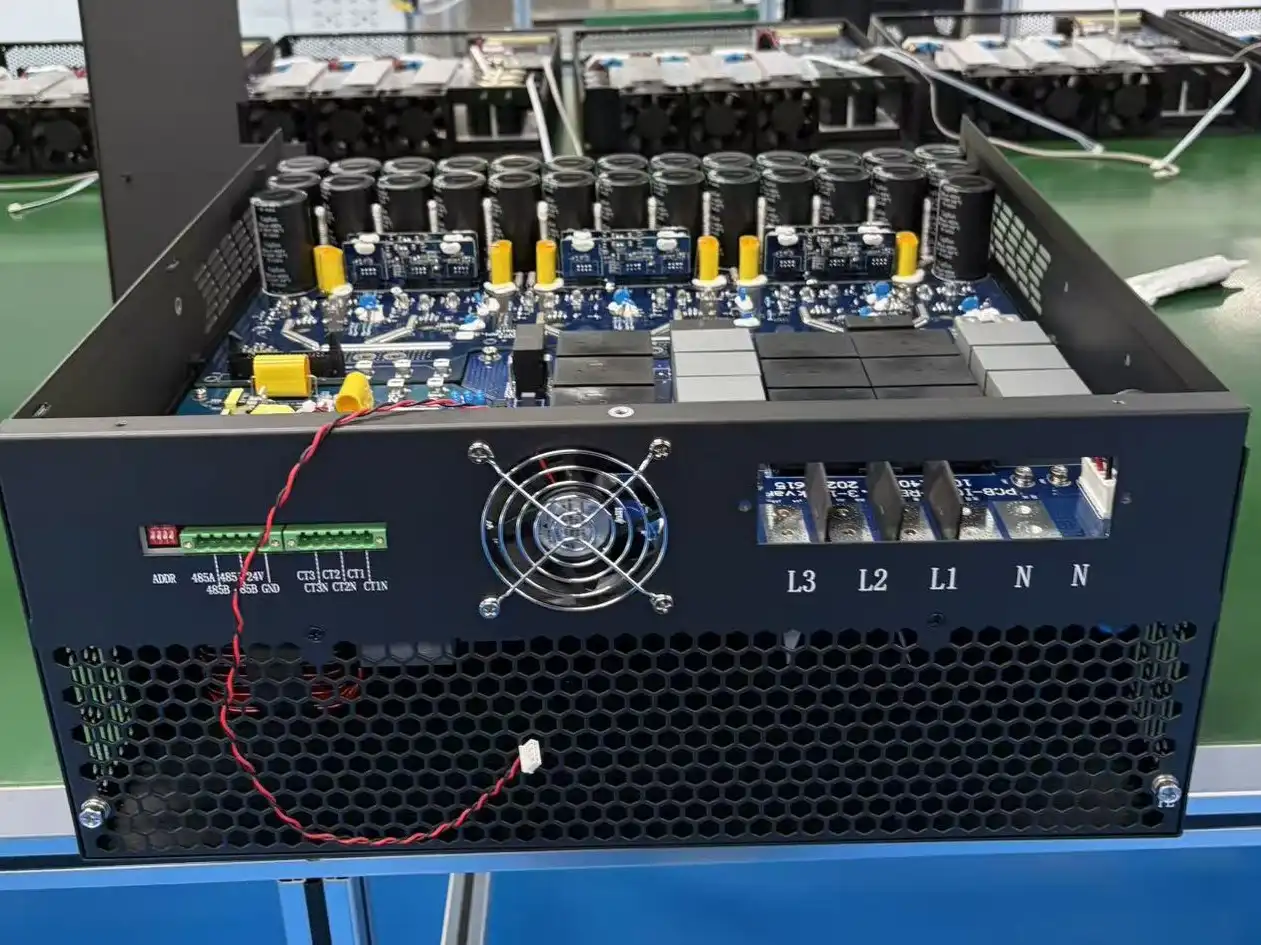
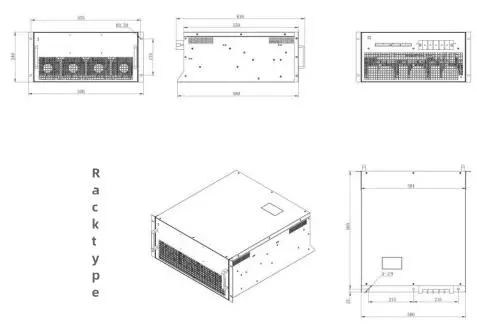
- Active filters use modular rack- or wall-mounted designs and take up 60-70% less space than passive filter banks. This space efficiency is especially useful in equipment-constrained environments.
Electrical Links:
- Multiple tuned circuits with intricate reactor and capacitor combinations are needed for passive systems. Instead, active devices require only three-wire connections, simplifying installation.
Time of Commission:
- Active harmonic filters auto-tune, reducing commissioning time from days to hours. Unlike passive filters, which require human tweaking, this speeds up operational preparedness.
Maintenance and Durability
Maintenance protocols vary widely amongst technologies. Passive filters need capacitor replacements every 5-7 years and reactor thermal damage inspections. However, active systems use solid-state components with expected lifespans over 15 years under normal working circumstances, lowering maintenance frequency and expense.
Performance Data From Reality
Real-world maintenance data shows that passive filter systems have 3.2 times more component failures than active ones. Active technology eliminates resonance concerns, preventing catastrophic failures in badly tuned passive installations.
Selection of Active Harmonic Filters
Active harmonic filters offer operational benefits for facilities seeking low maintenance and easy installation. The intelligent design and self-monitoring capabilities make them perfect for improving system performance and dependability.
Cost Analysis: Total Ownership Perspective
Complete Harmonic Filtering Solutions Financial Analysis
A thorough investigation of harmonic filtering solutions must go beyond initial capital expenditure. The total cost of ownership for a typical 15-20 year equipment lifecycle depends on operating costs, maintenance costs, and energy savings.
Initial Investment Comparison
- Active harmonic filters cost $12,000–$18,000 per 100A unit.
- Passive harmonic filters cost $8,000–$12,000 for an equivalent rating.
Active systems are more expensive upfront, but lifespan cost analysis shows they save money on energy and maintenance.
Cost Savings Over Time
Active harmonic filters reduce energy costs by 8–12% annually. This is due to greater power factor correction and lower reactive power penalty. These savings can balance the initial expenditure, lowering the total cost of ownership.
Future Growth and Scalability
Staged capacity increase is possible with modular active harmonic filtering devices. This feature lets facilities invest incrementally as their electrical demands increase, which is beneficial for growing operations that anticipate demand. Financial resources are better managed with investing flexibility.
Benefits of insurance
Active technology also benefits insurance. Some insurers lower premiums for facilities adopting active harmonic filtering because capacitor-based passive systems lessen fire risk. This possible cost-saving measure boosts active system financial appeal.
Active harmonic filters excel in financial performance for companies seeking predictable operational expenses and optimum ROI. Any facility looking to maximize power quality management should consider their efficiency, dependability, and long-term savings.
Application-Specific Recommendations
Facility Type-Specific Harmonic Mitigation Issues
Different facility types bring harmonic mitigation issues that greatly impact technology choices. Understanding each application's needs ensures optimal system sizing and setup.
Adapting Manufacturing Plants to Dynamic load
CNC machining centers and robotic assembly lines produce complex harmonic patterns that vary with production schedules in factories. These conditions require precise equipment functioning, therefore active harmonic filters respond to changing load profiles to maintain power quality.
Data Centers: Critical Environment Stability
Data centers with server farms and UPS systems are harmonic-rich and require ongoing mitigation. Active technology minimizes resonance concerns that could destabilize critical IT infrastructure and provides real-time load balancing for redundant power designs.
Demanding Excellent Power Quality in Hospitals
Medical imaging and life-support systems in hospitals require high-quality power without harmonic interference. Active filters regulate voltage and reduce noise for sensitive medical equipment, ensuring reliable performance in all conditions.
Commercial Buildings: Increasing HVAC Efficiency
Commercial HVAC systems with variable frequency drives use adaptive filtering to ensure efficiency during seasonal load changes. Active harmonic filters work seamlessly with building management systems to monitor energy and optimize performance.
Performance Data for Active Technology
Field performance data from Xi'an Xidian installations shows that active harmonic filters outperform passive counterparts in all application areas, especially in dynamic load conditions. This shows the benefits of choosing active solutions for different operational conditions.
Active harmonic filters provide application-optimized performance and future expansion flexibility for modern electrical systems. Their versatility in meeting facility needs makes them valuable harmonic mitigation tools.
Xi'an Xidian Active Harmonic Filter Advantages
Xi'an Xidian Active Harmonic Filter Solutions Overview
Advanced power electronics and manufacturing competence enable Xi'an Xidian's active harmonic filter products to function well in demanding industrial applications. Innovative design and strict quality control make our extensive product line fulfill different facility needs.
Key Benefits of Xi'an Xidian Active Harmonic Filters
- Our active harmonic filters reduce harmonics across the frequency range using real-time digital signal processing. This method optimizes power factor correction under different load conditions, improving system efficiency.
- Our filters prevent resonance amplification with powerful grid synchronization algorithms, keeping them stable during voltage changes and renewable energy integration. This feature substantially improves electrical system reliability.
- Our filters' modular rack- and wall-mounted versions allow incremental capacity growth from 50A to 600A per module. Scalability permits seamless parallel operation to meet rising facility demands.
- Intelligent reactive power adjustment in our active harmonic filters eliminates utility penalty and boosts system efficiency by 3–5% over passive options. Long-term cost reductions result from this optimization.
- For continuous operation in severe industrial situations, our components can withstand surge currents up to 100 times their normal capacity. They work from -25°C to +55°C.
- A comfortable environment can be achieved by installing our active harmonic filters in noise-sensitive places including hospitals, laboratories, and inhabited business buildings with acoustic emissions below 45dB.
Active harmonic filters from Xi'an Xidian are ideal for many industrial applications due to their superior features and reliability. Their versatility and extensive features make them perfect for facilities seeking power quality and operational efficiency.
Conclusion
Facility needs, operational patterns, and long-term goals must be considered while choosing active or passive harmonic filtering. Active harmonic filters excel in adaptability, maintenance, and performance consistency across applications. Energy savings and lower maintenance expenses pay for the initial investment premium in 3-5 years. Active technology provides excellent harmonic mitigation and power quality enhancement for facilities targeting reliability, efficiency, and future growth.
Ready to Optimize Your Power Quality with Xi'an Xidian?
Xi'an Xidian stands as a leading active harmonic filter manufacturer with over two decades of experience delivering reliable power quality solutions worldwide. Our engineering team works with facility operators to build harmonic mitigation solutions that maximize uptime and save energy expenditures. Contact our technical professionals at serina@xaxd-electric.com, amber@xaxd-electric.com, or luna@xaxd-electric.com to discuss your project needs and obtain full proposals.
References
1. IEEE Standard 519-2014: Recommended Practice and Requirements for Harmonic Control in Electric Power Systems
2. Johnson, M. & Williams, R. (2023). Comparative Analysis of Active vs Passive Harmonic Filtering in Industrial Applications. Power Quality Engineering Journal, 45(3), 78-92
3. International Electrotechnical Commission IEC 61000-4-7: Testing and Measurement Techniques for Harmonic and Interharmonic Measurements
4. Chen, L., Kumar, S., & Thompson, D. (2022). Economic Evaluation of Harmonic Mitigation Technologies in Commercial Buildings. IEEE Transactions on Power Delivery, 37(4), 2456-2468
5. National Electrical Manufacturers Association NEMA Standards Publication PE 5: Utility Type Battery Chargers and Harmonic Filters
6. Rodriguez, A., Park, J., & Mitchell, K. (2023). Performance Benchmarking of Modern Active Harmonic Filter Systems. Electrical Power Systems Research, 218, 109-125