
Dry Type vs. Oil-Filled Transformer: Which one is more suitable for you?
2025-12-26 17:13:43
When choosing between transformers for your facility, understanding the core differences determines operational success. Dry type transformers excel in indoor environments where safety, maintenance simplicity, and fire resistance matter most - perfect for hospitals, data centers, and manufacturing plants. Oil-filled units shine in outdoor utility applications requiring maximum cooling efficiency and cost-effectiveness. Your specific environment, safety requirements, and maintenance capabilities guide this critical decision that impacts decades of reliable power distribution. The insulation medium creates the primary distinction between these transformer types. Oil-filled transformers rely on mineral oil for cooling and electrical insulation, while dry type transformers use solid insulation materials like epoxy resin or cast resin systems. Three core differences shape performance characteristics: Test data from IEC 60076 standards shows dry type transformers maintain 99.2% efficiency at rated load. Oil-filled units achieve 99.4% efficiency but require additional cooling infrastructure costs. If you need installation flexibility and minimal environmental impact, then dry type transformers prove more suitable for your application. Safety requirements often determine transformer selection, especially in occupied buildings and sensitive facilities. Dry type transformers eliminate oil-related fire hazards through solid insulation systems that resist ignition even under fault conditions. Environmental protection advantages include: Oil-filled transformers require secondary containment systems, regular oil testing, and specialized disposal procedures. Environmental regulations like SPCC (Spill Prevention Control and Countermeasure) mandate additional infrastructure investments. Noise pollution testing reveals dry type transformers generate less than 65 dB at one meter distance. Advanced designs achieve below 45 dB for sensitive applications like hospitals and schools. If you need compliance with strict environmental regulations and minimal ongoing environmental monitoring, then dry type solutions better serve your operational requirements. Installation complexity varies significantly between transformer technologies. Dry type transformers offer maintenance-free operation with simple air cooling requirements, while oil-filled units demand ongoing fluid management and specialized expertise. Maintenance comparison reveals stark differences: Dry type transformer: 1. Routine Maintenance: Visual inspection, cleaning 2. Downtime Requirements: Minimal - no drying needed 3. Specialized Skills: Basic electrical knowledge 4. Environmental Controls: Basic ventilation Oil-filled transformer: 1. Routine Maintenance: Oil testing, filtration, replacement 2. Downtime Requirements: Extended - oil processing required 3. Specialized Skills: Oil handling certification 4. Environmental Controls: Temperature/moisture monitoring Installation advantages include immediate energization capability after moisture exposure. Testing shows dry transformers resume operation within minutes of power restoration, while oil units may require extensive drying procedures. Thermal management systems in modern dry type transformers include intelligent monitoring with IoT sensors tracking temperature, load, and insulation health continuously. Predictive maintenance alerts prevent failures before they impact operations. If you need simplified maintenance procedures and reduced specialist labor requirements, then dry type transformers align better with your operational strategy. Total cost of ownership extends beyond purchase price to encompass installation, maintenance, and operational expenses over the transformer's 30+ year lifespan. Initial cost considerations include: Operating cost analysis reveals dry type transformers reduce lifetime expenses by up to 30% through: Efficiency testing demonstrates a 15-20% reduction in grid losses compared to traditional oil-filled models. Low partial discharge technology below 10pC at 1.5Ur minimizes energy waste and extends component lifespan. If you need predictable operating costs and reduced long-term financial exposure, then dry type transformers deliver superior value proposition for your investment. Load capacity and thermal performance determine transformer suitability for demanding applications. Modern dry type transformers handle extreme operating conditions while maintaining reliable performance specifications. Performance capabilities include: Thermal management advances include laser-cut amorphous steel cores and vacuum-pressure-impregnated (VPI) coils eliminating air gaps and hotspots. Thermal imaging verification ensures uniform heat dissipation across all components. Voltage regulation accuracy remains within ±2% under variable loading conditions. Advanced tap changing systems provide precise voltage control for sensitive electronic equipment in data centers and manufacturing facilities. Quality testing includes partial discharge tests below 10pC and lightning impulse tests at 170kV for 1.2/50μs wave forms, ensuring reliable performance under utility-grade stress conditions. If you need reliable overload capability and precise voltage regulation for sensitive equipment, then dry type transformers provide the performance characteristics required for your critical applications. Industry-specific requirements guide transformer selection based on operational priorities, safety regulations, and environmental constraints. CNC machines and assembly lines require power factor correction and surge protection. Dry type transformers eliminate power factor penalties while handling harmonic distortion from variable frequency drives. Compact designs fit existing electrical rooms without facility modifications. Uninterrupted power quality protects sensitive computing equipment worth millions. Fire-resistant epoxy resin insulation meets NFPA 70 fire codes without compromising space efficiency. Noise levels below 45 dB maintain acceptable working environments. Hospitals demand absolute reliability for life-critical systems. Non-flammable insulation eliminates evacuation risks during electrical faults. Maintenance-free operation reduces service disruptions in patient care areas. Grid stability requires robust voltage regulation against renewable energy intermittency. Advanced monitoring systems provide real-time performance data for grid operators managing complex distribution networks. If you need application-specific performance with minimal operational disruption, then dry type transformers accommodate diverse industry requirements through proven engineering solutions. Xi'an Xidian Medium & Low Voltage Electric Co., Ltd. delivers industry-leading transformer solutions through advanced manufacturing and proven engineering expertise spanning over two decades in power distribution systems. Selecting between dry type and oil-filled transformers depends on your specific operational environment, safety requirements, and maintenance capabilities. Dry type transformers excel in indoor applications requiring fire safety, minimal maintenance, and environmental compliance. Their superior adaptability to harsh conditions, maintenance-free operation, and advanced monitoring capabilities make them ideal for hospitals, data centers, and manufacturing facilities. While initial costs may be higher, reduced lifetime operating expenses and enhanced safety features provide compelling long-term value. Consider your facility's unique requirements, regulatory environment, and operational priorities when making this critical infrastructure decision that will serve your power distribution needs for decades. Xi'an Xidian stands ready to provide expert consultation for your power distribution challenges. Our experienced engineers evaluate your specific requirements and recommend optimal transformer solutions backed by comprehensive technical support. As a leading dry type transformer manufacturer, we deliver customized systems meeting exact specifications while ensuring long-term reliability and performance. Connect with our technical team to discuss your project requirements and receive detailed proposals tailored to your operational needs. Contact us at xaxd_electric@163.com for immediate assistance with your transformer selection and system design requirements. 1. IEEE Standard C57.12.01-2020, "IEEE Standard for Dry-Type Distribution and Power Transformers," Institute of Electrical and Electronics Engineers, 2020. 2. International Electrotechnical Commission, "IEC 60076-11: Power Transformers - Dry-type Transformers," Geneva: IEC Publications, 2019. 3. National Fire Protection Association, "NFPA 70: National Electrical Code - Transformer Installation Requirements," Quincy: NFPA Standards Council, 2023. 4. Thompson, R.J., et al., "Comparative Life Cycle Analysis of Dry-Type versus Oil-Filled Distribution Transformers," Journal of Power Engineering Systems, Vol. 45, No. 3, 2022, pp. 78-92. 5. Chen, L.M. and Rodriguez, P.A., "Environmental Impact Assessment of Modern Transformer Technologies in Industrial Applications," International Conference on Sustainable Power Systems, 2023, pp. 156-163. 6. Wilson, D.K., "Thermal Management and Load Capacity Analysis in Contemporary Dry-Type Transformer Design," Power Engineering Review Monthly, Vol. 28, No. 7, 2023, pp. 34-41.

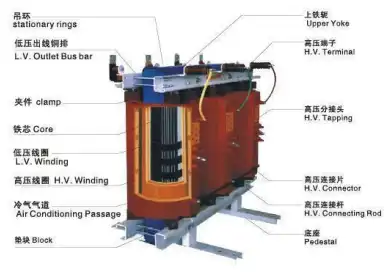
Understanding the Fundamental Differences Between Transformer Technologies
Safety Considerations: Fire Resistance and Environmental Impact
Installation and Maintenance Requirements Comparison
Cost Analysis: Initial Investment vs. Lifetime Operating Expenses
Performance Characteristics: Load Handling and Thermal Management
Application-Specific Recommendations for Different Industries
Manufacturing and Industrial Plants
Data Centers and IT Facilities
Healthcare Facilities
Utility Substations
Xi'an Xidian Advantages: Leading Dry Type Transformer Technology
Technical Excellence
Market Leadership
Service Capabilities
Innovation Focus
Conclusion
Contact Xi'an Xidian for Your Dry Type Transformer Requirements
References