
Harmonic Mitigation Capacitor Benefits for Industrial Power Systems
2026-11-04 17:34:02
A harmonic mitigation capacitor improves power factor while withstanding the heat and voltage stress that harmonic currents create. Paired with a detuning reactor, it moves the tuning point of the capacitor circuit below dominant harmonics such as the 5th and 7th. That lowers the risk of harmonic magnification, nuisance tripping, and early capacitor failure. Plants with drives, rectifiers, and inverters also gain lower reactive current, less equipment heating, and more usable capacity. Results depend on measured harmonic data and correct design. Below, we explain how these capacitors work, where they fit, and how to specify them.
Why Industrial Power Systems Need Harmonic Mitigation Capacitors
Where Harmonics Come From and How We Measure Them
Harmonics are created by nonlinear loads that draw current in a distorted waveform. The way these things work is the same for variable frequency drives, UPS systems, rectifiers, welding tools, switching power sources, and solar inverters. When the current is distorted, the voltage across the system impedance is also distorted. Total harmonic distortion (THD), individual harmonic current and voltage, real power factor, and demand distortion are all things we use to keep an eye on the problem. Harmonic limits are set by IEEE 519-2022 at the point of common coupling. This means that many US facilities need these numbers to be in line with the law and to protect their equipment. A power quality analyzer that keeps track of a full production cycle is the best first step.
What Harmonics Do to Equipment
Heat is added by harmonic currents. There is more eddy current and stray loss in transformers. The RMS current in cables and busbars is higher, and motors get hotter. Also, switchgear and capacitor banks can get too hot. Harmonics can also trip breakers when there isn't really an overload, mess up control signals, and use up space that production equipment could have used. Capacitors are the most at risk because as frequency goes up, their impedance goes down, letting harmonic current flow through them. In a messed-up system, a capacitor that is only rated for pure 60 Hz duty can handle a lot more current than that.
Why Standard Power Factor Capacitors Can Cause Trouble
A bank of capacitors and the system inductance work together to make a parallel circuit. To find its adjusting order, take the square root of the short-circuit kVA and divide it by the capacitor kVAR. If that order is close to the 5th or 7th harmonic, which is what drives and rectifiers do, the voltage and current at that harmonic can go way up. The tuning order can also be changed by moving bank stages in and out. The load changed the harmonic spectrum, so a bank that worked for years might not work after a new drive comes in. That's why we test first and then pick a harmonic reduction capacitor.
What Is a Harmonic Mitigation Capacitor, and How Does It Compare?
How a Harmonic Mitigation Capacitor Works with a Detuning Reactor
A harmonic mitigation capacitor is a power factor correction capacitor that can handle higher voltage and harmonic current stress. It is connected in series with a detuning reactor. The setting frequency is set by the reactor percentage. The branch is tuned near the 3.8th harmonic by a 7% reactor and near the 2.7th harmonic by a 14% reactor. Both are below the 5th. If you go above that setting point, the branch acts as an inductor, so it can't connect to the 5th or 7th system inductance to make a parallel circuit. At 7% detuning, the voltage of the capacitor goes up by 1/(1−p), which is about 7.5%. A full system has protection, switching devices, a controller, monitoring, and a case.
Harmonic Mitigation Capacitor vs. Standard Capacitor
A normal power factor capacitor is made for a voltage that changes in a linear way and doesn't protect against tuning. A harmonic reduction capacitor bank has a series reactor and uses capacitor units that can handle more power and current. It costs less to buy the standard unit at first, but it works better with clean systems than drive-heavy ones. If tests and estimates show that there is little distortion and no risk of setting going wrong, a normal bank can still work after being checked. Most of the time, a detuned bank is used when distortion is modest and loads change. If you swap a standard capacitor that has failed for a higher-rated one that doesn't have a reactor, the problem still exists.
Passive and Active Harmonic Filters
A detuned harmonic mitigation capacitor bank's main job is to fix reactive power and keep the tuning point safe. It takes in some harmonic current, but it's not a filter in its own right. Passive filters pick out certain orders, like the fifth and seventh, and soak up the current that comes with them. Their best use is in places with steady loads, like rectifier systems in electrolytic aluminum plants and power substations. Most of the time, these filters are put together with single-phase high-voltage capacitor units. Active filters add current that cancels out other current and track harmonic spectra that change quickly. The two are combined in hybrid designs. We pick based on the THD goal, the dominant harmonic order, and the variation in the load.
Key Benefits and Industrial Applications of Harmonic Mitigation Capacitors
Electrical Benefits
A well-designed harmonic mitigation capacitor system raises the true power factor and lowers the current in the transformers, cables, and switchgear upstream. Increasing the power factor from 0.80 to 0.95 cuts the current by about 16% for the same real power. Conductor losses go down by about 29% because I²R loss follows current squared. When you detune, the chance of harmonic increase and the annoying trips that come after it goes down also goes down. Lower heat puts less stress on insulation and makes nearby equipment last longer. For these gains to be valid, the design must match the measured harmonic spectrum.
Cost and Capacity Benefits
Depending on your utility bill, a lower current can lower demand charges or power factor penalties. Check to see if your utility company charges by kVA demand or by a power factor threshold. Staged automatic control keeps up with the load and doesn't overcorrect when production is low. When transformer and cable capacity is freed up, it can be used for new equipment, which could put off an upgrade. Harmonic stress-tolerant capacitors also cut down on repair work and unexpected downtime. No capacitor can make up for a bad design because performance still depends on site measurements, protection, ventilation, and how well it is put together.
Industrial Applications
Heavy harmonic current is made by crushers, rolling mills, and big drives that are used in steel mills, cement plants, mines, and chemical sites. UPS solutions are important for data centers. Renewable plants connect inverters, and water treatment plants run drives for pumps and fans. HVAC and lifts are added to commercial buildings. High-voltage passive filters made from single-phase capacitors are often used in electrified rail and electrolytic metal rectifier systems. Different harmonic mitigation capacitor uses have different load changes, drive types, how the transformer and generator work together, enclosure designs, and how the switching works. Before deciding between a standard or custom solution, you should look at the power quality of the site.
How to Select, Install, and Maintain a Harmonic Mitigation Capacitor
Selection Data and Ratings
Start with the voltage, frequency, kVA of the transformer, short-circuit level, operating conditions, and installation environment. Figure out the real power factor, reactive demand, voltage change, and transients, as well as the total harmonic distortion (THD). That information helps us figure out the size of the kVAR, the tuning frequency and amount of detuning, as well as the voltage and harmonic current values with margin. We choose the protection and the way the switches work as well. If you want to buy a harmonic mitigation capacitor for high voltage use, you should ask for data from type and standard tests on dielectric loss, partial discharge, and recommended voltage margin. Look over the project's IEC, IEEE, UL, or other standards for the whole assembly, not just the capacitor unit.
Installation and Commissioning Checks
Look over the single-line diagram, connection point, grounding method, fault current, and protection coordination before sending it out. Add any transformer, generator, or UPS. Check the temperature, humidity, dust, corrosive gasses, altitude, enclosure rating, clearance, ventilation, vibration, and the amount of air flow. Use conductors, switching devices, and upstream protection that are rated correctly. To make sure that capacitors are safe to touch, discharge resistors make sure that they discharge to a safe level. During commissioning, the temperature, switching, capacitance, insulation, reactor, controller, and switching should all be tested. Once the power is on, check the THD, power factor, current, and temperature under real load to make sure the plan works.
Maintenance and Failure Prevention
As part of regular checks, you should look for things like discoloration, swelling, leakage, loose terminals, the temperature of the reactor, the condition of the fuse, controller alarms, ventilation, and dust. Too much harmonic current, too much voltage, bad detuning, a hot environment, not enough air flow, switching on and off too often, inrush current, loose connections, and poor protection coordination are all common reasons why things break. If a switch trips over and over, there is strange noise, the temperature is rising, or the power factor adjustment is going down, this should be looked into. The tuning frequency moves when capacitance is lost, so a harmonic reduction capacitor bank needs to have its capacitance checked when it is not in use. Plants that can't afford long shutdowns benefit the most from spare parts that work with the main parts and constant monitoring.
Evaluating a Harmonic Mitigation Capacitor Supplier and Xi'an Xikai's Filter Capacitor
What to Ask a Harmonic Mitigation Capacitor Manufacturer
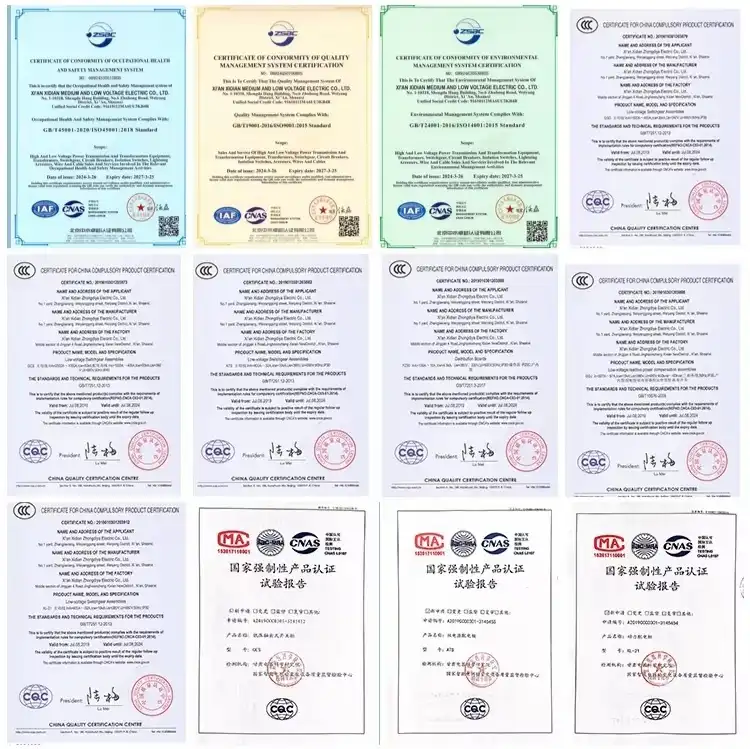
A good company that makes harmonic mitigation capacitors should be able to help with system analysis, kVAR size, harmonic assessment, reactor selection, and special control needs. Ask for certificates, drawings, full assembly data, datasheets, and results on routine and type tests. Check the wait times, spare parts, guarantee, labeling, export experience, communication ports, enclosure measurements, OEM customization, and help for commissioning. Instead of just looking at the purchase price, compare the total cost of ownership, which includes things like setup, energy savings, spare parts, and the risk of downtime. Lifecycle risk is lower with a supplier that supports the product for as long as it is in service than with a vendor that only gives quotes.
Xi'an Xikai High Voltage Single Phase Filter Capacitor
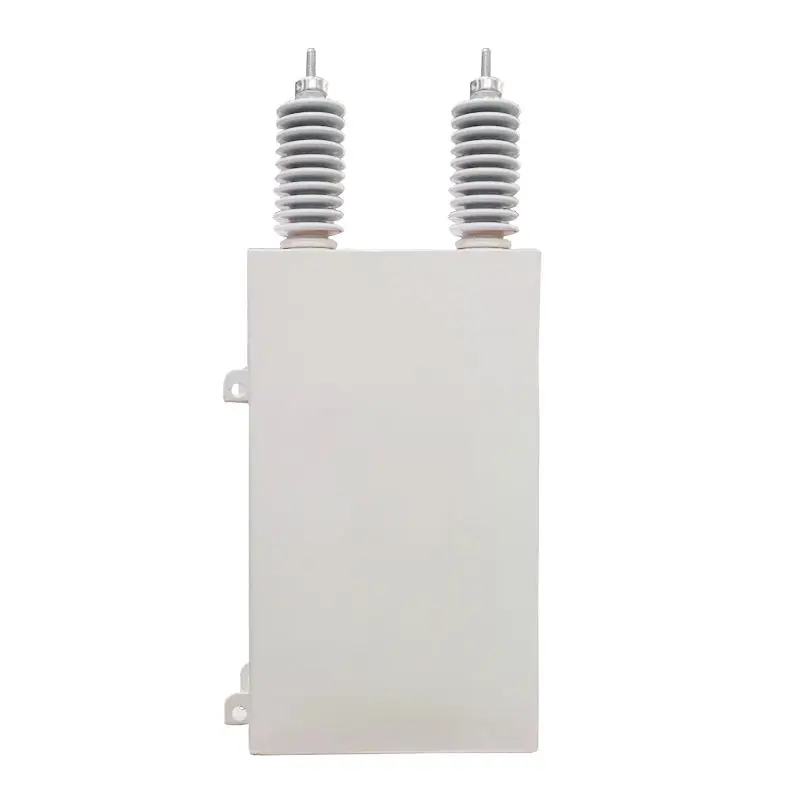
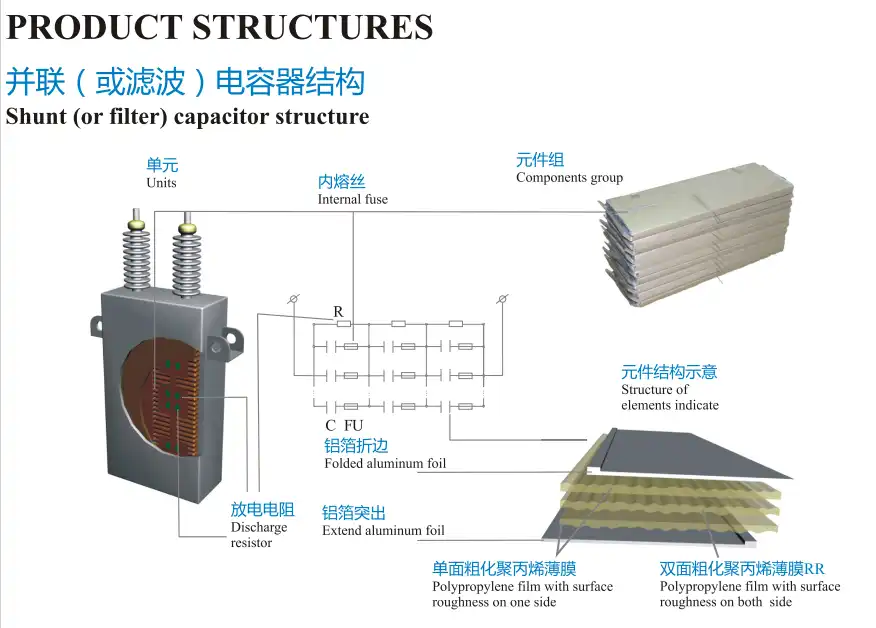
The High Voltage Single Phase Filter Capacitor we sell can be used for traction substations and high-voltage passive filtering. It has internal fuses and discharge resistors that keep a bad piece from touching other parts. To fix the over-voltage issue in the series section, we made the connection between the discharge resistor better. Automatic argon arc welding and new-type seals are used in tanks to keep them from leaking. The unit has a low noise level and a high resistance to overload. It has a zinc-aluminum alloy coating on a multi-layer polypropylene film that helps it quickly recover from dielectric stress. We use IEC 60831 and UL 810 in our product data, and we make sure that the full list of standards is followed for every project.
Manufacturing Background and Customization
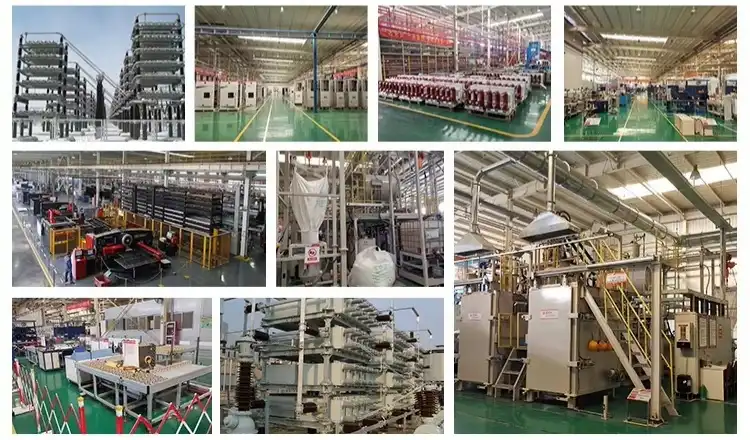
Xi'an Xikai Medium & Low Voltage Electric Co., Ltd. makes 7 product categories, 34 series, and over 100 types. Some of these are vacuum circuit breakers, instrument transformers, switchgear, dry-type transformers, prefabricated substations, and power electronics. At heights of up to 4,000 meters, our plateau-type tools can do its job. Our goods are used by State Grid systems, the steel and metals industry, petrochemicals, rail transportation, and clean energy. We look over your plans and work with your experts on filter capacitor projects to figure out the capacitance, terminals, and cooling needs. Early on, let us know what your dielectric loss, partial discharge, and voltage margin goals are. We will include them in the technical submittal.
Conclusion
A harmonic mitigation capacitor fixes the power factor and can handle the stress that drives, rectifiers, and inverters put on the voltage and current harmonics. When it is used with a detuning reactor, it moves the tuning point below the 5th and 7th harmonics. This keeps standard banks from getting distorted. Some of the benefits are less current, less I²R loss, fewer unnecessary trips, and more space. You can get these gains if you measure harmonic data, make sure the numbers are correct, place the device soundly, and check the capacitance regularly. Passive and active filters are still the best choice when direct screening is needed to meet the THD goal. Not just the price should be used to judge a supplier; test results, drawings, and ongoing support should also be taken into account.
FAQ
1. What makes a harmonic mitigation capacitor different from a standard capacitor?
It works with a detuning reactor and has higher ratings for voltage and harmonic current. The tuning point stays away from the 5th and 7th harmonics because of that pair. Both of these are missing from a normal capacitor.
2. Can a harmonic mitigation capacitor reduce THD?
By moving the tuning point and soaking up some of the harmonic current, it can help some systems have less distortion. It is not a built-in filter. The results depend on the load, noise sources, and the system's resistance. If you want to filter directly, pick either a passive or an active filter.
3. What data do you need for sizing?
To size the system correctly, we need power quality measurements, the single-line diagram, voltage, frequency, transformer rating, short-circuit level, load list, VFD or inverter capacity, and site conditions. We also review the operating environment and available system data to determine the required kVAR, tuning frequency, detuning level, voltage rating, and harmonic current capacity.
Request a Harmonic Mitigation Capacitor Quotation from Xi'an Xikai
If you need help with your next harmonic mitigation capacitor project, Xi'an Xikai can do application review, custom design, and build a High Voltage Single Phase Filter Capacitor with internal fuses and argon arc welded tanks. Please send your voltage, frequency, load, and single-line diagram to serina@xaxd-electric.com, amber@xaxd-electric.com, or luna@xaxd-electric.com. As a company that makes harmonic mitigation capacitors, we are happy to hear from OEM and bulk buyers. To find out more, go to xaxd-electric.com.
References
1. IEEE Std 519, IEEE Standard for Harmonic Control in Electric Power Systems, 2022
2. IEEE Std 18, IEEE Standard for Shunt Power Capacitors, 2012
3. IEEE Std 1036, IEEE Guide for the Application of Shunt Power Capacitors, 2020
4. IEC 60871-1, Shunt Capacitors for A.C. Power Systems Having a Rated Voltage Above 1000 V, Part 1: General, 2014
5. Electrical Power Systems Quality (Dugan, McGranaghan, Santoso, Beaty), McGraw-Hill, 2012
6. Power System Harmonics (Arrillaga, Watson), Wiley, 2003