
Why Lightning Arresters are Key to Protecting Power Equipment?
2026-02-10 16:04:05
Lightning arresters serve as the critical first line of defense against catastrophic power equipment failures caused by electrical surges and lightning strikes. These sophisticated protective devices safeguard millions of dollars in industrial infrastructure by instantly diverting dangerous voltage spikes away from sensitive machinery, transformers, and control systems. When lightning strikes or switching surges occur, a high-quality lightning arrester acts within microseconds to channel excess electrical energy safely to ground, preventing equipment damage, operational downtime, and potential safety hazards that could devastate manufacturing plants, data centers, hospitals, and utility networks across industrial facilities.
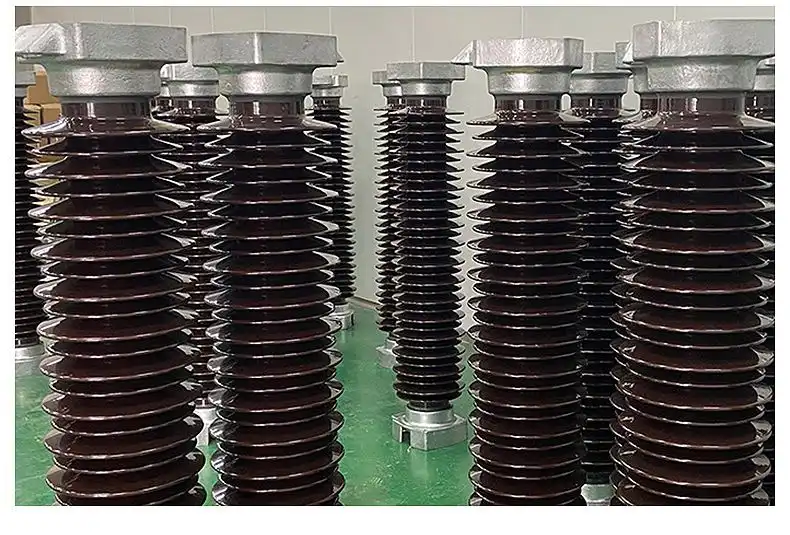
Understanding Lightning Arresters and Their Critical Role
Lightning protection is one of the most complex areas of electrical network design, especially in industrial applications where downtime for machinery translates into instant revenue loss. Lightning arresters work as sensitive voltage switches that stay dormant under normal operating settings but rapidly activate when hazardous surge voltages endanger connected equipment.
Fundamental Working Principles of Surge Protection
Modern surge protection systems employ metal oxide varistor innovation to provide accurate voltage switching characteristics. The arrester basically functions as a shorted circuit that doesn't impede system operations by maintaining a very high resistance under typical operating voltages. When surge voltages surpass predefined threshold values, the metal oxide materials quickly convert to a low-resistance condition, establishing a preferred channel for surge current to pass to ground.
The pace of this changeover becomes critical for equipment protection. Advanced lightning arresters accomplish this switching method within nanoseconds, significantly quicker than the rising time of normal lightning-induced surges. This quick reaction capacity guarantees that protected machinery never encounters harmful voltage spikes, even during lightning attacks on overhead transmission cables or adjacent ground strikes that generate voltage fluctuations in electrical systems.
Historical Evolution and Technological Advances
Early gap-type arresters depended on air gaps and serial resistance to control surge currents, though these devices faced from uneven performance and maintenance issues. The invention of silicon dioxide arresters in the second half of the century enhanced dependability, but the arrival of zinc oxide chemistry changed surge prevention capabilities.
Contemporary polymer-housed Lightning Arrester designs represent the latest advancement in lightning protection technology. These devices combine the superior electrical characteristics of metal oxide varistors with lightweight, weather-resistant polymer housings that eliminate the porcelain cracking issues that plagued earlier designs. The polymer construction also provides enhanced contamination resistance, making these arresters particularly suitable for coastal environments and industrial areas with high pollution levels.
Types of Lightning Arresters and Their Suitable Applications
Selecting proper arrester technology strongly effects both protection efficacy and long-term operating expenses. Different arrester models excel in certain situations, and recognizing these variances helps procurement experts to maximize protection tactics for their unique operating needs.
Metal Oxide Arresters for Heavy-Duty Applications
Metal oxide detectors dominate industrial applications owing to their higher energy handling capability and constant performance qualities. These devices employ zinc oxide varistor blocks that show extremely nonlinear voltage-current characteristics, providing accurate voltage control during surge occurrences.
The energy absorption capability of metal oxide arresters provides them with excellent for transmission substations, big industrial plants, and other uses where major surges may occur. Their capacity to sustain many surge events without deterioration offers dependable protection over the long term, while the predictable aging features allow for periodic maintenance programs that avoid surprise failures.
Polymer Arrester Technology Benefits
Polymer arresters provide substantial benefits in weight-sensitive application and areas with harsh weather conditions. Concerns about porcelain breaking from mechanical stress or thermal cycling are eliminated by the composite housing structure, and contaminant accumulation that may impair arrester function is lessened by the hydrophobic surface characteristics.
These arresters are especially helpful in renewable energy systems, where reducing weight simplifies mounting operations and minimizes structural requirements. Wind turbines and solar systems benefit from the greater weather resilience of polymer building, which ensures continuous performance even under extreme climatic circumstances.
Station Class vs. Distribution Class Specifications
Station class arresters offer maximum protection for essential transmission as well as distribution equipment, including greater energy ratings along with additional durable construction appropriate for utility transmission lines and big industrial installations. These devices often manage system voltages beyond 15kV and provide improved protective margins for costly inverters and switching equipment.
Distribution class protectors serve medium-voltage needs in residential and industrial facilities, offering cost-effective protection for electronics rated between 1kV and 35kV. While these devices manage lesser energy levels than unit class units, they nonetheless offer dependable protection for electric motors, shafts, and distribution conversions that represent major capital expenditures.
Installation and Maintenance Best Practices for Optimal Efficiency
Lightning arresters' protective effectiveness and service life are maximized by using appropriate installation methods and proactive maintenance plans. Even the most advanced surge protection systems fail to offer enough protection when installation problems jeopardize their function or when maintenance negligence enables performance deterioration to go unnoticed.
Critical Installation Parameters and Grounding Requirements
Effective arrester installation starts with correct grounding system design and execution. To avoid inductance that might lower protection efficacy during rapidly increasing surges, the grounding conductor that connects the interrupter to the electrical station ground line must be kept as narrow and straight as feasible.
Lead length limitations become critical in Lightning Arrester surge protection applications. Each additional foot of lead length between the arrester and protected equipment reduces protection effectiveness due to voltage drop across the lead inductance during surge current flow. Industry standards recommend maximum lead lengths of 8 feet for distribution applications and even shorter connections for sensitive electronic equipment protection.
Ground resistance measurements ensure acceptable grounding system performance, most most applications needing ground resistances below 5 ohms. Ground resistance may be greatly impacted by seasonal changes in soil moisture content, thus tests must be made in both wet and dry circumstances to guarantee year-round protection efficacy.
Routine Inspection and Performance Monitoring
Scheduled visual inspections identify potential problems before they compromise arrester performance or lead to catastrophic failures. Inspection procedures should examine the arrester housing for cracks, erosion tracks, or contamination buildup that could affect electrical performance or structural integrity.
Thermal imaging gives significant diagnostic information on arrester state, especially for finding units with high leakage current that signals internal degradation. Arresters working at increased temperatures relative to identical devices in the same system may need replacement to avoid unexpected failures.
Leakage current monitoring gives the most sensitive indicator of arrester status, with compact test equipment permitting regular measurements during planned maintenance outages. The steady degradation shown by trending leakage current levels over time enables scheduled replacement before to failure.
Common Installation Mistakes and Prevention Strategies
One of the most frequent mistakes in protection system design is inadequate surge coordination across many protective devices. When numerous arresters safeguard equipment at various voltages their voltage grades must be properly synchronized to guarantee correct operating sequence during surge situations.
Improper arrester installation may cause to mechanical defects that undermine both protection efficiency and personnel safety. Mounting hardware must allow thermal contraction and expansion cycles while maintaining tight mechanical connections. In seismic locations, mounting mechanisms must also survive earthquake forces without harm.
Smart Procurement Strategies for Lightning Arresters in B2B Context
Effective procurement of surge protection equipment requires careful evaluation of technical specifications, supplier capabilities, and total cost of ownership considerations. The lowest initial purchase price rarely represents the best long-term value when equipment reliability, warranty coverage, and supplier support capabilities are considered.
Technical Specification Evaluation Criteria
Arrester selection starts with identifying acceptable voltage ratings in accordance with system operating parameters and protection needs. The maximum continuous operation voltage (MCOV) rating must surpass the maximum predicted system running voltage under any normal and abnormal operational situations, including transient overvoltages which happen during system disruptions.
Energy handling capacity dictates arrester acceptability for certain applications, with transmission transformers and industrial facilities needing greater energy ratings than conventional distribution uses. The amount of protection offered to connected equipment is shown by the flow voltage characteristics at different current magnitudes; lower discharge voltages provide better protective margins.
Pressure release capability provides safe unsuccessful operation once arrester energy values are exceeded. Quality arresters contain pressure relief devices that move fault gasses away from workers and neighboring equipment, reducing collateral damage during the few situations when trap failure occurs.
Supplier Evaluation and Partnership Considerations
Established manufacturers with thorough testing capabilities give better guarantee of product dependability and performance consistency. ISO 9001 certification implies application of management of quality systems that minimize production variability and increase product dependability.
Technical assistance skills become vital when application-specific problems emerge or when peculiar installation needs must be handled. Suppliers with skilled application engineers may give useful help on arrester choices, installation methodologies, and system coordination concerns.
Project timing and the need for emergency replacements are impacted by manufacture lead times plus inventory availability. Suppliers keeping appropriate inventory levels of conventional configurations can react swiftly to urgent replacement demands, whereas those needing long production lead times may create intolerable delays during equipment breakdowns.
Leading Brands and Solutions in Lightning Arresters: Market Insights
The global surge protection market features several established manufacturers who have developed comprehensive product portfolios serving diverse industrial applications. Understanding the strengths and specializations of different suppliers enables informed procurement decisions that align with specific operational requirements and performance expectations.
Established International Manufacturers
Siemens and ABB represent the largest global suppliers of transmission-class surge protection equipment, with extensive product lines covering applications from distribution through extra-high voltage transmission systems, including critical components such as the Lightning Arrester. These manufacturers leverage decades of research and development investment to offer advanced polymer arrester designs with enhanced performance characteristics and extended service life expectations.
General Electric along with Schneider Electric concentrate on offering integrated safeguard solutions that incorporate arresters with tracking devices and coordinating software. Their solution offerings emphasize comprehensive protection optimization versus individual component performance, making them appealing to utilities and big industrial enterprises seeking complete protection methods.
Distribution-class arresters for commercial and industrial sectors are the area of expertise for Eaton and Cooper, which is now a part of Eaton. Their product ranges emphasize inexpensive protection for moderate voltage applications, with common designs that decrease inventory needs and simplify specification procedures.
Xi'an Xidian's Advanced Lightning Protection Solutions
Xi'an Xidian Medium & Low Temperature Electric Co., Limited has established the reputation of a leading producer of surge defense equipment, integrating sophisticated polymer technology with strong design concepts to give exceptional protective performance. Long-term operating dependability is ensured by our lightning arresters' safe pressure release capabilities, good aging characteristics, and dependable sealing performance.
Our comprehensive creation program involves constant innovation in novel materials and production methods. The outstanding protective performance of our inhibitors stems from carefully constructed zinc oxide varistor elements paired with polymer casing technology that minimizes moisture intrusion and contamination-related failures.
Through extensive testing methods, quality control measures guarantee that each arrester satisfies strict performance criteria. Triple-sealing procedures provide total waterproofing protection, and raw material testing using traceable, pure zinc oxide ensures constant electrical properties. High-voltage testing mimicking a lightning bolt up to 650kV proves performance under high surge circumstances.
Custom solutions made for particular applications and distinctive grid patterns are part of our production expertise. Over 20 patents in polymeric aluminum oxide arrester technology highlight our dedication to innovation and technological leadership in surge prevention equipment design and manufacture.
Conclusion
Lightning arresters remain essential components for protecting valuable power equipment across industrial, commercial, and utility applications. The combination of advanced metal oxide varistor technology with modern polymer housing designs provides reliable surge protection that minimizes equipment damage, reduces operational downtime, and enhances overall system reliability. Proper selection, installation, and maintenance of these protective devices ensures long-term operational benefits that far exceed their initial investment costs.
Effective procurement strategies focus on total value rather than initial purchase price, considering factors such as energy handling capability, environmental performance, supplier support, and warranty coverage. As electrical systems become increasingly complex and equipment costs continue rising, the role of reliable surge protection becomes even more critical for maintaining operational continuity and protecting capital investments.
FAQ
1. How often should lightning arresters be inspected and maintained?
Visual inspections should be performed annually, with more detailed electrical testing conducted every three to five years depending on environmental conditions and system criticality. Thermal imaging surveys can identify developing problems between scheduled inspections, particularly in installations with high contamination levels or extreme weather exposure.
2. What are the limitations of lightning arresters in risk elimination?
Lightning arresters cannot eliminate all surge-related risks, as their protection effectiveness depends on proper installation, adequate grounding, and appropriate coordination with other system protection devices. While they significantly reduce equipment damage probability, direct lightning strikes to equipment or inadequate surge coordination can still result in damage despite arrester presence.
3. What factors influence the choice between metal oxide and polymer arrester technologies?
Environmental conditions, weight restrictions, and maintenance access typically drive technology selection decisions. Polymer arresters offer advantages in corrosive environments, weight-sensitive applications, and locations with limited maintenance access, while traditional porcelain designs may be preferred in applications where proven long-term performance history is prioritized over other considerations.
Partner with Xi'an Xidian for Superior Lightning Protection Solutions
Xi'an Xidian stands ready to protect your critical power equipment with industry-leading lightning arrester technology that combines superior protective performance with exceptional reliability. Our team of experienced engineers provides personalized consultation to identify optimal protection strategies for your specific applications, backed by competitive pricing and comprehensive technical support. As a trusted lightning arrester supplier with over 20 patents in polymeric technology, we deliver custom solutions with 6-8 weeks lead time and 24/7 installation guidance. Contact serina@xaxd-electric.com, amber@xaxd-electric.com, or luna@xaxd-electric.com today to discuss your surge protection requirements and discover how our proven expertise can safeguard your operations.
References
1. IEEE Standards Association. "IEEE Guide for the Application of Metal-Oxide Surge Arresters for Alternating-Current Systems." IEEE Std C62.22-2009, Institute of Electrical and Electronics Engineers, 2009.
2. Hinrichsen, Volker. "Metal-Oxide Surge Arresters: Fundamentals and Applications." Power Engineering Journal, vol. 15, no. 3, 2001, pp. 150-158.
3. McDermott, Thomas E., et al. "Lightning Protection System Performance: Theory and Practice." IEEE Transactions on Industry Applications, vol. 49, no. 2, 2013, pp. 888-895.
4. International Electrotechnical Commission. "Surge Arresters - Part 4: Metal-oxide surge arresters without gaps for a.c. systems." IEC 60099-4:2014, International Electrotechnical Commission, 2014.
5. Woodworth, John R. "Advances in Polymer-Housed Surge Arrester Technology for Transmission Applications." IEEE Transactions on Power Delivery, vol. 28, no. 4, 2013, pp. 2303-2310.
6. Miller, Paul S., and Johnson, Robert K. "Economic Analysis of Lightning Protection Systems in Industrial Facilities." Industrial Power Engineering Conference Proceedings, vol. 42, 2015, pp. 245-252.