
Why Use a Self-Healing Filter Capacitor for Harmonic Filtering?
2026-11-13 17:20:00
Why use a self-healing filter capacitor for harmonic filtering? Because one tiny dielectric fault does not have to end the capacitor's life. In self-healing filter capacitors, the thin metal layer around a breakdown point vaporizes within microseconds and isolates the damaged spot. The unit keeps working with only a small capacitance loss. Metallized polypropylene film also gives low dielectric loss and stable capacitance, which help a capacitor and reactor hold a precise tuning frequency. Self-healing does not cure overvoltage, overheating, or resonance, so correct rating and design still decide service life.
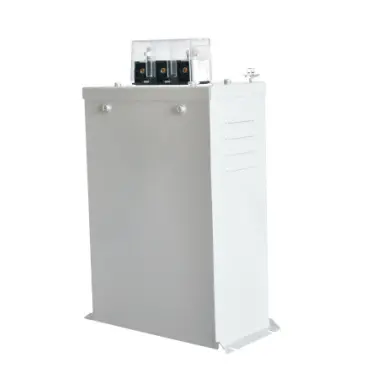
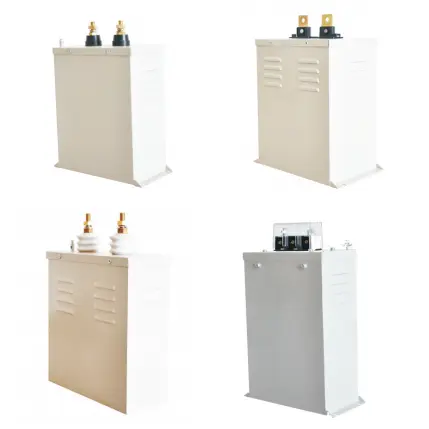
What Are Self-Healing Filter Capacitors, and Why Does Harmonic Filtering Matter?
Why Harmonics Need Attention
Inverters, battery chargers, variable frequency drives, and solar inverters all take power in short bursts instead of smooth sine waves. These nonlinear loads send out harmonic currents, which change the voltage and make transformers, wires, and motors heat up more. They also cause losses and problems with electric fields. In the US, IEEE 519-2022 suggests limits for harmonic voltage and current at the point of common coupling. Because of this, many plants now make harmonic control a part of the design process. A passive filter cabinet is often given as an answer. Putting a capacitor in series with a reactor makes a path with low resistance for a certain harmonic order, like the 5th or 7th.
How Self-Healing Filter Capacitors Are Built
It is known that self-healing filter capacitors are made of metallized film capacitors. A very thin layer of metal, like an aluminum-zinc combination, is put on top of the polypropylene film. A small fault can be fixed by the electrode itself because it is so thin. The self-healing low-voltage filter capacitors that Xi'an Xikai makes are made with metallized polypropylene (MKP) film, aluminum-zinc electrodes, flame-resistant epoxy resin encapsulation, and brass terminals that won't rust. The epoxy or plastic housing gets rid of the risk of oil leaks that comes with designs that use oil and helps with environmental compliance. Due to the fact that each part impacts loss, heat flow, and service life, we look at the building as a whole rather than just having one material choice.
What Happens During a Self-Healing Event
A short arc is made when a weak spot in the film breaks. The arc's heat turns the thin metal around the fault into a gas. That makes a small area that doesn't conduct electricity, so the capacitor keeps working. There is a slow decrease in capacitance as each event takes away a small amount of electrode area. A capacitance loss of 3% to 5% is often seen as the end of life in many specifications, but a properly rated unit can clear many events before it gets to that point. As a safety measure, I tell engineers to think of self-healing filter capacitors as a safety margin, not as a reason to value the part less.
How Do Self-Healing Filter Capacitors Work in Harmonic Filtering?
The LC Tuned Circuit
The capacitor and reactor make up an LC circuit in a passive filter. Its tuned frequency is given by f = 1/(2π√LC). The two reactances cancel each other out at that frequency, and the circuit has low impedance, which means that harmonic current flows into the filter instead of the grid. Xi'an Xikai makes self-healing filter capacitors that work with frequencies between 150 Hz and 2500 Hz, which includes both low-order and mid-order harmonics. Tolerance for capacitance is important here. As capacitance changes, so does frequency. A 3% change in capacitance changes the set frequency by about 1.5%.
Voltage Rise Across the Capacitor
A lot of buyers don't pay attention to the voltage on the capacitor. That shift can make filtering less effective or move the resonance toward a harmonic you do not want to boost. The voltage of the capacitor in a series reactor circuit is equal to the voltage of the system divided by (1 - p), where p is the reactance ratio between the reactor and the capacitor. The capacitor sees about 107.5% of the system voltage when the reactor is set to 7%. That's about 516 V on a 480 V system. It's not likely that a 525 V unit would have enough room for harmonic energy, so a 690 V unit might be a better choice. We have ratings of 440 V, 480 V, 525 V, and 690 V, with 5 to 100 kvar per unit. Picking the grade early stops frequent overvoltage stress, which wears down dielectrics faster.
Loss, Heat, and Temperature Behavior
The dissipation factor, which is written as tan δ, tells us how much energy the insulator gives off as heat. It stays below 0.002 at 1 kHz for polypropylene film, which is one reason it works well as a filter. At the same harmonic current, less loss means less heating inside the circuit. Temperature can also change capacitance, and the amount that changes depends on the film material. Most of the time, polypropylene is more stable than polyester. Don't just ask for tan δ and capacitance-versus-temperature data at room temperature for self-healing filter capacitors in a tuned filter. Also ask for data at the expected hot-spot temperature. You can trust the answer more when you measure data from a sample in the real case instead of just looking at the number on a datasheet.
Benefits of Self-Healing Filter Capacitors Compared with Other Capacitor Types
Core Benefits
Self-healing filter capacitors' main benefit is that they can handle faults. A local flaw turns into a small loss of capacitance instead of a straight short circuit. This makes it less likely that there will be a quick power outage in a filter cabinet. Metallized polypropylene also has a stable capacitance, low dielectric loss, and high insulation resistance, all of which are useful in tuned circuits. Because they are dry, you don't have to worry about handling oil, and the epoxy housing doesn't react to humidity, vibration, or changes in temperature, so the units can be used in both indoor and outdoor substations. Xi'an Xikai says that in utility-scale deployments, the MTBF is more than 100,000 hours. These qualities cut down on repair trips, but important equipment still needs to be checked every so often.
Comparison with Electrolytic and Foil Designs
Since aluminum electrolytic capacitors can hold more charge per unit of volume, they are still commonly used in small DC busses. They also have a higher ESR, limits on polarity, and a short service life when heated. Film capacitors have a low ESR, don't have any polarity, and can handle large ripple currents well. Foil-type film capacitors can handle a lot of pulse current, but when they break down, the unit usually stays short. When used for AC harmonic filtering at low voltage, self-healing filter capacitors have a softer failure mode because the capacitance drops slowly instead of all at once. One part of IEC 60831-1 is even just for self-healing shunt capacitors up to 1,000 V AC.
Polypropylene Versus Polyester
In metallized self-healing filter capacitors, polypropylene (MKP) and polyester (MKT) both function, but they are better suited for different tasks. Polypropylene is good for high ripple duty, tuned circuits, and AC filter capacitor roles because it has less dielectric loss and stays stable at higher temperatures. Polyester is cheaper and can be smaller for the same capacitance, so it is good for DC filter capacitor roles that don't need to be used for a lot of power. In some situations, neither is better than the other. When it comes to a harmonic filter cabinet with a set tuning goal, I like MKP because it keeps loss and capacitance drift low. For this reason, our self-healing low-voltage filter capacitors use MKP film.
How to Choose Self-Healing Filter Capacitors and Where to Use Them
Selection Parameters
Before choosing self-healing filter capacitors, you need to know what they are going to be used for: AC harmonic filtering, DC bus smoothing, or fixing a detuned power factor. Next, check the rated voltage, which should include the rise from the series reactor as well as transients and harmonic voltage. Also, look at the RMS and peak current, tuned frequency, tan δ, and hot-spot temperature rise. Look over the mounting style, terminals, creepage, clearance, and protection for the enclosure. Share the target harmonic order and the reactor inductance for a tuning frequency that isn't standard. This way, the capacitance can be set to keep the frequency within a certain range. Simulators and impedance scanning can help with complicated systems, but the real test of a prototype in a cabinet is what proves it for sure.
Applications
Self-healing filter capacitors can be used in a number of situations. Power factor fines are taken away from CNC machines and assembly lines in factories, and harmonic distortion is cut down on drives. They help keep the voltage stable in substations by blocking harmonics from renewable inverters and intermittent generation. Flame-resistant epoxy-encapsulated units can be used to fix old systems in hospitals and malls. Film capacitors are also used to control ripple in PV and wind converters, motor drives, UPS systems, and servo equipment. Because of this, each case needs its own analysis of voltage, frequency, cooling, and environment. This is because a capacitor that works well in a dry indoor panel might not work well in an outdoor enclosure.
Failure Modes and Prevention
Even with self-healing filter capacitors, life can be shortened under certain circumstances. Long-term overvoltage and repeated transients wear down the insulator. Internal heat rises when there is too much harmonic current. If the capacitors and reactors aren't matched well, they can resonate with the grid and make a harmonic stronger instead of weaker. Moisture, shaking, high atmospheric temperature, and loose connections are some of the things that put more stress on capacitors. Over time, repeated healing events lower their capacitance. To avoid these issues, I recommend lowering the voltage, designing the thermally with airflow in mind, doing a resonance study before installation, making sure the terminal torque is right, and checking the capacitance on a regular basis. If the level drops below 3% to 5%, it's clear that replacement is needed.
How to Evaluate a Supplier of Self-Healing Filter Capacitors
Documentation and Factory Controls
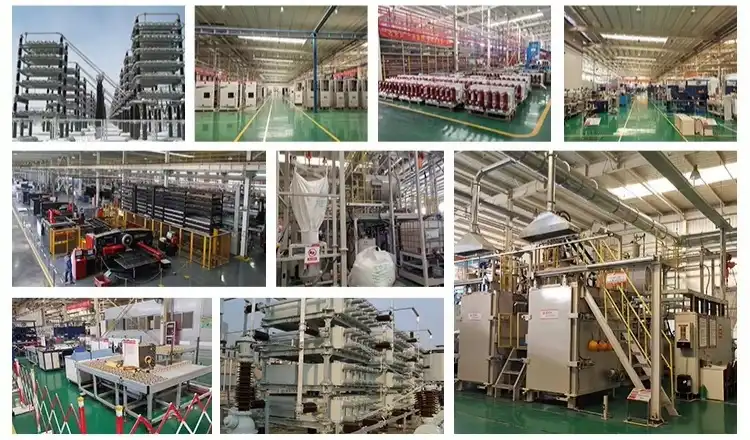
Look for more than just a capacitance and voltage table when comparing suppliers of self-healing filter capacitors. Find out the frequency range, loss factor, ripple current, temperature class, insulator resistance, size, and settings used to test the lifetime of the item. Then look at how the factory works. Vacuum metallization and automatic wrapping are used on our line to make sure that the electrodes are all the same. We test for leakage current and capacitance variation electrically on all of our products, and the variance is less than 3%. A 72-hour load test is also done on all units, and designs are based on IEC 60831-1/2. With batch traceability, you can connect a field result to a production lot. This makes it faster to find the root cause.
Customization, Samples, and Company Background
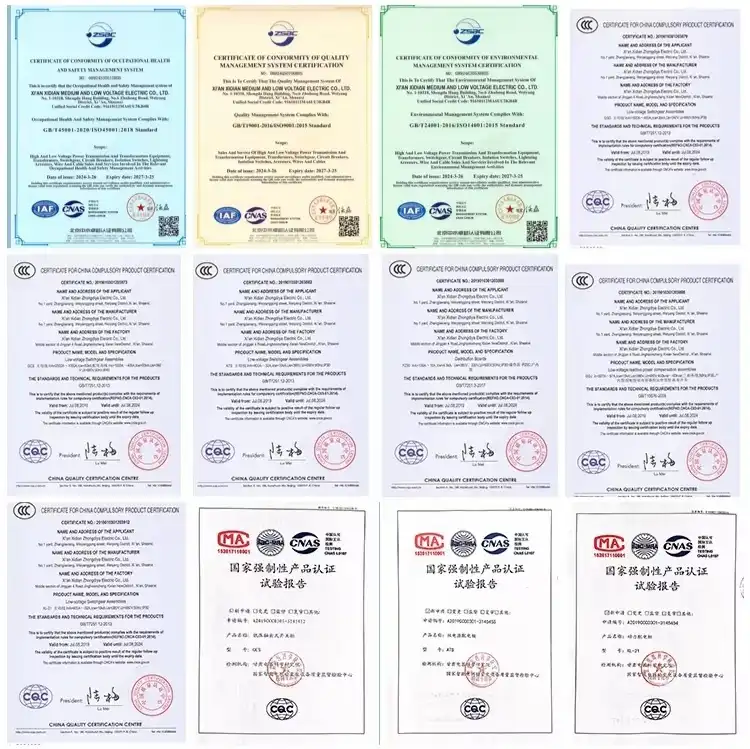
Because tuning frequencies aren't always the same, you need a supplier who can change the capacitance, voltage, and size. Our self-healing filter capacitors are backed by national-level projects and 12 or more patents. They are available in modular forms to meet the needs of different voltage and frequency ranges. Medium- and low-voltage electrical equipment is made in Xi'an Xikai. The area has seven product groups and more than 100 versions, such as switchgear, dry-type transformers, and power electronics. Our gear is used for projects with State Grid, steel, petrochemicals, rail, and renewable energy. We list CE, RoHS, UL, and CCC in our compliance profile. Please make sure that the certificate covers your model and market.
A Practical Decision Path
A clear path helps keep projects on time. First, send the application data, which includes the temperature, system voltage, harmonic profile, tuned frequency, and reactor value. Second, look over the suggested grade, making sure it includes the voltage range and tolerance. Third, test the samples in your cabinet at a known voltage and temperature, and write down the capacitance, tan δ, and temperature rise. Fourth, decide what the acceptance criteria are and give your approval to a written specification that includes both technical and business terms. Before you place repeat orders, allow one to two months for testing and sampling. Following these steps for a sample order of self-healing filter capacitors lowers the risk of setting drift and makes it clear for both sides what they need for mass orders.
Conclusion
Self-healing filter capacitors are good for harmonic filtering because the metallized polypropylene film fixes small dielectric faults, keeps loss low, and keeps capacitance steady in LC tuned circuits. The tuned frequency changes by about 1.5% when the capacitance changes by 3%. A series reactor raises the voltage of the capacitor, and tan δ and temperature behavior change the heat and tuning. Self-healing film fails more slowly than electrolytic and foil designs, and in tuned AC service, polypropylene usually does better than polyester. Self-healing filter capacitors can be used in a lot of different places, from business buildings and green converters to power plants and substations. Overvoltage, heat, moisture, vibration, and bad fitting are still things that can cause limits to be broken. So, a good choice depends on application data that has been checked, the right voltage margin, testing of prototypes, and clear documentation from the supplier.
FAQ
1. How Does Self-Healing Affect the Life of Filter Capacitors?
Every time an electrode heals, a tiny bit of its area is taken away, so capacitance goes down a little. It's often the end of life when the value drops by 3% to 5% from the start. If the unit is properly rated, it can clear many events before it hits that limit. Voltage, temperature, and current stress can also change life.
2. Can Self-Healing Film Replace Electrolytic Capacitors in a DC Link?
Most of the time, yes, especially when the voltage is above 500 V. Film has no polarity, a smaller ESR, and a higher ripple-current capability. Still, electrolytics can hold more capacitance per unit volume, so space can make a difference.
3. Does Self-Healing Prevent Every Failure?
No, the unit can still be damaged by too much heat, water getting in, vibration, and resonance. Local dielectric faults can only be fixed by self-healing, so voltage derating and thermal design are still very important.
4. What Should I Send for a Quotation?
Send the type of application, the tuned frequency, the capacitance, the rated voltage, the reactor value, the ripple profile, the dimensions, the quantity, the certifications, and the address where the goods should be sent. Tests and datasheets help make sure the fit is right before placing a bulk order.
Request Self-Healing Filter Capacitors from Xi'an Xikai
If you need self-healing filter capacitors for harmonic filter cabinets, Xi'an Xikai is the company to go to. The voltage ranges from 440 V to 690 V, with 5–100 kvar per unit. Our voltage and frequency designs are flexible and backed by 12 or more patents. To serina@xaxd-electric.com, amber@xaxd-electric.com, or luna@xaxd-electric.com, send your tuning frequency, voltage, and amount. To find out more, go to xaxd-electric.com.
References
1. IEEE Std 519-2022, IEEE Standard for Harmonic Control in Electric Power Systems, 2022
2. IEC 60831-1, Shunt Power Capacitors of the Self-Healing Type for AC Systems Having a Rated Voltage up to and Including 1000 V, Part 1: General, 2014
3. IEEE Std 18-2012, IEEE Standard for Shunt Power Capacitors, 2012
4. Electrical Power Systems Quality (Dugan, McGranaghan, Santoso, Beaty), McGraw-Hill, 2012
5. Power System Harmonics (Arrillaga and Watson), Wiley, 2003
6. Reliability of Capacitors for DC-Link Applications in Power Electronic Converters: An Overview (Wang and Blaabjerg), IEEE Transactions on Industry Applications, 2014