
Indoor Vacuum Circuit Breaker: Spring Mechanism and Maintenance Guide
2026-11-10 17:20:11
An indoor vacuum circuit breaker uses a sealed vacuum interrupter to extinguish the arc and a spring mechanism to store the energy that closes and opens the contacts. Maintenance keeps both parts working: check spring charging, latches, lubrication, contact wear, and vacuum integrity at set intervals, and record every result. In this guide, I cover construction, spring operation, ratings, installation, upkeep, and troubleshooting. I wrote it for switchgear OEM engineers, purchasing teams, and facility managers who want a clear picture before they specify a 12 kV breaker, whether they build cabinets or buy for projects.
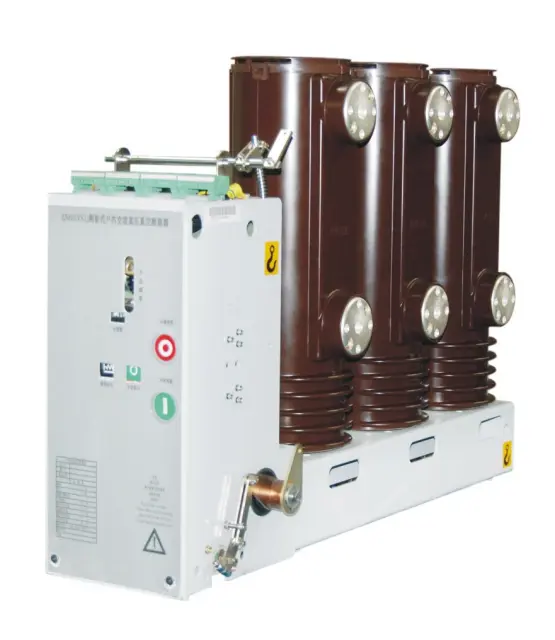
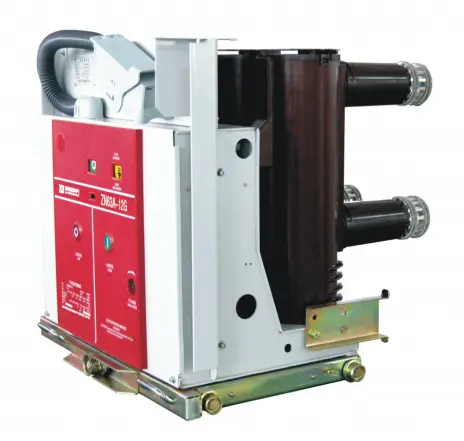
Indoor Vacuum Circuit Breaker Construction and Working Principle
Core Components Inside the Breaker
In general, an indoor vacuum circuit breaker for medium-voltage switchgear has three poles. An air gap interrupter with a fixed and a moving contact is on each pole. Along with the moving contact, there is a working tube that is insulated. There is a motor that charges, extra contacts, position markers, and interlocks all around that core. The coils close and open around it. The main terminals link to the switchgear busbars, and the secondary plug is where the control wire goes. Each link in this chain changes how fast and straight the contacts are, so when I check a unit, I start with the terminals and work my way up to the mechanism.
How the Vacuum Interrupter Clears an Arc
What is an arc? An arc forms when the moving contact breaks apart, letting metal vapor out of the contact surfaces. There are only ions left in the vacuum because most of the gas molecules have been stripped away. In other words, the arc ends when the natural current is zero, and the gap quickly gets its dielectric strength back. This is the reason why oil or gas are not needed to stop a spark in an indoor vacuum circuit breaker. The vacuum, on the other hand, needs to stay put the whole time it works. It's important to test the vacuum stability as part of every installation and maintenance plan because if the envelope leaks, that dielectric recovery is lost.
Indoor Operating Conditions and Their Effects
Of course, the room conditions are still important for an indoor vacuum circuit breaker. It's better to keep it out of the rain and direct sunlight. Around -40°C to +40°C is what ZN39 is said to be able to handle, with a 24-hour average below 35°C. It says that the humidity can reach up to 95% daily or 90% monthly, and the height can go up to 1000 m. Condensation, dust, and not enough air flow can still hurt insulation and grease inside a switchgear room. Ask for a derated or plateau-type design because air defense gets worse above 1000 m. The Xi'an Xikai hill has tools that can be used at heights of up to 4,000 meters.
Spring Operating Mechanism: Design, Operation, and Performance
How the Closing and Opening Springs Work
The close spring can be pushed through cams, ratchets, and shafts until a latch locks it in place. This can be done by hand, with a charging motor and gearbox, or with an indoor vacuum circuit breaker. When the close coil lets go of the latch, the stored energy moves the contacts together and charges the opening spring at the same time. As soon as the trip coil lets go of the opening latch, the contacts separate. When a circuit with a fault is tried to be closed more than once, an anti-pumping circuit stops it. Even after the spring is charged, the breaker can still finish a job because the energy is mechanically stored in the spring.
Spring Mechanism Versus Magnetic Actuator
Techs already know how to check, change, and fix the parts that make up spring systems. This works well for field repair teams and OEM lines. Most of the time, magnetic actuators need to be controlled electronically and store energy in capacitors. They have fewer moving parts and can be turned on and off more often. There are a lot of places I ship spare parts for an indoor vacuum circuit breaker line, and spring mechanisms make it easy to do so. The ZN39's spring-operated mechanism is made up of separate parts that can be switched out instead of the whole thing. You can still make the right choice based on your job cycle and customer service skills.
Fixed Versus Withdrawable Indoor Vacuum Circuit Breaker Designs
One more kind of breaker is one that can be taken out. This kind is on a truck that can be moved from the place where it is tested to the place where it is fixed. When the unit can be taken out without hurting the busbars, it cuts down on the time it takes to replace it. They also add a rack for things. If the trip is rough, dirt, dry lube, or guide rails that aren't lined up right could cause it to get stuck. Always check that the truck width, rail height, shutter operation, and secondary plug pinout on samples before approving them for OEM builds. They should match what's shown on the cabinet drawings. Now is often the time when problems with interchangeability show up.
Key Technical Specifications and Selection Criteria
Ratings to Verify Before You Order
Start with the rated voltage, the normal current, and the current that breaks a short circuit. It's important to do this. The IEC numbers 31.5 kA and 40 kA are often used. I think you should match them to the problem level you found plus a little extra. The short-time survive current and the peak making current should also be checked. In line with IEC 62271-100, make sure you ask what class an indoor vacuum circuit breaker is when you place your order. There are two types: M1 (2,000 operations) and M2 (10,000 operations). Also, check the charging time, opening and closing times, and control voltage to make sure they match the way your switchgear is controlled.
ZN39 12 kV Indoor Vacuum Circuit Breaker at a Glance
An indoor vacuum circuit breaker called ZN39 has been approved by both IEC 62271-100 and CE. It can handle 12 kV. It can handle at least 20,000 operations, which is more than the 10,000 operations of the M2 class, and it breaks in 15 ms or less. Stronger brackets and high-creepage ceramic bands are used in places that are likely to have earthquakes or are polluted. From Xi'an Xikai, there is the cheap ZN39-E and the smart ZN39-S with IoT-ready status tracking. Ask for the datasheet to see what options are available right now. It is possible to change the voltage levels, terminal layouts, and transmission lines to meet the needs of different areas.
Comparing an Indoor Vacuum Circuit Breaker with Outdoor, SF6, and Air Types
When used in the yard, outdoor vacuum breakers keep out the weather and give you longer insulation lengths. Inside units, on the other hand, fit switchgear that is enclosed in metal. SF6 breakers need to be able to handle and watch gas in order to stop arcs. Vacuum systems don't do that, though, since the interrupter is sealed. At 12 kV, air circuit breakers are not usually used because they are best for low-voltage panels. For medium-voltage switchgear used indoors, vacuum technology makes pole assemblies smaller and doesn't need to be cared for regularly. Select the right type of breaker based on the voltage, the location, and the service crew you have.
Indoor Vacuum Circuit Breaker Installation and Commissioning Guide
Pre-Installation Checks
Check the nameplate, model, accessories, and drawings of the indoor vacuum circuit breaker against the order before you move it into a cubicle. Look at how it was kept and see if the box is damaged from being dropped. Make sure the unit is dry and that it cools to room temperature before you turn it on so that condensation doesn't form on the insulators. Just move the spring once by hand to make sure the signs change right. Make sure you talk to the right people before you start a new job in the US. This is because a lot of companies in the U.S. need IEEE or ANSI grades instead of IEC ones.
Mounting and Interface Alignment
Take your time and pay attention to the guide rails, shutters, grounding contact, and interlocks as you slide the truck into the cubicle. Moving the rack handle from the test area to the service area should be simple. If the maker says what primary contact clearances, contact pressure, and tightening torque you need, don't guess. Instead, use a torque wrench that has been scaled. The backup plugs should fit all the way in, and the wire diagram and pinout should match. When you put a sample in your own cabinet before making a yearly order, you can see right away if there are any problems with the size.
Commissioning Tests
Putting the breaker through its paces shows that it works as a whole. Insulation resistance, main-circuit contact resistance, contact travel, opening and closing times, and a power-frequency withstand test across the open contacts to make sure the vacuum is still there are some of the tests that are usually done. Next, check the manual and electric functions, the motor's filling time, the coils, the anti-pumping, and all the interlocks. Check each answer against the original numbers and write them down. After a while, this will help you see trends. In the United States, IEEE C37.09 tells you how to test AC high-voltage circuit breakers for your project.
Indoor Vacuum Circuit Breaker Maintenance and Troubleshooting
Inspection Intervals and Safe Work Practices
Set the time between checks based on the number of operations, fault interruptions, and the surroundings, and make sure you read the manufacturer's instructions first. In NFPA 70B, maintenance is not something that needs to be fixed after it breaks, but rather something that is planned and based on conditions. Make sure there is no voltage and let the springs drain before you work on an indoor vacuum circuit breaker. You must also turn off all power sources and use lockout/tagout. NFPA 70E tells us what to do to stay safe around power. After putting everything back together, check the power, the shelves, the shutters, the interlocks, and the manual and electric operation. Be sure to record the amount of procedures, test results, and parts that were changed. This is because longer charging times or higher touch resistance are often early warning signs of trouble.
Spring Mechanism and Vacuum Interrupter Checks
Look for cracks in the springs on an indoor vacuum circuit breaker. Next, check the locks, pins, rollers, cams, gears, and shafts for wear. Get rid of any old grease and only use the lubricant that came with the machine. If you use the wrong grease, the latches could become stiff and the racking mechanism could stop working. Record the time it takes for the spring to charge and compare it to the beginning. The maker set a limit for the interrupter's contact wear sign. Compare it to that limit. Check for vacuum loss and measure the contact resistance. Do a hold test across the open gap as well. Assembled parts should be cleaned with a dry cloth or a safe cleaner.
Troubleshooting Failures to Close, Trip, or Charge
Check the anti-pumping relay, the spring-charge indicator, the control voltage at the coil terminals, the latch position, and the control voltage at the coil terminals if an indoor vacuum circuit breaker won't close. To see if it will trip, you should check the ground, the connection, the opening coil, and the relay output. A broken gearbox or limit switch will cause a motor to run even though it is not charged. If the motor doesn't run at all, something is wrong with the power or the wires. It is set by IEC 62271-1 what the source voltage range for discharges is. At the low end of this range, test the coils. A skilled worker must check the timing and resistance if the machine is loud, moves slowly, or has a high resistance.
Quality Control and Documentation for Indoor Vacuum Circuit Breaker Buyers
Factory Tests and Quality Control
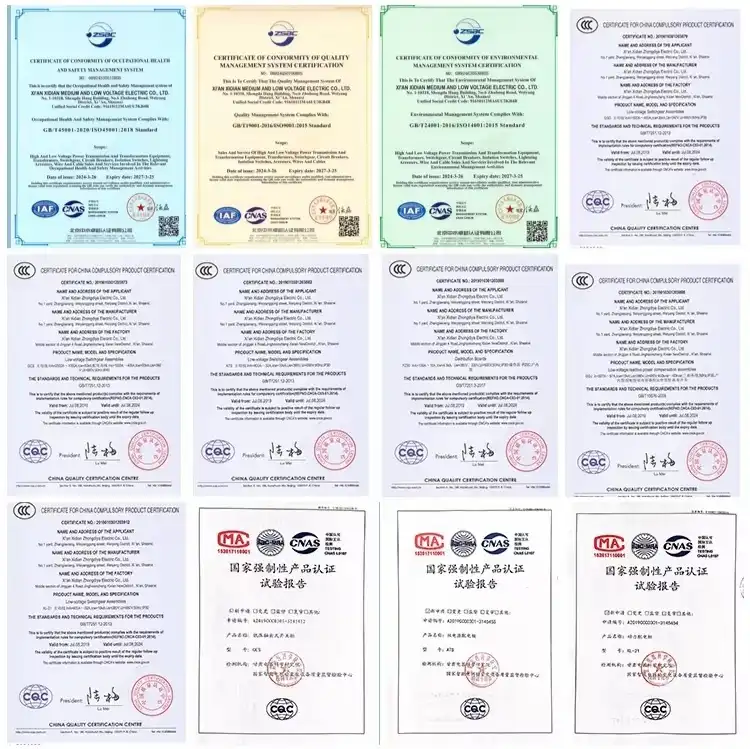
Ask suppliers for regular test records that cover the vacuum interrupter's integrity, its ability to work mechanically, its ability to control functions, and its insulation. You should also ask for proof of how the test equipment was set up. Type tests have shown that the design meets IEC 62271-100, and regular tests have shown that each unit is the same as the design. ISO certification has been given to the plants where Xi'an Xikai works. The ZN39 line uses automatic assembly and three stages of testing. When you order the same units every month, automated assembly cuts down on mistakes made by people.
Documentation Package for OEM and Project Buyers
A complete package for an indoor vacuum circuit breaker order includes a general arrangement drawing, primary and secondary wire diagrams, an installation guidebook, test results, quality certificates, a list of spare parts, packing materials, and terms and conditions for the guarantee. Labeling, packing, mounting, and interaction needs are often added by OEM buyers. Xi'an Xikai has manuals and CAD files in a lot of different languages. These will help the people working on your design check the truck's size and secondary wiring before the samples get to your shop.
Why Work with Xi'an Xikai
Some of the things that Xi'an Xikai Medium & Low Voltage Electric Co., Ltd. makes are high- and low-voltage switchgear, dry-type transformers, indoor and outdoor vacuum circuit breakers, instrument transformers, and substations that are already built. It comes in 34 different types and 7 groups. Its products are used in projects for rail, renewable energy, steel, petrochemicals, and State Grid systems. The group has more than 15 patents for switching technology and worked on the National 863 Program. For long-term OEM production, that range lets one provider take care of breakers and the other parts that go with them.

Conclusion
Inside an indoor vacuum circuit breaker, there are three parts that all work together: a sealed vacuum interrupter that clears the arc, a spring mechanism that gives the breaker power to open and close, and a maintenance plan that keeps both in good shape. Before anything else, the control scheme, voltage, normal current, breaking current, and endurance class are picked. Next, the plug's fit against the cabinet is checked to see if it can be taken off. When teams carefully install, test, and write down the integrity of springs, latches, contacts, and vacuum, they can find problems early on. To figure out what's wrong, trace the energy from the spring that is charged to the coil, latch, and contact as they move. Making sure the breaker works with the project is what the provider should do. They should look over the test records and all the papers.
FAQ
1. How often should I maintain an indoor vacuum circuit breaker?
First, do what the maker tells you to do. Then, if there is a lot of dust, moving, or heat, cut down on the time between rounds. A lot of teams also look for faults, which can happen at any time.
2. How do I check for vacuum loss?
You need to do a power-frequency withstand test across the open contacts. As soon as the test voltage breaks, the interrupter needs to be changed. One more thing to watch out for is rising touch resistance.
3. Why does my breaker refuse to close?
Start with the anti-pumping switch, the position of the latch, the control voltage at the close coil, and the state of the spring charge of the indoor vacuum circuit breaker.
4. Can the ZN39 work above 1000 m?
Based on the ZN39 data, the heights are up to 1000 m. Xi'an Xikai can tell you about tools that can be used up to 4,000 meters above sea level.
Request an Indoor Vacuum Circuit Breaker Quotation from Xi'an Xikai
Xi'an Xikai makes indoor vacuum circuit breakers. They have 12 kV gear that can work at up to 4,000 meters above sea level and plateau-type gear that can work at more than that. Send an email to serina@xaxd-electric.com, amber@xaxd-electric.com, or luna@xaxd-electric.com with your control voltage, voltage class, rating current, breaking current, car size, and breaking current. Our pros will write something and then check to see if it works with the other one.
References
1. IEC 62271-100: High-Voltage Switchgear and Controlgear – Part 100: Alternating-Current Circuit-Breakers, 2021
2. IEC 62271-1: High-Voltage Switchgear and Controlgear – Part 1: Common Specifications for Alternating Current Switchgear and Controlgear, 2017
3. IEEE C37.09: IEEE Standard Test Procedure for AC High-Voltage Circuit Breakers with Rated Maximum Voltage Above 1000 V, 2018
4. NFPA 70B: Standard for Electrical Equipment Maintenance, 2023
5. NFPA 70E: Standard for Electrical Safety in the Workplace, 2024
6. Slade, P. G., Electrical Contacts: Principles and Applications, CRC Press, 2014