
Inside a Dry-type Iron Core Reactor: From Silicon Steel to Coil Casting
2026-11-13 17:20:12
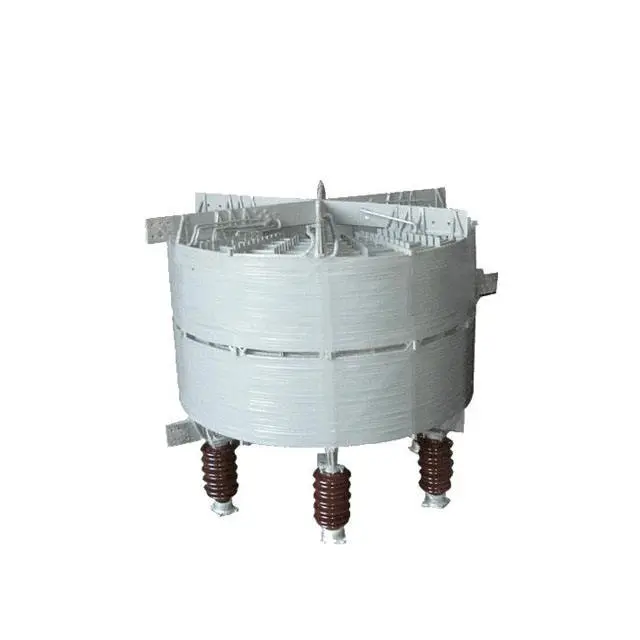
A dry-type iron core reactor is an inductive component that pairs laminated silicon steel with an epoxy-cast coil and relies on air, not oil, for cooling. The steel guides magnetic flux, segmented air gaps keep inductance steady, and the cast coil resists moisture, thermal cycling, and mechanical stress. Inside capacitor and filter cabinets, the reactor limits inrush current, absorbs harmonic currents, and protects the capacitors. At Xi'an Xikai, we walk through the full build below, from steel selection to resin casting. We also show how each step shapes inductance accuracy, temperature rise, noise, and shipping safety.
From Electrical Requirements to Dry-Type Iron Core Reactor Design
Start with the Application, Not the Catalogue Rating
A catalog rating talks about a standard part, but a real reactor starts with the system it protects. Before we start designing, we need to know the voltage, frequency (60 Hz in the US), rated current, capacitor size, harmonic spectrum, overload profile, environmental temperature, and way to cool the system. It also matters what the goal is. A filter reactor for a 5th-harmonic problem is not the same as one that only limits the inrush current of a capacitor. They are also not the same as a drive input reactor. When harmonics are taken into account, two cabinets with the same current rating may need different bases, air gaps, and conductors. Because of this, the design of every dry-type iron core reactor should be based on conditions that have been measured or agreed upon at the site.
Reactance, Impedance Percentage, and Tuning
X_L = 2πfL is the basic equation, which means that reactance goes up as frequency and inductance go up. The rating for the reactor in a filter branch is given as a fraction (p) of the reactance of the capacitor. f = f₁ / √p gives the branch tuning frequency. Here, f₁ is the line frequency and p is a decimal. The branch is tuned to about 227 Hz, which is the 3.8th harmonic, by a 7% reactor on a 60 Hz system. The bank doesn't boost that point because it's below the 5th harmonic. A 14% reactor tunes down, close to 160 Hz. The first design choice is p. The inductance tolerance tells us how closely the finished unit matches p.
Build a Specification Sheet Before You Request Quotes
A full guideline sheet cuts down on the time it takes to get a quote and keeps the design from having to be redone. Describe the voltage, frequency, rated current with harmonic current, inductance and tolerance (for example, ±3%), impedance percentage, insulation class, temperature rise limit, and noise target when you ask for a quote for a dry-type iron core reactor. Place the terminals, point the cable in the right direction, list the size, quantity, and delivery date of the enclosure. At this point, you should say if the project needs a small number or a voltage or frequency that isn't standard. That way, the design and production plan will take that into account from the start. They can also check the match with the help of a capacitor bank drawing.
Building a Dry-Type Iron Core Reactor, Step by Step
Step 1: Selecting and Processing Silicon Steel
Glued silicon steel is used to make the magnetic circuit of a dry-type iron core reactor. Eddy current loss is limited by thin, insulated laminations, and core heating is limited by low-hysteresis grades. CKSC reactors use silicon steel that has been annealed. It is used to cut, smooth, stack, clamp, and measure sheets. Burrs can short out nearby laminations, which increases losses, and stacking things too loosely can make them vibrate. There are divided air holes in the core that keep the inductance close to linear and spread the flux out evenly. If the gap size changes, so does the inductance, and the core may reach saturation faster when there is harmonic current. So, tight gap control saves the inductance range that buyers ask for.
Step 2: Designing and Winding the Coil
It is the coil that controls the reactor's electricity and heat. Copper or aluminum? Designers choose by looking at how well it conducts electricity, how heavy it is, how much it costs, how strong it is mechanically, and how it can be connected. Copper conducts electricity better and lets you make a smaller coil. Aluminum, on the other hand, is lighter and usually costs less. The degree of dielectric strength, the number of turns, and the distance between the layers determine the inductance. Harmonics make RMS current and local heating go up, so the conductor needs to be big enough to handle all four types of current, not just the fundamental. Finally, insulation is put between the turns, layers, and core to finish the design. Our method for winding and curing is fully automatic, which helps us make turns consistently.
Step 3: Vacuum Casting and Curing the Epoxy Coil
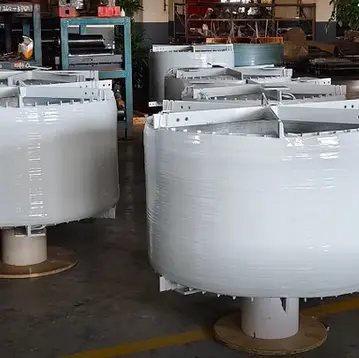
In a dry-type iron core reactor, the quality of the casting affects the type of insulation that is used. A flame-resistant epoxy material is vacuum-cast into CKSC coils, which are then strengthened with glass fiber and cured at a high temperature. At 160°C, our process lasts for 48 hours. By vacuuming out the air bubbles, the resin can fill the winding without any gaps. This is important because gaps can lead to partial discharge, hot spots, and insulation wearing out faster. The glass fiber helps the coil handle big jumps in current and cracking from hot to cold. The surface that was cast doesn't get damaged by moisture, dust, or chemicals, and the product data says that the partial discharge is less than 5 pC. During the final review, the size, position of the terminals, resistance, inductance, and any necessary dielectric tests are checked.
Step 4: Integrating the Coil with the Iron Core
The coil and core are put in place with spacers and supports after casting, and then they are fastened. This stage is in charge of noise and transportation safety. Magnetostriction, loose laminations, high flux density, weak clamping, or coil movement are all things that can cause hum. CKSC reactors use high-temperature adhesives to fill in segmented air holes. This keeps the noise level below 75 dB and lowers core shaking. Natural air (AN) or forced air (AF) can be used for cooling, depending on the current, the enclosure, the temperature outside, and the overload duty. When a dry-type iron core reactor is shipped over long distances, find out how the core and coil are held in place. When the core is moved, the air gaps change, which changes the inductance.
How a Dry-Type Iron Core Reactor Works and Where It Fits
Working Principle: Inrush, Flux, and Detuning
Rapid changes in current are fought by inductive reactance. When a bank of capacitors is turned on, the reactor slows the rise in current and stops inrush. A dry-type iron core reactor inside a cabinet also changes the total reactance of the capacitor branch. If you choose the right impedance, the branch won't be able to boost a nearby harmonic. This keeps the capacitors from getting too hot or overloaded. The iron core's air gaps divide flux into even segments, which lowers the loss of eddy current. This makes the voltage more stable, the grid less unstable, and the capacitors less stressed during switching, motor starting, and short overloads.
Dry-Type Iron Core Reactor Applications
For CNC machines and assembly lines to not lose power, factories pair these reactors with banks of capacitors. They are used by substations to keep the voltage steady in the face of harmonics and the intermittent output of renewable inverters. Businesses like malls and hospitals can replace old systems with new ones that have flame-resistant epoxy coils. This is what the National Electrical Code (NFPA 70) says should be done in installations in the United States. The idea behind drive input filtering is used in steel, cement, mining, and water treatment plants. Each use of a dry-type iron core reactor is related to a different electrical goal, such as lowering distortion, protecting capacitors, limiting inrush current, or making the power quality better.
Dry-Type Iron Core Reactor vs. Air Core and Oil-Immersed Designs
There is a lot of current duty in air core reactors because they are linear and don't saturate. Also, they need space and make a lot of stray magnetic fields, so installers usually put them somewhere open. Reactors that are submerged in oil keep high-power outdoor installations cool, but the oil makes maintenance, fire, and leakage risks higher. The flux in a dry-type iron core reactor stays in the core, which means it can fit inside metal cabinets and rooms. It gets rid of the risk of oil and has a higher inductance-to-volume ratio than systems that use air cores. Its downside is saturation, which is why you need to be careful with air-gap design and current rating.
CKSC Dry-Type Iron Core Series Reactor: Product Features
Harmonic Filtering for Rectifiers, Converters, and Drives
Harmonics are added to the grid by rectifiers, converters, and frequency converters. High-order harmonics can damage the main transformer and other things in the circuit. The CKSC series reactor is linked to filter capacitors in both high-voltage and low-voltage filter cabinets in a series fashion. It is set to a certain frequency and takes in harmonic currents of that order. On some sites, it can handle the third, fifth, seventh, eleventh, thirteenth, and higher orders. The system power factor is improved by the same series link, so one branch takes care of both reactive correction and harmonic absorption.
Noise, Temperature Rise, and Energy Performance
Here are the three things that cabinet builders care about the most. Because it has segmented air gaps, the design keeps noise below 75 dB. The low-temperature-rise design keeps the temperature below 95°C, which keeps energy and heat inside the cage from being lost. According to our product data, core losses are 30% lower than in regular models. This lowers the cost of operation while keeping the voltage steady. Class F materials are used for coil insulation, and the partial discharge stays below 5 pC. As a whole, these numbers answer the questions that engineers first have about noise, temperature rise, and loss.
Customization Options for Your Cabinet Layout
Because each project needs its own cabinet and power, the CKSC line is made up of separate parts. You can choose between AN or AF cooling, voltage ratings up to 110 kV, and sizes that fit your layout. There are small models for places that are tight on room, high-temperature models for desert areas, and retrofit units for infrastructure that is getting old. Early on, let us know what you can't do, such as non-standard voltage or frequency, input direction, or amount, and our engineers will let you know what the design can handle. In our full line of products, plateau-type equipment can work at elevations of up to 4,000 meters, so let us know what your site's elevation is.
Selection, Compliance, and Quality Checks
Key Parameters and Compliance for a Dry-Type Iron Core Reactor
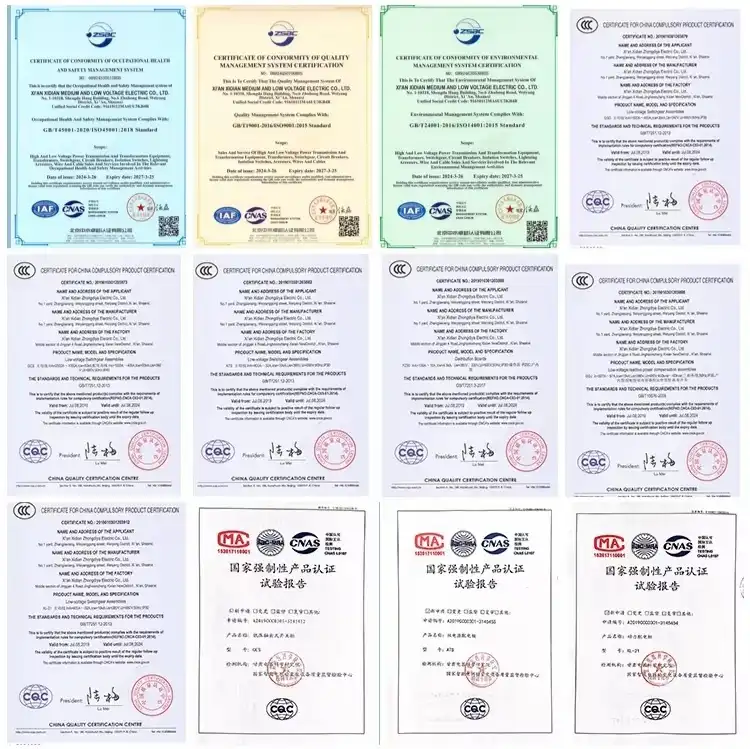
Some important parameters are the rated voltage, current, frequency, impedance, noise, short-circuit withstand, temperature rise, insulation class, and clearances. The rated current needs to take duty cycle and harmonic loading into account. IEC 60085 says that Class F insulation is equal to 155°C, and IEC 60076-6 talks about reactors. In the US, IEEE 519 sets the harmonic limits at the point of shared connection, and NFPA 70 controls how things are put together. If the job calls for it, UL or CSA marking may also be needed. Talk to your project engineer and the local inspector to make sure you know the right standards. There isn't just one that works for all voltage levels and destinations.
Quality Verification from Incoming Steel to Shipment
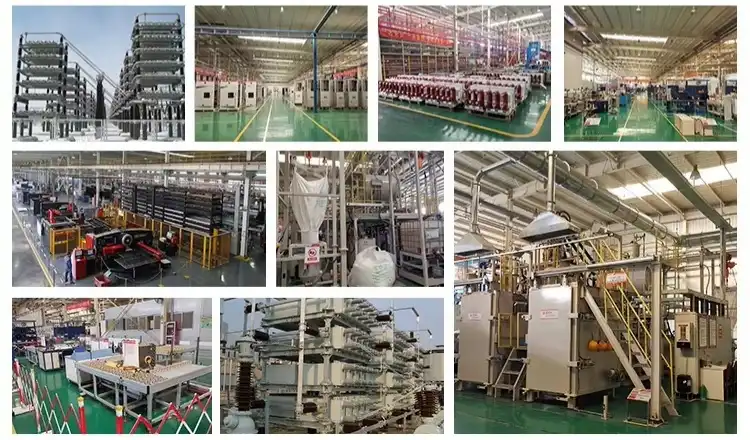
A good dry-type iron core reactor maker should be in charge at every step. Checks that come in cover wires, insulation, glue, silicon steel, and more. Core dimensions, air gaps, winding resistance, turn count, and casting quality are all checked while the process is going on. Inductance, DC resistance, insulation resistance, dielectric withstand, temperature rise, noise, and partial discharge are all part of the final tests. Our CKSC reactors are inspected in 12 steps, which include tests for impulse and temperature rise. It is important to ask for records that connect test results to batch and serial numbers. Our work includes more than 30 patents in noise reduction and thermal management, more than 500 sites in 20 countries, and help for setting up and fixing problems 24 hours a day, seven days a week.
Common Mistakes and How to Compare Quotes
A common mistake is picking a unit based only on its rated current. The incorrect impedance can make harmonics stronger, overload capacitors, and make power factor correction less effective. Some buyers don't pay attention to harmonic heating or think that dry-type equipment doesn't need any upkeep. In real life, dust can get in the way of cooling tubes, and the link torque should be checked once a year. Others wait until commissioning, when changes are most expensive, to make changes to things like ventilation, clearances, grounding, and cable routing. When comparing quotes, don't just look at the unit price. You should also look at the total value, which includes the test scope, documentation, packaging, lead time, warranty, and support.
Conclusion
When materials, design, and system matching are all right, a dry-type iron core reactor works well. The inductance, losses, and noise are set by silicon steel and managed air gaps. Choose the right conductor and winding geometry to set the heat and impedance. The insulation is kept safe from water, changing temperatures, and mechanical stress by vacuum-cast epoxy with glass fiber. Making sure the core and coil are securely attached keeps noise low and stops movement while in transit. In capacitor and filter cabinets, the reactor controls the inrush current and soaks up harmonics at its tuned frequency. The field results are determined by the correct impedance and current rating, which includes the harmonic load. Unlike air core and oil-immersed designs, it can be installed in a small space and without oil. It's not just the price that matters when choosing a unit; application data, tested and proven performance, and meeting project standards are also very important.
FAQ
1. What Is the Difference Between a Dry-Type Iron Core Reactor and an Air Core Reactor?
An iron core unit keeps flux inside a silicon steel core. This makes it small enough to fit inside cabinets, but the air gaps in its core must keep it from becoming saturated. A linear air core unit needs room to move because it has a large stray field. This is why it usually sits in open space.
2. How Do I Choose the Impedance Percentage?
Start with the harmonic spectrum and the value of the capacitor. When tuned to 7%, a 60 Hz branch is tuned to 227 Hz, which is below the 5th harmonic. When tuned to 14%, the branch is tuned to 160 Hz. The final choice will depend on the measured harmonics of the site, so send your data.
3. What Do You Need for a Quotation?
Send the capacitor ratings, cooling method, size and terminal needs, quantity, delivery date, voltage, frequency, current, inductance and tolerance, impedance, harmonic data, and data on inductance and tolerance. We'll let you know about the wait time after we look over these data technically.
Request a Dry-Type Iron Core Reactor Quotation from Xi'an Xikai
Xi'an Xikai makes dry-type iron core reactors and has seven product categories. They also make plateau-type equipment for heights of up to 4,000 meters. They can look at your cabinet data and suggest a CKSC configuration. Type, amount, harmonic data, voltage, and current should be sent to serina@xaxd-electric.com, amber@xaxd-electric.com, or luna@xaxd-electric.com. To find out more, go to xaxd-electric.com.
References
1. IEC 60076-6: Power Transformers – Part 6: Reactors, 2007.
2. IEEE Std 519: IEEE Standard for Harmonic Control in Electric Power Systems, 2022.
3. IEEE Std C57.16: Requirements, Terminology, and Test Code for Dry-Type Air-Core Series-Connected Reactors, 2011.
4. NFPA 70: National Electrical Code, 2023.
5. IEC 60085: Electrical Insulation – Thermal Evaluation and Designation, 2007.
6. Transformer Engineering: Design, Technology, and Diagnostics (CRC Press), 2012.