
Lightning Arrester for Transformer Protection: Placement Matters
2026-11-09 17:21:42
Placement has a major influence on how well a lightning arrester protects a transformer. Install the lightning arrester as close as practical to the transformer high-voltage bushings. Use short, straight phase and ground leads, and connect the unit to a low-resistance grounding system. A lightning arrester does not stop lightning itself. Instead, it diverts lightning impulses and switching overvoltages to ground so that the transformer insulation is exposed to a lower voltage. Long leads add inductive voltage and can weaken that protection. In this article, I explain how the device works, where to mount it, how to select it, and what to check before you buy.
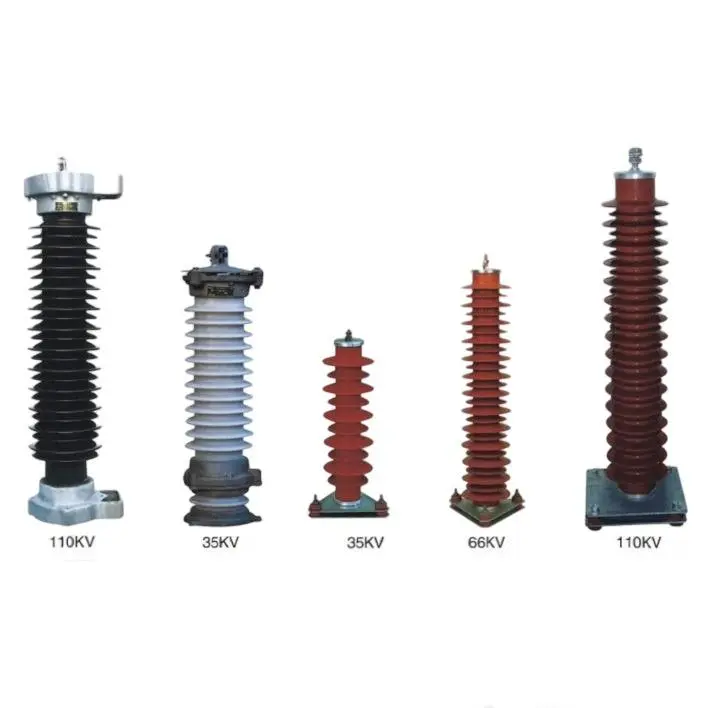
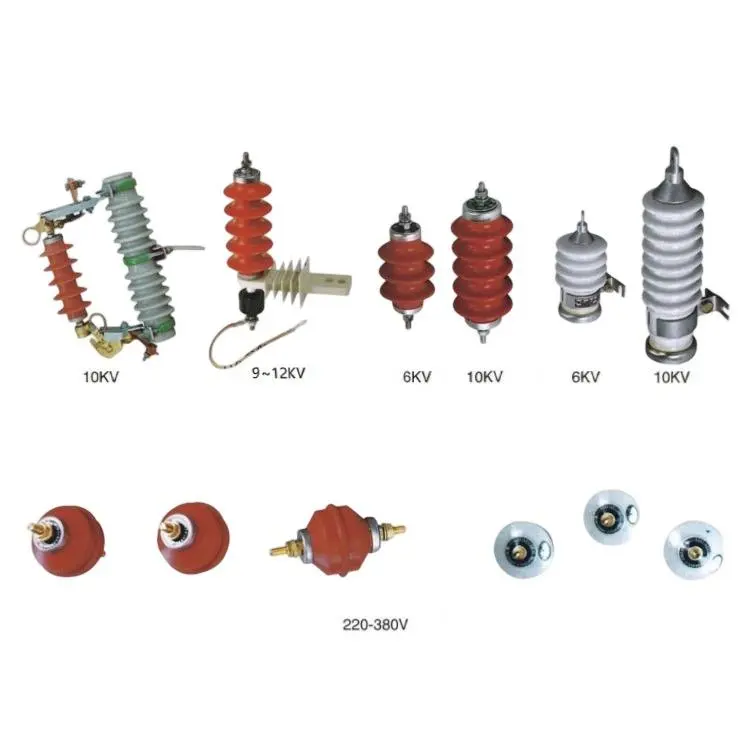
How a Lightning Arrester Works Near a Transformer
Zinc Oxide Blocks Switch From Insulator to Conductor
Modern metal-oxide lightning arresters employ blocks of zinc oxide with a very nonlinear voltage-current characteristic. At normal system voltage the blocks remain very high resistive and allow only modest leakage currents to pass. When a lightning or switching impulse comes their resistance reduces fast. So that the lightning arrester may deflect the impulse current to the earth. When the transitory is gone the blocks revert to their high-resistance condition. In this design, there are no series gaps, so no continuous follow current of the same kind as generated by gapped arresters is produced. IEC 60099-4 covers metal-oxide surge arresters without gaps for AC systems and IEEE C62.11 specifies standards for suitable devices for the US market.
Residual Voltage and Insulation Coordination
The voltage that appears across the lightning arrester while it is conducting surge current is called its residual voltage. The transformer insulation system must withstand this voltage with an appropriate coordination margin. Engineers compare the arrester's residual voltage with the transformer's basic insulation level (BIL), also referred to as its lightning impulse withstand level. IEC 60071-2 provides guidance on insulation coordination and the application of protective devices. A lower residual voltage generally provides more protection margin, but the arrester must also have adequate energy-handling capability and thermal stability. An arrester with a very low protection level but insufficient energy capability may fail under repeated or severe surge duty. For this reason, both protection level and energy capability should be reviewed together on the datasheet.
Why Lead Length and Grounding Change the Result
The voltage arriving to the transformer is affected by the residual voltage of the lightning arrester as well as the inductance of the connected leads. Every conductor contributes inductance . During a quick impulse , this inductive voltage might be considerable . Therefore a lengthy phase lead or ground lead increases the voltage stress felt by the transformer bushing and insulation. The resultant voltage might grow due to high resistance grounding connections. IEEE C62.22 offers application recommendations for metal-oxide surge arresters, emphasising correct placement in the vicinity of the equipment to be protected. An arrester, when properly fitted with short direct connections, will provide greater protection than a higher rated equipment with needlessly lengthy leads.
Where to Install a Lightning Arrester on a Transformer
Mount Close to the High-Voltage Bushings
Preferred position on line side is as near as practicable to the transformer high voltage bushings. The lightning arrester for pole-mounted transformers is normally situated on the same crossarm or bracket close to the bushing. In a substation it is often installed near the transformer and bonded directly to the grounding system. Less lead inductance means less voltage increase since the electrical route is shorter from the phase conductor to the lightning arrester to the transformer bushing to ground. When assessing a layout, don’t only measure the physical distance between arrester and bushing, but the whole conductor route from phase connection through the arrester to ground.
Cable Transitions, Low-Voltage Side, and Neutral
If the transformers are linked with the help of cables, this must be considered. Where an overhead line connects to an underground cable, reflected impulses may occur as a consequence of travelling waves and impedance changes, in which case a lightning arrester may be needed at the cable end. In some situations, additional arresters may also be suitable on the low voltage side or neutral, depending on the transformer design and grounding configuration. There is no general guideline for installation for dry-type transformers, indoor transformers, autotransformers, and mixed overhead-cable networks. Each application should be verified against the utility specification and the insulation coordination study before finalising the bill of materials.
Layout Rules for Leads, Clearances, and Grounding
There are several basic layout rules that should be followed in a properly designed installation. Avoid loops and sharp bends in the phase connections. Keep both phase and grounding leads as short and straight as practical. Connect the lightning arrester to the transformer tank or an appropriate grounding point, and connect that grounding point to the station grounding system. Maintain the required clearances from grounded structures and adjacent phases. Because impulse current can induce voltage in nearby conductors, keep the arrester grounding conductor away from sensitive control and measurement wiring where practical. Make sure that all joints are clean and tight and that each conductor is correctly sized for the application. Corrosion or a loose connection can increase resistance and reduce the effectiveness of the protection path.
Choosing the Right Lightning Arrester Type and Rating
Metal Oxide, Silicon Carbide, and Duty Class
Most recent systems are of the metal-oxide lightning arrester type which offer a quick response, low leakage current at normal operating voltage and do not need the same follow-current interruption setup as the earlier gapped types. Some old installations are still using silicon-carbide arresters with gaps. These units should be evaluated before any decision to retain or replace them. Distribution-class arresters may be used on transformers located on poles or pads whereas station-class arresters are often employed for bigger substation installations. Housing material also matters. Polymer housings are lighter and more resistant to handling damage, whereas porcelain housings are still used in certain utility applications. The chosen arrester should be suitable for the system voltage, exposure, equipment significance and the desired duty class.
Rated Voltage, MCOV/Uc, and BIL
Don’t just begin with nominal system voltage. First verify the maximum operational voltage of the system, frequency, neutral grounding technique and predicted momentary overvoltages. Then choose the suitable rated voltage and maximum continuous operating voltage (MCOV, or Uc in IEC nomenclature). The parameters should be such that the arrester may be left permanently linked to the system without undue thermal stress. Next, compare the lightning impulse withstand level or BIL of the transformer with the arrester’s discharge current and residual voltage. Recommendations on arrester selection and application are given in IEC 60099-5. This rating might be altered if the grounding configuration is altered. For example, if a system is strongly grounded and then changed to an ungrounded system.
Creepage Distance, Altitude, and Moisture Sealing
Environmental variables also have a role in the ultimate arrester selection. IEC 60099-4 prescribes service parameters for standard installation situations. Higher altitude installations need particular attention to exterior insulation and clearances. Contamination may degrade the efficacy of exterior insulation. Coastal, industrial and dusty regions may necessitate longer creepage distances. IEC 60815-1 gives guidelines for the choosing of insulation for pollution. Humidity, sea freight and extended outside exposure add more strain on housing seals too. Its plateau-type equipment may be used at an altitude of 4,000 meters, Xi'an Xikai said. Check the real elevation, pollution level, temperature range and installation environment before picking lightning arrester for a certain location.
Installation Mistakes, Testing, and Maintenance
Mistakes That Weaken Protection
Many protection difficulties stem from the installation itself and not from the arrester. Common problems include lengthy phase or ground lines, high resistance grounding connections, conductors not sized properly, poor bonding and inappropriate clearances. The selection mistakes may also be caused by the MCOV is too low, the rated voltage is not compatible with the grounding configuration or the creepage distance not appropriate for the pollution level. Moisture infiltration, altitude, UV exposure and poor mechanical support should also be addressed. Most of these problems may be found in a careful layout study prior to installation and are far more difficult to address after commissioning.
A Lightning Arrester Is Not a Lightning Rod
A lightning protection system and a surge arrester perform different functions. When lightning strikes a building or structure, an air terminal, commonly called a lightning rod, intercepts the strike and carries the current toward ground through a dedicated conductor. A lightning arrester protects electrical equipment against transient overvoltages traveling along the power system. Both systems can be used together and should be connected to a properly designed grounding system. A substation may have an effective external lightning protection system while still requiring a lightning arrester at the transformer to limit conducted surge voltage at the equipment terminals.
Inspection and Condition Monitoring
Regular examination may reveal degradation before a breakdown occurs. Inspect housing for corrosion, cracks, tracks, contamination and other physical deterioration. Then check the nameplate, grounding continuity and terminal connections. Additional monitoring might include leakage current measurement, resistive current measurement, insulation checks and thermal imaging depending on the manufacturer’s recommendations and the relevance of the installation. Condition monitoring. Fixed date for replacement is not necessarily the best option. Data from trends might be more informative. Look for indications of increased leakage current, anomalous hot areas, flashover markings or evidence of pressure-relief operation. The communication type monitor JCQ-3 (YC)10/800D made by Xi'an Xikai is able to monitor the discharge counts ranging from 0 to 9999 and send the data over RS485 with Modbus-RTU for remote monitoring.
Procurement Guide: Xi'an Xikai Lightning Arrester Options
What to Include in Your RFQ
A well-defined RFQ may assist to speed up the quote process and lower the chances of getting an inappropriate model. Give the system voltage, transformer rating, transformer BIL, grounding configuration, nominal discharge current, MCOV or Uc, and needed energy capability. Site elevation, pollution level, kind of house, mounting configuration, terminal needs, etc. For projects across nations, power-system and environmental circumstances might vary greatly. Thus, a distinct technical data sheet for each project is a way to keep the information consistent. Don’t just compare unit prices. Look at test findings, service life information, accessories needed, transportation needs, warranty terms, and other project expenditures. Ask for test results of the particular model showing conformity with the relevant standards of IEC 60099-4.
Polymer Lightning Arrester Features
Here are the core features Xi'an Xikai lists for its polymer-housed lightning arrester:
- Sealed polymer housing: Xi'an Xikai states that it uses a three-stage sealing structure to reduce the risk of moisture ingress, which is particularly relevant in humid environments and during long-distance sea transportation. The polymer housing also supports heat dissipation and helps reduce thermal stress. Because moisture ingress can contribute to arrester deterioration, sealing performance should be checked during product evaluation.
- Low leakage and long life: Xi'an Xikai states that its products have a service life of more than 25 years and low leakage current under normal operating conditions. The company also states that its high-voltage testing covers impulse levels up to 650 kV and that high-purity zinc oxide materials are subject to traceability controls.
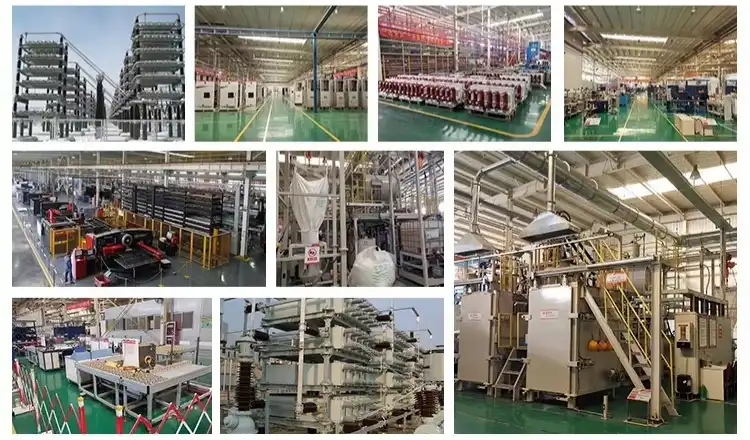
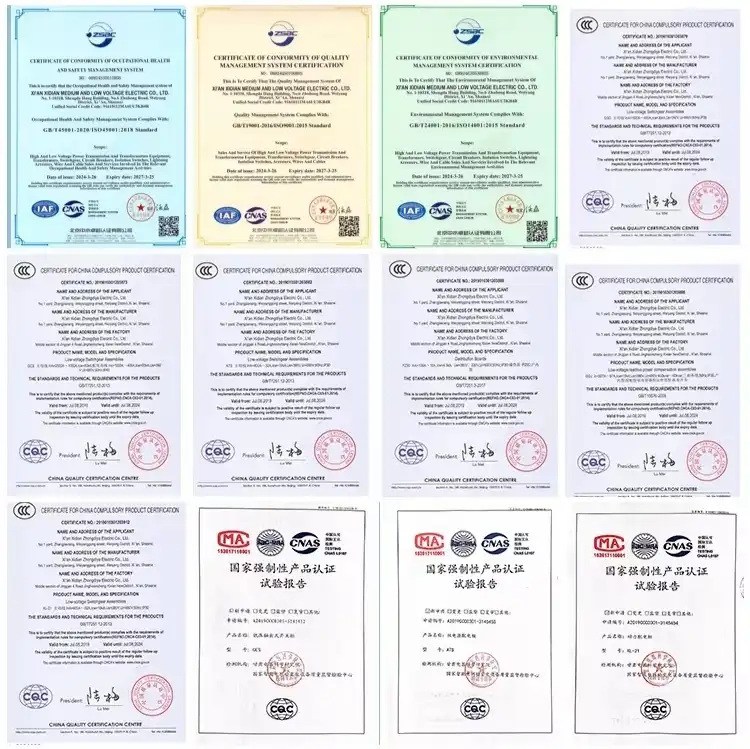
- Quality systems and options: The plant is certified to ISO 9001, ISO 14001, and ISO 45001, and Xi'an Xikai states that it holds more than 20 patents related to polymer-housed metal-oxide arrester technology. Optional IoT monitoring functions can be added to selected models to monitor discharge events and equipment condition.
Full-Insulated Option for Compact Switchgear
Xi'an Xikai also offers a fully insulated, composite-housing metal-oxide lightning arrester for compact equipment. In this configuration, the high-voltage cable exits from the top and is integrated with the arrester core to form a compact assembly. The sealed construction helps protect the internal components from environmental exposure and can reduce the required installation space between phases and between phases and ground. The cable outlet can also contribute to the required creepage distance, which may be useful in polluted or high-altitude environments. For large orders, Xi'an Xikai states a lead time of 6–8 weeks and offers 24/7 technical support and on-site installation assistance. When submitting an inquiry, provide a valid contact person and contact number so the technical team can confirm project details and arrange timely follow-up.
Conclusion
The amount of overvoltage that reaches a transformer depends heavily on the installation location and connection layout. A metal-oxide lightning arrester diverts lightning and switching impulses toward ground, reducing the voltage stress on the transformer insulation. Its effectiveness depends on residual voltage, lead length, grounding quality, and overall insulation coordination. Installing the arrester close to the HV bushings and using short, straight phase and grounding connections helps minimize additional inductive voltage.
The selection should consider MCOV or Uc, rated voltage, transformer BIL, arrester duty class, altitude, pollution level, and creepage distance. Many failures result from installation problems such as long leads, loose connections, inadequate grounding, or incorrect clearances. A lightning arrester also cannot replace an external lightning protection system or a properly designed grounding system. Regular inspection and condition trending can help identify aging before it causes an outage. For procurement, a complete RFQ and model-specific test documentation allow buyers to compare total project cost and technical suitability rather than relying on unit price alone.
FAQ
1. Where should I install a lightning arrester on a transformer?
Install it on the line side as close as practical to the transformer's HV bushing. Use short, straight phase and grounding connections, and connect the arrester directly to a properly designed grounding system.
2. What is the difference between MCOV and rated voltage?
MCOV, or Uc, is the maximum continuous operating voltage that the arrester is designed to withstand continuously. Rated voltage is a separate arrester rating used in conjunction with specified temporary-overvoltage and duty-test requirements. Both values must be selected according to the system voltage, grounding method, and expected operating conditions.
3. Can a lightning arrester replace a lightning rod?
No. A lightning rod or air-terminal system intercepts direct lightning strikes on structures, while a lightning arrester limits transient overvoltages on electrical equipment. The two systems can work together as part of a properly designed grounding and lightning-protection system.
4. When should I replace a lightning arrester?
Replacement should be based on its condition and application rather than on a single fixed date. Increasing leakage current, abnormal hot spots, flashover marks, housing damage, or evidence of pressure-relief operation can indicate deterioration and should trigger further inspection or replacement assessment.
Request a Lightning Arrester Recommendation From Xi'an Xikai
Hi, Xi'an Xikai. Please send me your system voltage, transformer rating, BIL, grounding method, site altitude, required quantity, and contact number. I will use this information to help identify a lightning arrester that matches your project requirements. Xi'an Xikai manufactures lightning arresters and provides product datasheets, technical support, and export-order assistance. Please contact serina@xaxd-electric.com, amber@xaxd-electric.com, or luna@xaxd-electric.com with your project details. A technical representative can then review the requirements and recommend a suitable configuration. To learn more about Xi'an Xikai's products, visit xaxd-electric.com.
References
1. IEC 60099-4: Surge Arresters – Metal-Oxide Surge Arresters Without Gaps for A.C. Systems, 2014
2. IEC 60099-5: Surge Arresters – Selection and Application Recommendations, 2018
3. IEEE C62.11: Standard for Metal-Oxide Surge Arresters for AC Power Circuits (>1 kV), 2020
4. IEEE C62.22: Guide for the Application of Metal-Oxide Surge Arresters for Alternating-Current Systems, 2009
5. IEC 60071-2: Insulation Co-ordination – Application Guide, 2018
6. IEC 60815-1: Selection and Dimensioning of High-Voltage Insulators Intended for Use in Polluted Conditions – Definitions, Information and General Principles, 2008