
Indoor Vacuum Circuit Breaker: What Buyers Need to Know
2026-11-09 17:21:32
An indoor vacuum circuit breaker is a medium-voltage switching device that interrupts fault current inside a sealed vacuum interrupter, with no oil or SF₆ gas. Before you order, check five points: rated voltage and current, short-circuit breaking capacity, insulation level, service conditions, and fit with your switchgear, such as a KYN28 cabinet. Also compare test documents, interrupter source, and after-sales support, not only the quotation. At Xi'an Xikai, we wrote this guide for panel builders, engineers, and purchasing teams who need to select a vacuum circuit breaker with confidence.
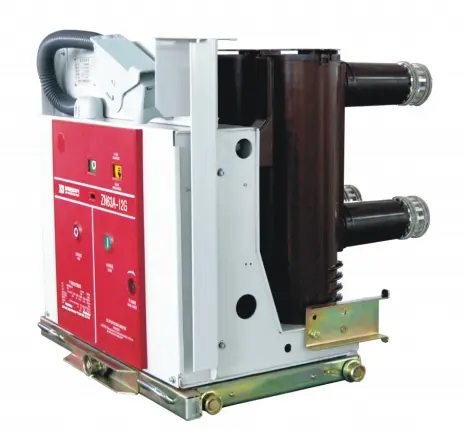
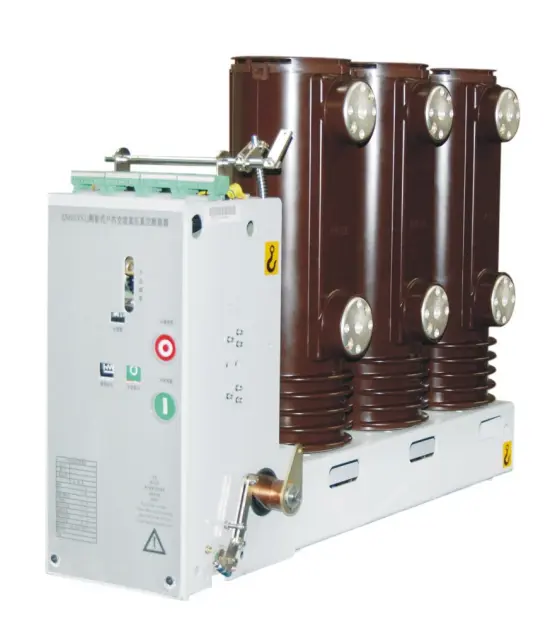
Vacuum Circuit Breaker Basics for Medium-Voltage Switchgear
What Is an Indoor Vacuum Circuit Breaker?
Medium-voltage lines are shut off and kept safe by an indoor vacuum circuit breaker (VCB). If a protection relay sends a trip signal, it stops the flow of fault current. It then opens the circuit to interrupt the fault and can close again to carry load current. The interrupter and operating mechanism are housed within an insulated assembly designed for indoor switchgear. Shops, office buildings, train systems, substations, and building repair projects all use it. Most ratings are between 3.6 kV and 33 kV, and continuous currents can be 630 A to 3,150 A or more. The vacuum interrupter, which doesn't use oil or SF₆ gas, extinguishes the arc. This means the machine doesn't have to deal with oil or gas leaks. First look at the temperature, current, breaking capacity, insulation level, and fitting conditions of each part, then move on to the next one.
Construction and Operating Principle
Vacuum circuit breakers all perform essentially the same function. Moving and fixed contacts, a working mechanism, a spring that stores energy, coils, insulation parts, connections, auxiliary contacts, and safety interlocks are all in this set. When everything is in order, power flows through the closed contacts. The moving contact separates from the fixed contact and an arc forms inside the interrupter when a relay or control circuit sends a trip signal. The arc is extinguished as the metal vapor condenses and the current approaches zero. The insulating strength recovers rapidly after the current stops. When the mechanism is motor-charged and spring-operated, it's just as important to know what's going on with the interrupter as it is with the mechanism.
Fixed and Withdrawable Designs
Since fixed breakers are built into the cabinet, they can cost less and take up less space. Withdrawable designs are mounted on a truck that can be moved between test, service, and other positions. The crew won't have to open the whole panel to remove the breaker this way. To buy KYN28 switchgear, most people choose the handcart type, and being able to change them is important. When panel builders buy a lot of cabinets, they need to make sure that the truck sizes, main contact arms, secondary plugs, and locking positions all match what is shown on the cabinet plans. A small difference can make it take longer to put together in your plant and lead to problems in the field later on. Before you place a large order, make sure you get the interface drawing and a sample from your supplier if the specs are changing. This way, you can be sure that it fits well.
Benefits, Limits, and Comparisons of a Vacuum Circuit Breaker
Key Benefits
A vacuum circuit breaker cuts off the power when there is a fault. It is compact, keeps working well for a long time, and doesn't need much upkeep. The contacts are enclosed in a sealed vacuum interrupter. Also, you don't need to check or replenish insulating oil or SF₆ gas. The units can also be used with modern automation and protection systems. There are fewer concerns about fires, leaks, and gas handling in the interruption chamber because it does not contain oil or SF₆. Standardized designs can also simplify testing, spare-parts management, and maintenance at a switchgear plant that makes a lot of units. This makes the equipment easier to manufacture and maintain in different operating environments.
Limitations to Plan For
People who want to buy a vacuum circuit breaker should know how much power it can handle. It's possible for overvoltages to occur when switching motors, transformers, or capacitor banks. Since these conditions can occur, you might need an overvoltage protection device such as an RC damper circuit or a metal-oxide arrester. There should always be suitable spare interrupters and trained technical support available for as long as the switchgear is being used. When you buy something, don't just look at the price. You should also think about how much it will cost you to buy, set up, test, replace parts, maintain, and service when it breaks down. Read the scope line by line if the price is low. The interrupter might have a different specification or the paperwork might not be as clear.
Comparison with Air, Oil, and SF₆ Breakers
Vacuum circuit breakers are compact, interrupt quickly, and generally require less maintenance than air, oil, and SF₆ circuit breakers used in indoor switchgear. You don't have to check insulating oil or manage SF₆ gas. Plus, they usually take up less room than air circuit breakers. A vacuum circuit breaker can be a practical alternative to SF₆ technology because it avoids the need for SF₆ gas in the interrupter. Because of this, vacuum technology has often taken the place of oil circuit breakers in medium-voltage applications. But you should still look at the voltage range, switching duty, breaking capacity, environment, cost over lifetime, and laws in your area. Because it needs to be protected from the weather, a breaker that works well inside might not always work well outside.
How to Choose the Right Indoor Vacuum Circuit Breaker
Start with Application and Ratings
First you need to explain the work. This may be a commercial load, a motor, an engine, a train, renewable energy or utility distribution. Then verify system voltage, frequency, rated current, short-time withstand current, peak withstand current, probable short-circuit current and maximum load current. Typical short circuit breaking capabilities for 12 kV switchgear are 25 kA and 31.5 kA although the amount necessary should be established by the system fault assessment. Choose a rated current such as 630 A to 2000 A according to the maximum load and future capacity needs. Higher current ratings can handle bigger loads but the whole switchgear design has to additionally consider thermal performance. Use these figures to size one and you won't have to worry about spending too much money on it or under-rating it.
Check Service Conditions and Standards
The parts selection is in accordance with the appropriate standard considering pollution, humidity, temperature, altitude and other service circumstances. IEC 62271-1 specifies the usual service conditions for high voltage switchgear and controlgear. Normal circumstances include for example an average relative humidity of up to 95% in 24 hours and an installation height up to 1000 m above sea level. Air is a good insulator , but the higher you go , the less air there is to insulate . Installations at higher elevations may need extra insulation measures or derating . Rules are vital too. In the US work is generally done under ANSI/IEEE C37.04 and C37.20.2. Many additional nations utilise IEC 62271-100 for circuit breakers. Look at the model you wish to purchase in type tests and regular testing. Also verify with your local regulations and determine what standards apply to your project.
Follow a Structured Selection Process
Technical ambiguity may be decreased by taking a series of measures. First, decide who will be doing the assignment. Then you’ll need to develop a compliance matrix including measurements, hardware, certifications, delivery, documentation, grades and standards. Based on technical capabilities, ability to make adjustments, export experience and after sales support develop a short list of manufacturers. Before starting production, make sure that the test plans, wiring diagrams, general arrangement drawings and interface measurements are all right. Use regular test findings, plant acceptance testing, and inspections before shipping to make sure the criteria are followed. Finally, budget for starting, replacement parts, maintenance and warranty coverage. It is not correct to compare any vacuum circuit breaker offer based just on unit pricing. The drawing and configuration must be examined jointly to identify any adjustments necessary prior to manufacturing.
ZN63-VS1 Indoor Vacuum Circuit Breaker Overview
Ratings and Mechanism
Inside, the ZN63-VS1 is a 50 Hz vacuum circuit breaker. In other words, one station can handle applications such as feeders, incomers, and bus-ties. It can handle 630 A, 1250 A, 1600 A, 2000 A, 2500 A, and 3150 A. The data sheet for this item says that it can break up to 40 kA. In every quote, make sure to include the exact rated voltage and breaking current. The vacuum interrupter can be used with a system that uses a permanent-magnet mechanism or one that makes use of springs. Its small size means that it can fit into control panels that are already in use, like the KYN28 series. Still, a drawing should be used to make sure that handcarts can be switched out before big orders come in.
Service Conditions
There is no reason why the ZN63-VS1 vacuum circuit breaker shouldn't work from -15 °C to +40 °C under its specified normal service conditions. The allowable humidity conditions include up to 90% relative humidity with a vapor pressure of ≤1.8 kPa and up to 95% relative humidity with a vapor pressure of ≤2.2 kPa, according to the applicable specifications. It can withstand seismic conditions up to MSK-8 and be installed at altitudes up to 1000 m. There shouldn't be a lot of dust, smoke, corrosive or flammable gases, vapors, or salt spray at the site. Since this is how things usually are inside, the unit works best in a switchroom that is clean and dry. Allow Xi'an Xikai to know right away if your job goes above 1000 m. For heights of up to 4,000 m, they can make plateau-style equipment.
Quality Assurance and Certifications
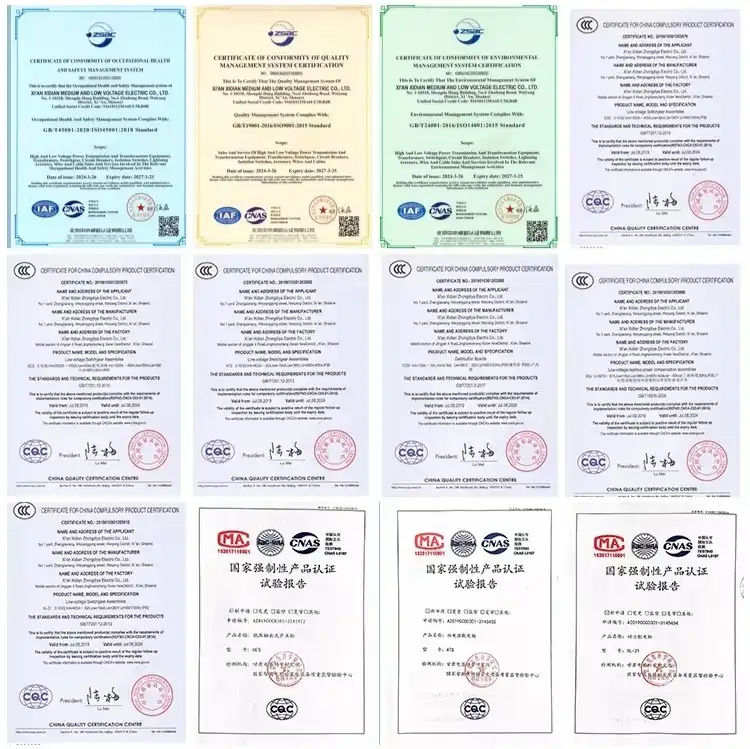
Xi'an Xikai is certified to ISO 9001, ISO 14001, ISO 45001, and 3C requirements for applicable products. The goods meet IEC standards and have test results from different labs. More than 12 quality checks are carried out on the parts between when they are made and when they are put together. It is possible to perform dielectric tests, temperature cycling tests, and vibration simulation tests as validation tests. Our R&D team has worked on national projects like China's 863 Program, and we have patents on a lot of the technologies we use in our major goods. Make it clear in the RFQ whether you want a local or a foreign vacuum interrupter. That way, the quote will be made to fit your needs. Each vacuum circuit breaker should have paperwork that matches the nameplate when it leaves the factory.
Where the ZN63-VS1 Fits
People can use it in hospitals, shopping malls, power plants, and other business buildings, as well as in green energy projects. It can be used indoors in any of the places listed above. It protects workplace equipment and feeders for assembly lines. It has safety interlocks that can be used to isolate faults in substations. Old breakers in business buildings can be swapped out for this during retrofits. Xi'an Xikai's equipment is also used by companies that work with petrochemicals, train transportation, metal and steel, energy and water conservation, and environmental protection. We can change how things are set up to meet OEM needs and make them fit in small spaces. Just send us your plans for the case.
Vacuum Circuit Breaker Procurement, Installation, and Maintenance
Write a Clear RFQ
If you provide a clear RFQ, someone can offer you a price quotation on a vacuum circuit breaker. You should know the coil size, rated voltage, current, frequency, short-circuit capacity, withstand ratings, pole arrangement, auxiliary connections, interlocks, communication interfaces, quantity, installation location, delivery timetable and if the configuration is fixed or withdrawable. When comparing pricing, don’t simply look at the unit price. See the test reports, accessories, packing, export papers, replacement parts, and technical assistance. Add the name of the interrupter you want for orders that come in frequently each month. For any new demands, ask for sample approval process. When all the promotions are for the same goods, it’s useful to know the costs.
Installation, Commissioning, and Maintenance
The best technique to set up and take care of a vacuum circuit breaker is a planned strategy. When it arrives glance at the name plate, the dimensions, the connections and the insulation portions to determine if any damage was done. The manufacturer states that commissioning normally includes verification of vacuum integrity, interlocks, safety tripping, mechanical function, opening and closing timing, and contact and insulation resistance. While the equipment is being serviced, check the seals, drive mechanism, shutters, trucks, wiring and lubrication points. The breaker stops the fault current while on fault duty. Separate records of motor charging activities, switching operations and fault interruptions are vital to retain. NFPA 70B, “Guidelines for Electrical Equipment Maintenance Programs. For major tasks there should always be proper spares on available, such as replacement contacts, gears, coils and interrupters.
Common Buyer Mistakes
Don’t only look at the price range or pick a breaker based just on the voltage. Also, don’t forget to check whether it will function with existing technology. Before you acquire this vacuum circuit breaker, you should know about its load capacity, fault level, insulation performance, operational duty, mounting dimensions, primary disconnects, control plugs, interlocks and truck interfaces. When changing a motor, transformer or capacitor you may require additional overvoltage protection. The other concern is the absence of adequate documentation. Please make sure that the tests, drawings, manuals, certifications and datasheets are all for the same configuration that was described. Before you buy, check the warranty, when replacement parts will be available, how to obtain assistance setting up the system and how to seek technical support.

Conclusion
As long as the door is closed and the equipment is installed under its specified indoor service conditions, an indoor vacuum circuit breaker can provide reliable medium-voltage switching without oil or SF₆ in the interrupter. It works well for medium-voltage switchgear that needs to be compact and easy to manage. One limitation is that switching motors, transformers, and capacitor banks can produce overvoltages, so appropriate protection may be required. The application should be the first thing that is defined in a good selection process. We should then review ratings, breaking current, service conditions, and standards. Also, test records and model specifications should be carefully reviewed. From 630 A to 3150 A at 50 Hz, the ZN63-VS1 can handle six different rated current levels. It can work inside as long as the air quality, temperature, humidity, altitude, and seismic level remain within the specified conditions. When there is a clear RFQ, matching documentation, and a fit check against the cabinet, it's safer to buy the right equipment. A low price alone won't get it done.
FAQ
1. What current ratings does the ZN63-VS1 offer?
At 50 Hz, it can handle rated currents of 630 A, 1250 A, 1600 A, 2000 A, 2500 A, and 3150 A. Check the specifications for each quoted configuration to make sure it has the required voltage and current ratings. Also, check that the selected rating will remain suitable for your cabinet and expected load as the system grows.
2. Can I use an indoor vacuum circuit breaker outdoors?
Not without confirming that the complete installation meets the required outdoor service conditions. If the unit is installed indoors, the switchroom needs to be clean and dry, with no heavy dust, corrosive gas, or salt spray. If you plan to use it outdoors, it needs to be installed in a suitable enclosure or protected arrangement designed for the environmental conditions. You can also use a breaker specifically made for outdoor service.
3. Does altitude change the selection?
Yes. The standard ZN63-VS1 configuration can work up to 1000 m above sea level under its specified conditions. For higher altitudes, talk to Xi'an Xikai about equipment designed for plateau applications that can be used at heights of up to 4,000 meters.
4. What documents should I request?
Find out how the routine tests and type tests were performed and request the relevant test reports. The other documents you should get include certificates, drawings, wiring diagrams, and operating instructions. The model, ratings, configuration, and accessories should be consistent across the quotation, nameplate, drawings, test documents, and final equipment.
Request a ZN63-VS1 Vacuum Circuit Breaker Quotation from Xi'an Xikai
Want to find a company that makes OEM switchgear and vacuum circuit breakers? It has ZN63-VS1 equipment for heights of up to 4,000 m and makes products that are ISO-certified. If you email your single-line diagram, specifications, quantity, and installation location to serina@xaxd-electric.com, amber@xaxd-electric.com, or luna@xaxd-electric.com, someone from our team will look it over. Find out more at xaxd-electric.com.
References
1. IEC 62271-100: High-voltage switchgear and controlgear – Part 100: Alternating-current circuit-breakers, 2021
2. IEC 62271-1: High-voltage switchgear and controlgear – Part 1: Common specifications for alternating current switchgear and controlgear, 2017
3. IEEE C37.04: IEEE Standard for Ratings and Requirements for AC High-Voltage Circuit Breakers with Rated Maximum Voltage Above 1000 V, 2018
4. IEEE C37.20.2: IEEE Standard for Metal-Clad Switchgear, 2015
5. NFPA 70B: Standard for Electrical Equipment Maintenance, 2023
6. The Vacuum Interrupter: Theory, Design, and Application (Paul G. Slade), CRC Press, 2008