
Why Is a Lightning Arrester Essential for Substations?
2026-11-09 17:21:21
A lightning arrester is essential for substations because it limits transient overvoltage before that voltage damages transformers, switchgear, and cables. It does not stop a lightning strike. Instead, it stays highly resistive under normal voltage, becomes conductive during a lightning or switching event, and sends the impulse current safely to the grounding system. Without this protection, insulation can break down, equipment can fail, and an outage can last for days. This guide for engineers, exporters, and procurement teams who want to understand how a lightning arrester works, where to install it, and how to buy the right model.
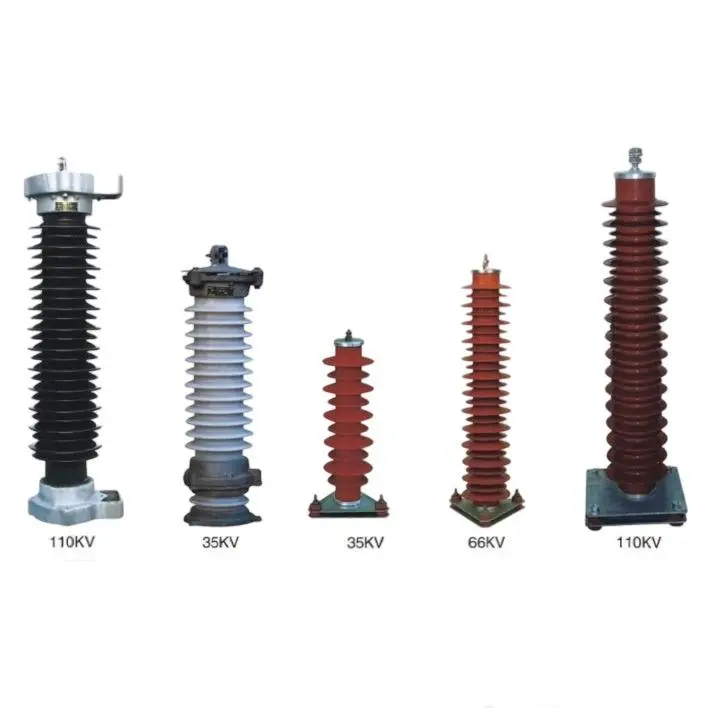
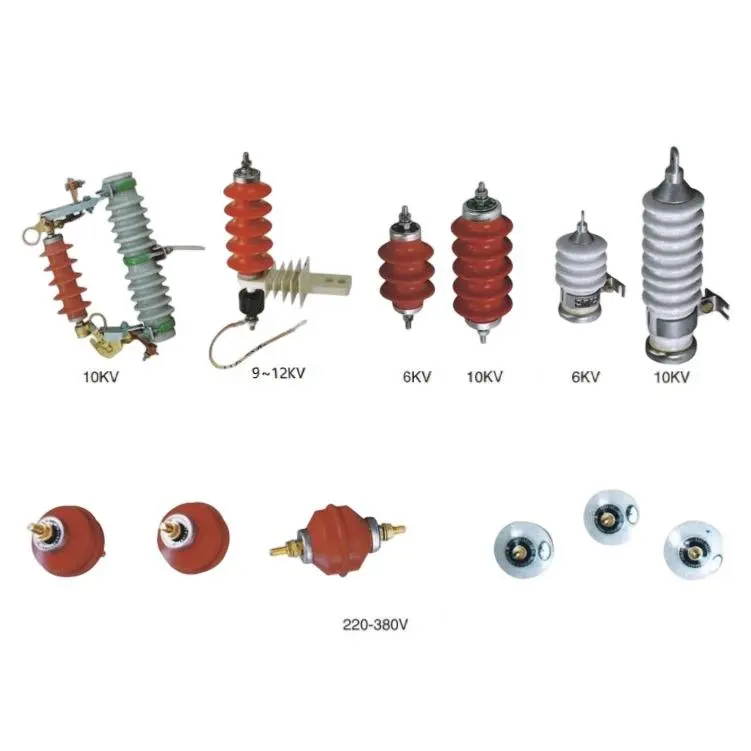
What Is a Lightning Arrester and Why Is It Essential for Substations?
How a Lightning Arrester Protects Substation Equipment
A lightning arrester is a safety device that is connected between a live wire and the ground. Its job is to limit the power that gets to machinery close. The arrester sends the impulse current to the grounding system when a transient comes along. Another thing it does is keep the voltage drop below the transformer or switchgear's insulation withstand level. A lot of the time, I tell people who are interested that an arrester is like an open opening for electricity. It doesn't get rid of the energy source, but it does direct it in a safe way. Zinc oxide blocks are used in modern designs because they react quickly and go back to a high-resistance state after the event is over.
Overvoltage Risks That Reach a Substation
Lightning isn't the only thing that can hurt you. A moving wave can reach the substation from a line strike, either directly or close by. Transient overvoltages can also be caused by switching processes, charging capacitor banks or transformers, or system faults. Lightning impulses rise in a matter of microseconds, but switching impulses last longer and hold more energy. When engineers coordinate insulation, IEC 60071-2 treats these overvoltage classes as separate. When protection is missing or not big enough, things like insulation breaking down, transformer damage, fire, and expensive power outages can happen. Since the transformer is usually the most valuable thing in a substation, it should have the first arrester.
Coordinated Protection Across the Substation
There isn't a single gadget that can cover an entire area. IEEE Std 998 talks about protecting against direct hits with shield wires and masts, which keep most hits away from live lines. After that, the grounding grid safely sends the current away. The moving waves and switching transients that still reach the equipment are taken care of by arresters. These are put in place at incoming lines, transformer terminals, busbars, cable terminations, and feeders by engineers. The results are then compared to the insulation levels required by IEC 60071-2. Layers is a good way for me to explain this. Shielding lowers the number of strikes, grounding lowers the potential rise, and the lightning arrester lowers the load that the insulation has to handle.
How Does a Lightning Arrester Work?
Normal Operation and Overvoltage Response
A metal-oxide lightning arrester acts like an insulator and only lets a small amount of current leak through it when the system voltage is normal. The nonlinear zinc oxide elements become conductive almost instantly when there is a lightning or switching overvoltage. Their resistance drops quickly, the arrester sends the current to ground, and the voltage stays low across the shielded devices. The elements go back to their high-resistance state after the transient is over. These days' arresters don't have a series gap, so they can act right away without having to wait for a spark-over. This provides smoother defense than older designs that used gapped silicon carbide.
Zinc Oxide Varistors and Their Voltage-Current Curve
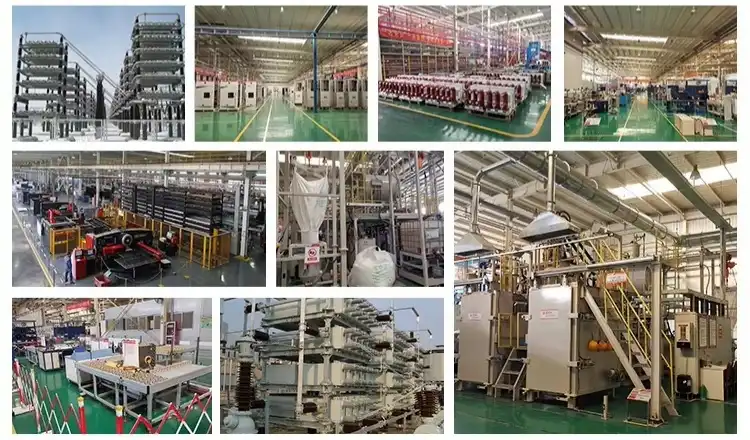
A modern arrester is made up of a stack of zinc oxide varistor blocks. What makes it work? The relationship between their voltage and current is not at all linear. The current stays very low below the operating level and rises very quickly above it. That graph shows how the device can handle thousands of amps during an event while drawing almost no power when the voltage is normal. Product quality determines how well it works. The polymer arrester made by Xi'an Xikai uses high-purity zinc oxide that can be tracked. Testing the raw materials is the first step in our quality process. It is possible for uniform blocks to share energy evenly, which helps them age steadily over time.
Key Ratings You Should Understand
Almost all datasheets have five grades. MCOV, the maximum continuous operating voltage, is the largest voltage that the arrester can permanently handle. Rated voltage is the value set by the standard's operating duty tests. Residual voltage is the voltage across the arrester while it drains the standard current, and it must stay below the equipment insulation level by a certain amount. Nominal discharge current, such as 5 kA or 10 kA, classifies the arrester under IEC 60099-4. Energy capability and line discharge class tell you how much energy the gadget can take in during an event. If you read these numbers correctly, you won't make many selection mistakes.
Types, Placement, and Installation of Lightning Arresters
Types and Housing Materials
Gapless metal-oxide lightning arresters have mostly taken the place of silicon carbide designs, but you may still find older units on older networks. Going to housing is the next step. Polymer is lighter, easier to move, and safer in general because it doesn't break when it fails than porcelain, which is heavy and stiff. Polymer also gets rid of water and pollution well. Class is also important. The energy capacity of the distributor, intermediate, and station classes is different, so fit the class to the voltage level and exposure. The two-unit design of Xi'an Xikai's polymer lightning arrester helps keep heat from building up and causing thermal runaway.
Where to Install a Lightning Arrester
Location changes how well something works just as much as ranking does. Put the transformer arresters as close to the high-voltage and low-voltage bushings as you can. The extra space lets the traveling wave bounce back, which raises the voltage at the transformer above the residual voltage of the arrester. Just like with long leads, short, straight ones are important because fast impulse current causes a voltage drop along every meter of conductor. Put arresters on incoming lines, feeder exits, cable terminations, and sensitive switchgear. Then, use the layout of the equipment to set up protection zones. Check for humidity and air flow inside. When you're outside, check the air quality, elevation, temperature, UV exposure, and creepage distance.
Wiring and Installation Steps
A simplified three-phase scheme uses one arrester per phase. The top terminal connects to the shielded wire, and the bottom terminal goes straight to the grounding grid at the substation. For a neutral point, use an arrester rated for that job instead of a phase-to-ground machine. Before you energize, I suggest five checks:
- Check the nameplate against the MCOV and system voltage.
- Check the housing for damage or cracks.
- Tighten the connections to the torque number given by the maker.
- Verify clearances and orientation.
- Test grounding continuity and consistency.
The most common mistakes are long leads, an MCOV that is too low, bad grounding, and not taking into account the site environment.
How to Choose and Buy a Lightning Arrester
A Step-by-Step Selection Process
Start with the use: 11 kV or 33 kV distribution, transformer cover, feeder cover, or a transmission station. Then get the voltage of the system, the way of grounding, and the insulation level of the transformer. Choose an MCOV that is higher than the steady-state voltage that the arrester will see. When there is a fault, double-check networks that are not grounded or that are resonantly grounded because the phase-to-ground voltage can rise. The IEC 60099-5 says to choose the theoretical discharge current and energy class for the exposure and then compare the residual voltage to the basic insulation level (BIL). In the end, look at test reports, housing, pollution levels, altitudes, seismic needs, and levels of pollution. Skipping any step generally leads to more work that costs a lot of money.
Procurement Points for Exporters and Distributors
Trade buyers have to deal with extra factors, such as voltages, altitudes, and local standards that vary from destination market to destination market, as well as wet sea freight. Before you ask for a price, you should write down the voltage class, discharge current, housing type, mounting style, and target standard. You should find out about model coverage, minimum order quantities, private labeling, and consistent product coding. These things will affect how easy it is to bundle arresters with transformers, switchgear, and isolators. Check the creepage distance against the pollution in the area, and ask the supplier how they seal the units to keep water out. Compare providers on total lifecycle cost, not just the price of each unit, because a broken unit in a substation costs a lot more than a small price difference.
Xi'an Xikai Polymer Lightning Arrester Features
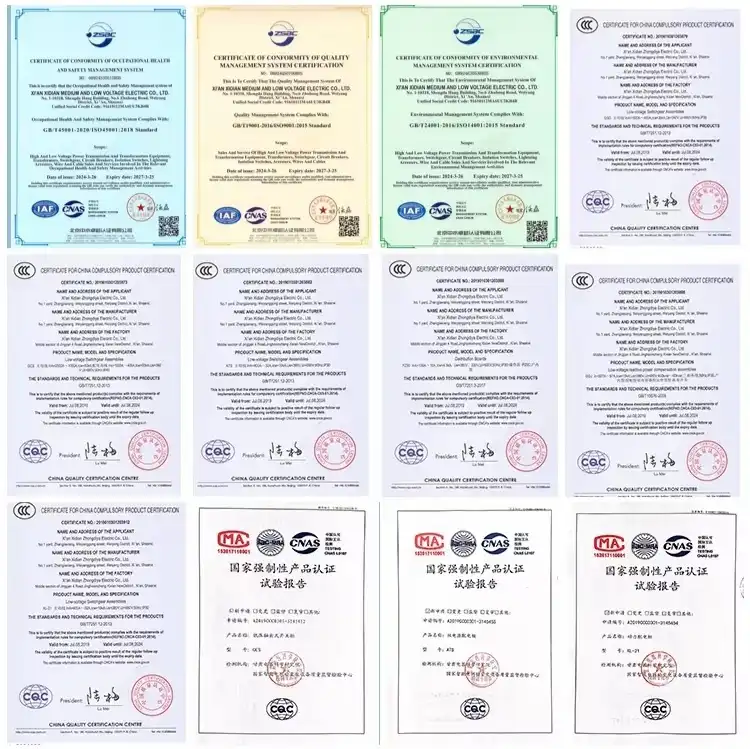
The polymer lightning arrester made by Xi'an Xikai is made for high-voltage AC systems. According to the product data, it has a service life of more than 25 years, almost no leakage current, and a sealed design that keeps water out. After being triple-sealed, each unit is put through high-voltage tests that simulate lightning strikes up to 650 kV. Our fully insulated composite housing arrester has a high-voltage wire outlet at the top, formed with the core in one piece. It's made for small switchgear. This makes it possible for insulation distances to be shorter and creepage distances to be longer for places that are high up and dirty. Premium models come with optional IoT sensors that report discharge events and degradation. Our team has more than 20 patents on polymeric MOA technology, and we follow ISO 9001, ISO 14001, and ISO 45001.
Maintenance, Comparison, and Real Applications
Maintenance and Performance Monitoring
Regular checks make things last longer. Inspect for damage like cracks, dirt, discoloration, rust, water getting in, tracking, and weak ground connections. A lot of utilities also compare current leakage, resistive current leakage, and infrared temperature to data from the past. The JCQ-3 (YC)10/800D monitor from Xi'an Xikai shows this information locally and sends it over RS485 using Modbus-RTU, with a counting range of 0 to 9999 and a leakage current range of 0 to 10 mA. Set how often to check based on pollution, lightning activity, and voltage level, and add checks after storms or problems. Write down the model, serial number, date of installation, and test results so that you can replace it before it breaks.
Lightning Arrester vs. Other Protection Devices
A lot of people mix up three gadgets. A medium- or high-voltage lightning arrester keeps live wires safe by stopping overvoltage and sending current to ground. An SPD keeps low-voltage power, communication, and control circuits safe. For example, the auxiliary supply in a control room is protected by an SPD. A lightning rod or mast can stop a direct hit and protect buildings and equipment close, but it doesn't lower the voltage on the wires. There must be grounding grids, arresters, SPDs, unified insulation levels, shield lines and masts, and all of these in a substation. Good protection doesn't come from just one device, but from how the system is set up.
Application Scenarios
For an 11 kV distribution substation, use medium-voltage arresters to protect the transformer, feeder, and incoming line in a small way. For a 33 kV utility or industrial substation, it's important to pay more attention to switching overvoltages, cable interfaces, outdoor switchgear, creepage distance, and transformer insulation. Station-class arresters with the ability to handle a lot of energy and full type-test documents are usually needed at high-voltage transmission stations. The polymer lightning arrester from Xi'an Xikai can also be used in green energy farms and to power railroads, where the equipment is put to the test by storms, vibrations, and smog. Every project needs its own engineering check, which makes sure that equipment is safe, available, and planned for upkeep.
Conclusion
A lightning arrester stops sudden voltage spikes by sending impulse current to ground. This keeps transformers, switchgear, and cables within the limits of their insulation. It works best when there are multiple layers of protection, such as grounding, shielding, and insulation coordination. At normal voltage, zinc oxide elements stay very resistive, but they conduct electricity during an event. Ratings like MCOV, residual voltage, and discharge current show if a model fits. How well they work depends on how close they are to the protected equipment, how short the leads are, and how well they ground themselves. The choice is based on the voltage, BIL, pollution, altitude, housing, and test records. Regular inspections and monitoring catch aging early. In real life, this means fewer outages, longer asset life, and lower lifetime cost.
FAQ
1. What does a lightning arrester do in a substation?
By sending impulse current to ground, which saves the insulation, it stops lightning and switching overvoltages.
2. Why should it be close to the transformer?
Because the distance and leads are short, the reflected wave and inductive voltage are lower. This means that the voltage seen by the transformer is close to the residual voltage of the arrester.
3. Which standard applies to metal-oxide arresters?
IEC 60099-4 talks about metal-oxide arresters for AC systems that don't have any gaps. In North America, IEEE C62.11 is used a lot.
4. Should I choose polymer or porcelain housing?
Polymer is less heavy, easy to ship, and good at dealing with water and dirt. It's rigid and old-fashioned to use porcelain. Pick based on the site conditions and how you want to handle it.
5. How often should I inspect an arrester?
Set the time frame based on pollution levels, lightning strikes, voltage levels, and utility rules. Add a check after big storms or faults.
Request a Lightning Arrester Recommendation from Xi'an Xikai
Are you looking for a lightning arrester maker that can meet your needs for voltage, creepage, and delivery? Send Xi'an Xikai your system voltage, discharge current, preferred case, and where you want the battery to go. We will tell you about a model and give you datasheets from manufacturing that is ISO 9001, ISO 14001, and ISO 45001 approved. Six to eight weeks is the usual lead time. Visit xaxd-electric.com or email serina@xaxd-electric.com, amber@xaxd-electric.com, or luna@xaxd-electric.com.
References
1. IEC 60099-4: Surge Arresters – Metal-Oxide Surge Arresters Without Gaps for A.C. Systems, 2014
2. IEC 60099-5: Surge Arresters – Selection and Application Recommendations, 2018
3. IEC 60071-2: Insulation Co-ordination – Application Guide, 2018
4. IEEE Std C62.11: Standard for Metal-Oxide Surge Arresters for AC Power Circuits (>1 kV), 2020
5. IEEE Std C62.22: Guide for the Application of Metal-Oxide Surge Arresters for Alternating-Current Systems, 2009
6. IEEE Std 998: Guide for Direct Lightning Stroke Shielding of Substations, 2012