
Lightning Arrester Types: A Practical Selection Guide
2026-09-29 17:28:24
Choosing the right lightning arrester for a substation export project is not just a technical decision — it directly affects equipment safety, project compliance, and your reputation with overseas clients. A lightning arrester is a protective device installed in power systems to divert transient overvoltages — caused by lightning strikes or switching events — safely to ground, preventing damage to transformers, switchgear, and cables. This guide walks through the main arrester types, selection criteria, installation practices, and procurement considerations to help B2B buyers source the right product with confidence.
Understanding Lightning Arresters: Basic Concepts and Types
Before you compare goods, it's helpful to know how each arrester technology works and what part it plays.
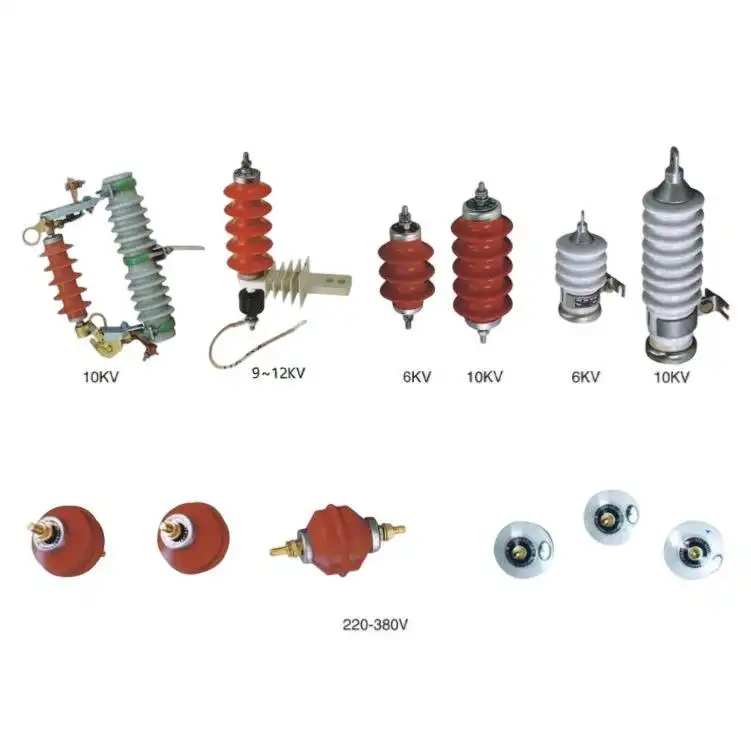
Metal Oxide Varistor (MOV) Arresters
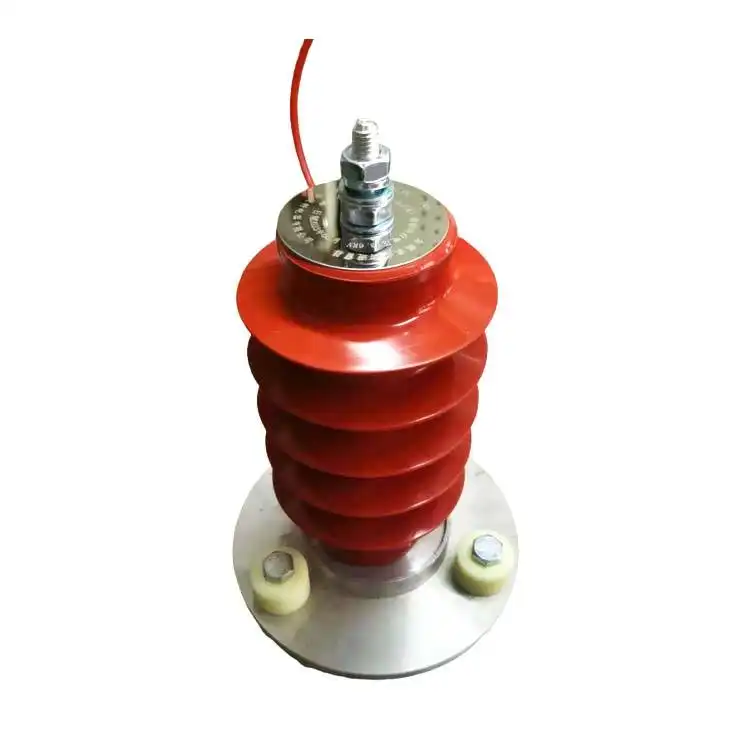
Zinc oxide (ZnO) blocks are what make MOV arresters work. They respond quickly to overvoltage, leave behind little voltage, and don't have much power-frequency follow current. MOV technology is now the standard for medium and high-voltage AC systems around the world. Based on this idea, Xi'an Xikai's YH10W-102/266W Lightning arrester Polymeric MOA for AC System is designed to work in wet and polluted places. It has a rating of 102kV, a DC reference voltage of ≥148kV, and a creepage distance of 31mm/kV.
Silicon Carbide (SiC) Arresters
A lot of silicon carbide arresters were used before MOV technology was fully developed. To stop the power-frequency follow current, they need spark gaps, which makes the mechanics more complicated. Older grid infrastructure in parts of Africa and South Asia still has SiC units, but MOV types are mostly replacing them in new installs because SiC units lose more energy and need more upkeep.
Air-Gap (Spark Gap) Arresters
When the voltage goes over a certain point, spark gap arresters work by destroying the air between the electrodes. They are easy to use, don't cost much, and work well in rural distribution lines. But they respond more slowly than MOV types, and if they're not paired with a series gap, they can cause power follow current. These are sometimes chosen for low-cost distribution projects in faraway places.
Polymer (Composite) Housing Arresters
Polymer-housed arresters use silicone rubber or EPDM composite instead of traditional porcelain. They are less heavy, can handle impacts better, and work better near the coast and at high elevations. The YH10W-102/266W's UV-resistant silicone rubber keeps its dielectric performance fixed from -40°C to +85°C. This makes it a good choice for projects in Southeast Asia, sub-Saharan Africa, and the Andes.
Key Criteria for Selecting the Right Lightning Arrester
When choosing a surge arrester for export projects, the technical specs need to be matched to the local grid and the surroundings. Before making an order, every buying manager should think about these main things with lightning arrester:
- Rated Voltage and System Voltage: The arrester's rated voltage must align with the nominal system voltage. For 110kV-class substations, a unit like the YH10W-102/266W at 102kV is the standard choice.
- Energy Absorption Capacity: High-energy systems — such as those connected to wind or solar farms — require arresters with higher energy handling ratings to avoid thermal runaway.
- Creepage Distance for Local Pollution Levels: IEC 60815 defines pollution severity classes. For coastal or industrial zones, a creepage distance of 31mm/kV (as offered by the YH10W-102/266W) satisfies Class III–IV requirements.
- Altitude Correction: At altitudes above 1,000 meters, dielectric strength of air decreases. Xi'an Xikai's plateau-grade equipment meets operational requirements up to 4,000 meters.
- Certification Requirements: For export projects, IEC 60099-4 and IEEE C62.11 compliance is non-negotiable. Many African and Southeast Asian utilities also accept GB/T 11032 certification as equivalent.
By matching these factors to the target market, you can avoid expensive problems in the field and guarantee claims after delivery.
Installation and Maintenance Best Practices
Even a properly specified arrester can fail if it is not installed or maintained correctly. For medium and high-voltage polymer surge arresters in substations, the following rules must be followed.
Site Assessment Before Installation
Before installing any overvoltage protection device, check the site's soil resistivity for grounding design, the level of pollution (salt spray, dust, industrial discharge), and the space between the phase and ground. If the grounding resistance is higher than 10 ohms, the arrester won't work as well.
Grounding and Connection Protocols
Connect the arrester as close to the protected equipment as possible and use the shortest ground lead to reduce lead inductance. For high-voltage uses, the ground wire should have a cross-section of at least 35 mm². To keep contact resistance from building up over time, use compression-type connections.
Routine Inspection and Fault Indicators
Polymer-housed MOV arresters like the YH10W-102/266W are made to last for more than 25 years and require little maintenance. They have a hermetic seal that keeps moisture out and don't need to be replaced. Check for surface tracking marks and discoloration on the silicone sheds during scheduled shutdowns. Also, make sure that the leakage current stays below 1mA. Any number above the average usually means that things are getting worse inside.
Comparing Lightning Arresters with Other Surge Protection Devices
A surge protective device (SPD) or a lightning stick are often thought to be the same thing as a lightning arrester. When buying teams know the differences, they can choose the right protective layer for each part of the substation.
Lightning Arresters vs. Surge Protective Devices (SPDs)
Lightning arresters handle sudden changes in high voltage and energy at the equipment level, which includes transformers, busbars, and cable terminations. On the other hand, SPDs keep low-voltage secondary circuits, control panels, and instruments safe. Both are needed to protect a substation completely, but they can't be used instead of each other. For AC systems with medium to high voltage, a metal oxide arrester is the best first line of defense.
Lightning Arresters vs. Lightning Rods
Lightning rods, which are made of air terminals, stop direct lightning hits before they reach the electrical system. They do this by sending the current to ground. When there is a close strike or switching event, voltage transients pass through the conductors. This is what arresters are for. Both are used in a well-thought-out security system. The rod handles the direct hit, and the arrester handles the conducted shocks.
Cost and Lifecycle Value for Bulk Procurement
Even though porcelain-housed arresters cost less per unit, they add weight to the freight and increase the risk of breaking while being shipped by ocean, which is a big problem for routes in Africa and South America. Polymer units cost a little more per piece, but they lose less during shipping, don't need to be inspected for damage to the porcelain when they arrive, and last longer in places with a lot of dampness. Polymer MOV arresters usually have a lower total cost of ownership for export packages over a 25-year lifecycle.
Procuring Lightning Arresters: Brands, Suppliers, and Transaction Guidance
Global providers like ABB, Siemens, and Schneider Electric charge high prices and take a long time to deliver to big utility companies. Chinese makers with IEC certifications and support for mixed procurement models are a good option for B2B selling companies that put together export packages of switchgear, transformers, disconnectors, and surge protection.
What to Verify Before Placing an Order
Before you choose a lightning arrester supplier, make sure that the IEC 60099-4 test reports are real and come from reputable third-party labs. Also, make sure that the creepage distance fits the pollution class of the target country and ask for a sample or inspection report from a recent batch. Ask for packing details that include moisture-barrier shipping for sea freight for projects that will be exported.
Lead Times and Stock Availability
Standard YH10W-102/266W units are kept in stock by Xi'an Xikai so that they can be sent out quickly. In-stock orders are usually ready in 3–7 days. On confirmed production schedules, bulk orders can be filled. With standard lead times, you can get custom specifications like an adjusted creepage distance, voltage rating, or terminal connector type.
Certifications That Matter for Export Markets
The YH10W-102/266W meets the requirements of both IEC 60099-4 and IEEE C62.11. It is also certified by ISO 9001 for quality management and has been tested and proven to work by independent laboratories. Utilities buying bodies in Africa, Southeast Asia, and South America all accept these certificates.


Conclusion
When choosing the right surge arrester for an export project from a substation, you need to think about the system voltage, the climate, the creepage distance, the altitude, and the approval needs. For medium and high-voltage uses, MOV polymer arresters are now the standard. They respond quickly, require little upkeep, and work well in harsh environments. The YH10W-102/266W Lightning arrester Polymeric MOA for AC System is made to meet the standards set by IEC 60099-4 and IEEE C62.11, and it is designed to work in the places where export package assemblers do the most business.
FAQ
1.What is the difference between a polymer and porcelain lightning arrester housing?
Polymer-housed arresters are made of a silicone rubber composite material that is lighter, less likely to crack, and better at keeping its surface clean in wet or coastal areas. It is heavier and easier to break porcelain housing while moving it. Polymer units cut down on damage costs by a large amount when shipping goods by sea to Africa or Southeast Asia.
2.Does the YH10W-102/266W meet IEC standards for export projects?
Yes. IEC 60099-4 and IEEE C62.11 are met by the YH10W-102/266W. The energy companies in most developing countries will accept both certificates.
3.How do I select the correct creepage distance for my destination country?
Use IEC 60815 to find the site pollution intensity class. The YH10W-102/266W has a voltage of 31mm/kV, which meets Class III and Class IV standards and is good for coastal, tropical, and industrial areas.
4.Can the arrester operate at high altitude?
Yes, Xi'an Xikai's equipment has been tested and proven to work at elevations of up to 4,000 meters. This means it can be used in high-altitude installation sites in Ethiopia, Bolivia, Peru, and other similar markets.
5.What is the minimum order quantity for stock units?
Standard stock units can be bought in mixed quantities, and delivery can happen between 3 and 7 days. To find out about current minimum order amounts and project-based prices, please contact the sales team.
Get a Quote from Xi'an Xikai — Your Lightning Arrester Supplier
More than 15 countries' trade companies and electrical equipment exporters buy lightning arrester goods from Xi'an Xikai that are IEC-certified. The YH10W-102/266W is in stock and can be sent out right away. Custom creepage distances and voltage levels can be made to fit the needs of a particular project. When people ask us about technology, we answer them within 24 hours. Get in touch with us directly to talk about the details of your project and get a quote:
Email addresses: serina@xaxd-electric.com, amber@xaxd-electric.com, luna@xaxd-electric.com; xaxd-electric.com;

References
1. IEC 60099-4: Surge Arresters – Part 4: Metal-Oxide Surge Arresters without Gaps for A.C. Systems. International Electrotechnical Commission, 2014.
2. IEEE C62.11: IEEE Standard for Metal-Oxide Surge Arresters for AC Power Circuits (> 1 kV). Institute of Electrical and Electronics Engineers, 2012.
3. IEC 60815-1: Selection and Dimensioning of High-Voltage Insulators Intended for Use in Polluted Conditions. International Electrotechnical Commission, 2008.
4. Hinrichsen, V. Metal-Oxide Surge Arresters in High-Voltage Power Systems: Fundamentals. Siemens AG Energy Sector, 2011.
5. Christodoulou, C. A., et al. "Condition Monitoring of Metal Oxide Surge Arresters." IEEE Transactions on Dielectrics and Electrical Insulation, 2014.
6. Lat, M. V. "Thermal Properties of Metal Oxide Surge Arresters." IEEE Transactions on Power Apparatus and Systems, 1983.