
How Does a Lightning Arrester Protect a Power System?
2026-09-29 17:33:04
A lightning arrester protects a power system by intercepting overvoltage surges — caused by lightning strikes or switching events — and diverting the excess electrical energy safely to the ground. Without this device, a single lightning event can damage transformers, switchgear, and cables, causing outages that cost utilities thousands of dollars per hour. The arrester clamps the voltage at a safe level, then automatically reseals once the surge passes, keeping the system online. For substation engineers and trade procurement managers sourcing equipment for export projects, understanding this mechanism is the first step toward specifying the right protection.
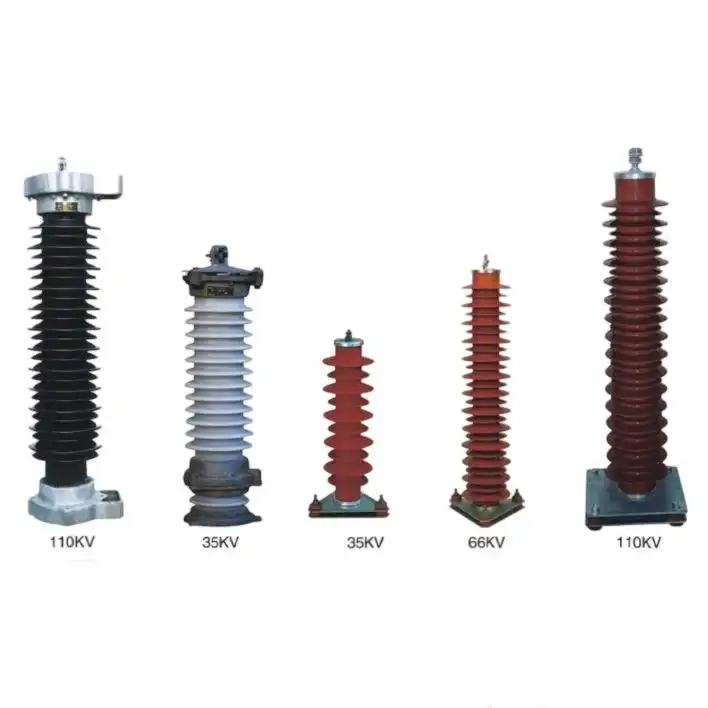
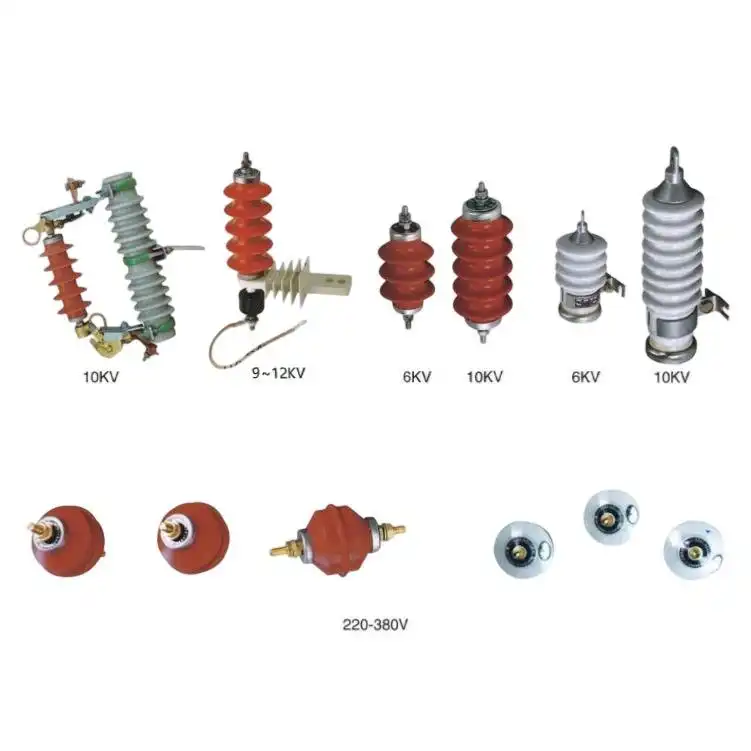
Understanding Lightning Arresters: What They Are and How They Work
Before you choose a surge protector, it's helpful to know what happens inside the unit when something goes wrong.
The Core Working Principle
A lightning arrester sits between the live wire and the ground. It stays non-conductive at normal working power. When there is a short-term overvoltage spike, like from lightning or a switching surge, the zinc oxide (ZnO) varistors inside the device quickly change to a conductive state and send the energy to earth. When the voltage goes back to its normal range, conductivity goes down again. A modern metal oxide arrester (MOA) is different from older silicon carbide versions because it can restart itself.
Zinc Oxide vs. Silicon Carbide Arresters
Silicon carbide blocks needed a series spark gap to stop continuous current flow, but zinc oxide varistors react faster and have lower residue voltage. These days, ZnO-based polymer MOAs like the YH10W-102/266W are the most common choice for transmission and distribution tasks. This is because they offer better voltage clamping with no moving parts. Silicon carbide units are mostly old technology that can still be found in older substations but aren't often asked for in new construction projects.
Lightning Arresters vs. Surge Protectors
Most of the time, these terms are used to refer to the same thing, but they refer to different voltage levels and installation points. Most of the time, surge protective devices (SPDs) protect low-voltage equipment panels and building electrical systems. Lightning arresters, on the other hand, are placed at the high-voltage entry points of substations, transformer bays, and line terminations, where impulse currents can reach tens of kiloamperes.
The Role of Lightning Arresters in Protecting Power Systems
If you choose the right lightning arrester, it will protect you in more ways than just receiving a lightning hit.
Risk Factors in Exposed Grids
The most lightning strikes happen over overhead transmission lines in tropical, coastal, and high-altitude areas. The IEC says that more than 70 ground flash events happen every square kilometer every year in parts of equatorial Africa and Southeast Asia. For these speeds, unprotected transformer windings and busbar insulation break down much faster than their intended lifespan. This increases the frequency of unplanned outages and the cost of maintenance.
Real-World Protection in Substation Projects
Field data from IEC 60099-4 compliance trials consistently shows that correctly rated MOAs lower transformer insulation stress during lightning events by keeping the voltage spike to the equipment's Basic Insulation Level (BIL). Several power authority maintenance reports say that replacing old porcelain arresters with polymer MOAs cut transformer bushing failures by over 60% in the first two operating seasons in a 110kV substation in Sub-Saharan Africa.
Maintenance Practices That Extend Service Life
This is because the arresters need to be checked on a regular basis. In areas with a lot of pollution, I suggest that eye checks be done every six months. During these inspections, you should look for cracks in the silicone shell, corrosion at the grounding clamp, and signs of surface tracking. Monitoring leakage current by reading the milliampere at the base gives an early sign of ZnO block degradation a long time before a thermal runaway event happens.
Choosing the Right Lightning Arrester for Your Needs
It's not a small mistake to get the specifications for a lightning arrester wrong; it can void the warranty on the equipment and make you responsible when the job is handed over.
Key Selection Criteria
Before you buy, you need to make sure that a number of factors match the installation spot. Here are the main things that every buying manager should check when making a choice:
- Rated voltage and continuous operating voltage (COV): The rated voltage of the arrester must be higher than the system's highest phase-to-ground voltage when there is a fault. For a 110kV system, this level is met by a machine like the YH10W-102/266W, which is rated at 102kV and has a DC reference voltage of at least 148kV.
- Creepage distance for pollution class: Longer creepage times are needed for sites close to the coast, in industrial areas, or at high elevations. The YH10W-102/266W has a creepage distance of 31mm/kV, which meets IEC pollution class III and IV standards. This directly addresses the environmental issues that are common at project sites in Africa, Southeast Asia, and South America.
- Standard compliance: IEC 60099-4 is the standard for AC system arresters, so they must meet it. It's important to check IEEE C62.11 orientation for projects that use either North American or dual-standard standards.
All of these factors work together to show if an arrester will last the whole project, not just during acceptance testing.
The YH10W-102/266W: A Closer Look
The YH10W-102/266W Polymeric MOA for AC circuits is designed to protect transmissions at 102kV. It works reliably in temperatures ranging from -40°C to +85°C thanks to its UV-resistant silicone rubber housing. This makes it suitable for use in desert, tropical, and high-altitude environments. The hermetic closing design keeps wetness out during long ocean freight trips, which is something that export trade sellers often worry about. The unit has been certified by IEC 60099-4 and IEEE C62.11, and it has been exposed to 100kV lightning impulses, salt fog for 24 hours, and partial discharge monitoring below 10pC. It has a service life of more than 25 years and an adjusted leakage current below 1mA that keeps operating costs low.
Price, Quality, and After-Sales Support
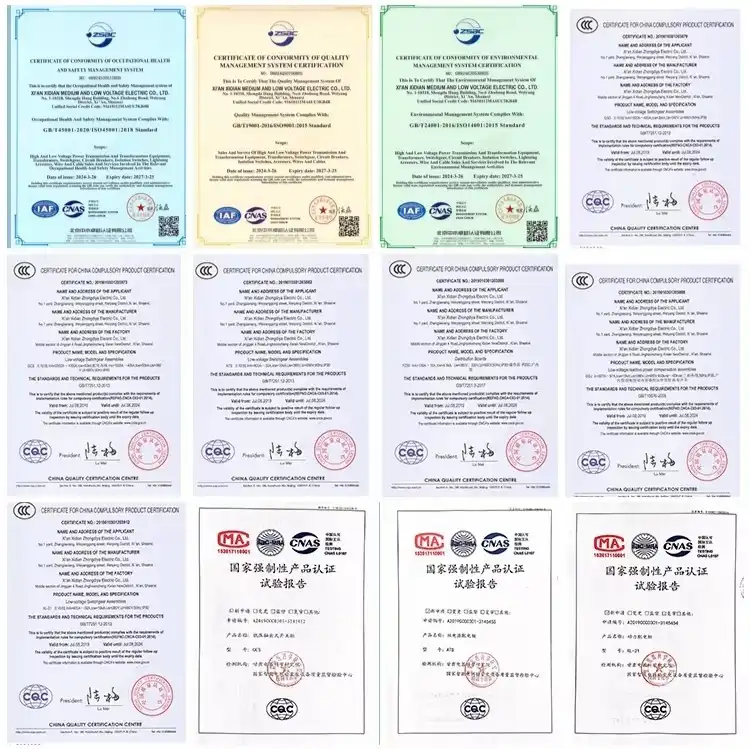
There is a real sense of price sensitivity in foreign trade, but the full cost of an arrester job includes the cost of replacement labor, shipping, and fines for downtime. A unit that comes with a valid third-party test report, ISO 9001 factory certification, and clear guarantee terms usually costs less over five years than a different unit that hasn't been checked out and was bought based only on price.
Installation and Maintenance: Ensuring Maximum Efficiency
Even a correctly specified lightning arrester won't work if it is installed wrong.
Step-by-Step Installation Guidelines
To keep the lead inductance from adding too much to the clamping voltage, the arrester should be placed as close as possible to the protected equipment terminals. It is important that the ground lead to the station earth grid has no sharp turns and is as straight as possible. To make sure everything fits properly, follow the manufacturer's instructions, which are usually found in the installation guide.
Routine Maintenance Checklist
A useful site review includes four things: checking the housing visually, making sure the ground link is solid, comparing the leakage current reading to the standard reading taken during commissioning, and making sure the pressure relief vent is still clear. If the reading is more than 20% off from the baseline used for commissioning, a second DC reference voltage test should be done to rule out ZnO block degradation.
Safety Protocols for High-Voltage Handling
When working with an arrester on a device that is already live, you must follow local electrical safety rules and the IEC 60900 standards for insulated tools. Before touching any terminal, turn off the power, isolate it, and make sure there is no voltage. I strongly warn you not to skip live-line working procedures, not even for simple visual checks at the top terminal.
Conclusion
A lightning arrester's only job is to protect equipment from damage caused by a surge. But for it to do that job reliably for at least 25 years, the materials must be carefully chosen, the specifications must be followed, and the installation must be done correctly. The arrester is not a standard item for export trade wholesalers who are putting together full substation kits for use in Africa, Southeast Asia, or South America. The IEC 60099-4 certification and longer creepage distance of units like the YH10W-102/266W, along with the polymer MOA technology they use, directly address the environmental and legal problems those countries face. If you specify properly from the start, you can avoid expensive replacements in the field and protect the image of every project you work on.
FAQ
1.What is the difference between a lightning arrester and a surge protector?
High-voltage surges (10kV to 220kV) can happen at the transmission or distribution entry point. A lightning arrester controls these surges and sends impulse currents of several kiloamperes to ground. A surge protector (SPD) works at low voltage panel level, usually less than 1,000V, to keep end-user technology safe. Both use ZnO technology that is very similar, but they are rated and installed for very different parts of the power system.
2.How often should a lightning arrester be inspected?
In mild regions, checks are usually done once a year. Every six months inspections should be done in places with a lot of pollution, like along the coast, in factories, or at high elevations. Leakage readings taken now should be compared to baselines set when the system was first installed at every visit.
3.Can a lightning arrester handle repeated surge events?
Yes. A properly rated MOA is made to be discharged many times within its energy absorption class. But each rush event makes the ZnO blocks a little less young. Using a fitted counter to keep track of the cumulative discharge count can help you figure out when a replacement is needed.
4.Does creepage distance matter for export projects?
It's very important. Based on the IEC 60815 pollution rating, countries that are tropical, seaside, or higher than 1,000 meters usually need longer creepage distances. Surface flashover fails in the field often happen because the wrong creepage class was chosen.
Partner with Xi'an Xikai for Certified Lightning Arrester Supply
Xi'an Xikai gives export trade distributors a direct way to get surge protection devices that are IEC-certified and have been used in the field. The YH10W-102/266W lightning arrester comes with full test paperwork and can be ordered in a variety of ways. Standard versions can be delivered in 3–7 days from stock. You can get custom voltage ratings and creepage distances to match the grid standards of the market where you're going. Click on xaxd-electric.com or email serina@xaxd-electric.com, amber@xaxd-electric.com, or luna@xaxd-electric.com to get a quote from our lightning arrester suppliers.
References
1. International Electrotechnical Commission. IEC 60099-4: Surge Arresters – Part 4: Metal-Oxide Surge Arresters Without Gaps for AC Systems. IEC, 2014.
2. IEEE Power and Energy Society. IEEE C62.11: Standard for Metal-Oxide Surge Arresters for AC Power Circuits. IEEE, 2012.
3. Christodoulou, C. A., Vita, V., Perantzakis, G., Ekonomou, L., & Milias-Argitis, I. "Adjusting Metal Oxide Surge Arresters' Characteristics for the Protection of MV/LV Distribution Transformers." Energies, MDPI, 2017.
4. Hinrichsen, V. Metal-Oxide Surge Arresters in High-Voltage Power Systems: Fundamentals. Siemens AG, 2011.
5. IEC 60815-1. Selection and Dimensioning of High-Voltage Insulators Intended for Use in Polluted Conditions. IEC, 2008.
6. Lat, M. V. "Determining Temporary Overvoltage Capability of Metal Oxide Surge Arresters." IEEE Transactions on Power Delivery, IEEE, 1990.