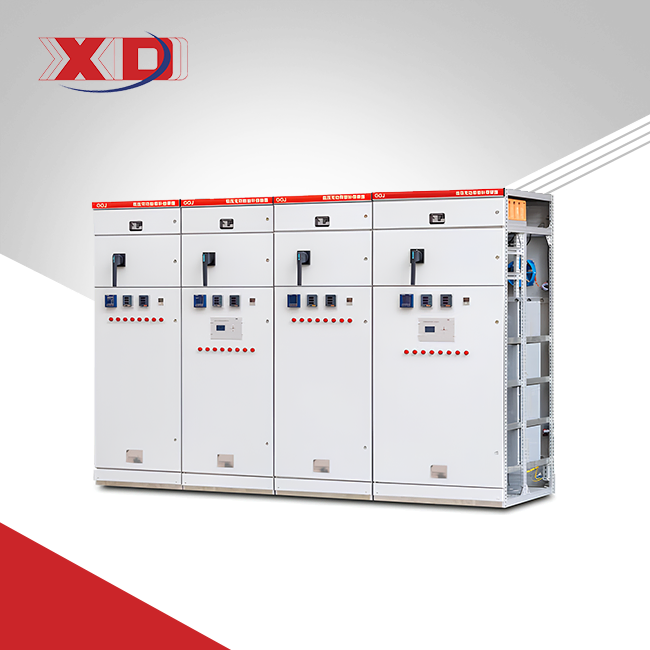
GGJ Low Voltage Reactive Power Intelligent Compensation Device
Oil-immersed Current Transformer: Working Principle Explained
2026-08-19 10:03:18
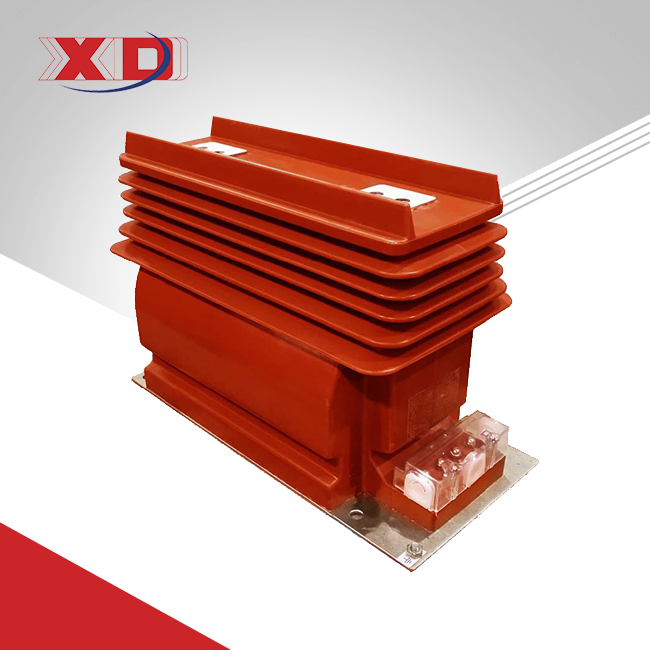
When substation engineers face the challenge of measuring thousands of amperes flowing through high-voltage lines, the oil-immersed current transformer becomes their indispensable instrument. This device leverages electromagnetic induction to convert primary currents—often reaching 4000A or higher—into manageable secondary currents of 1A or 5A, enabling accurate metering and protective relay coordination. Insulating oil surrounds the magnetic core and windings, simultaneously providing dielectric strength to withstand voltages up to 680kV while dissipating heat generated during operation. The combination of oil-paper insulation and epoxy resin casting creates a robust structure that maintains precision even under fault conditions exceeding 63kA short-circuit stress.


Understanding Oil-Immersed Current Transformers
An oil-immersed current transformer is made up of three parts that work together: the copper windings, the mineral or manufactured insulating fluid, and the silicon steel magnetic core. The load current's main carrier goes thru the middle of a toroidal or stacked laminated core, creating a magnetic flux equal to the amperage. The flux is turned into a stepped-down current signal that protective relays and meters can safely understand by wrapping secondary windings around this core.
Core Construction and Electromagnetic Behavior
The magnetic path is made up of high-permeability silicon steel laminations that keep hysteresis losses to a minimum and make sure that linear transformation ratios are maintained. We get accuracy classes from 0.1 for revenue counting to TPY for transient protection by keeping an eye on the core measurements and air gaps. The magnetic flux density stays well below saturation during normal operation, which keeps the ratio accurate within ±0.2% for Class 0.2S devices. In fault situations, certain TPY cores use gapped construction to delay saturation, capturing the DC offset part of short-circuit currents that are important for modern digital relays.
Insulating Oil Functions and Thermal Management
The dielectric liquid has two functions that make this technology better than dry-type designs. It has a breakdown voltage greater than 30kV per 2.5 mm gap, which lets insulation lengths be kept short even at 550kV system voltages. At the same time, natural circulation moves the fluid past windings that generate heat, sending heat to heaters outside the tank or to the tank's surface. This cooling system keeps the winding hot-spot temperatures below 105°C, which keeps the insulation lasting longer than 30 years. It can work continuously in temperatures ranging from -45°C in the arctic to +50°C in the desert.
When the oil temperature goes from cold startup to full load, it expands by 8–10%. To keep seals from bursting, metal expansion compensators make sure that the volume stays the same. Multi-layer gasket systems at flange interfaces and bushing bases use elastomeric materials that don't break down when exposed to mineral oil. This stops leaks that could happen during thermal cycling, which is bad for the environment.
Key Advantages and Applications of Oil-Immersed Current Transformers
When purchasing managers look at the different sensing technologies available for 110kV to 550kV substations, they notice a few performance differences that make the higher initial investment in liquid-filled designs worth it. Better dielectric strength lets them have smaller footprints than resin-cast equivalents with the same voltage ratings, which lowers the cost of buying land for urban grid expansions. The thermal capacity of the fluid can handle short-term overloads, which happen a lot when systems are being rearranged or when emergency moves need to be made, without affecting the insulation properties right away.
According to operational data from State Grid installations, the average time between failures for models that meet GB 20840.2-2014 standards is more than 200,000 hours. The oil-immersed current transformer is reliable because it can fix itself. Partial discharge activity that would normally carbonize solid insulation spreads thru the liquid instead, letting it keep working until the next planned repair interval. Pressure-compensated designs keep the internal dielectric strength even when the air pressure drops, which is helpful for high-altitude missions up to 4000 meters.
Substation Integration Scenarios
In high-voltage transmission yards, these devices are set up in three-phase rows next to circuit breakers. They send current signals to distance protection systems that find problems within 40 to 60 milliseconds. The 10–50VA load rating lets you connect multiple relay inputs and income metering lines without affecting the accuracy. Differential protection methods in generator step-up transformer bays use matched pairs of Class 0.2S current transformers to find problems inside the windings by comparing the phasors of incoming and outgoing current.
Industrial facilities that use arc furnaces or big motor drives need units that can handle 160kA of dynamic withstand. This makes sure that the mechanical integrity stays intact when asymmetrical fault currents create electromagnetic forces that are more than 100 times the rated load. The three-second 63kA temperature rate is in line with normal backup protection clearing times. This keeps the windings from annealing or the core from losing its magnetism during long faults.
Grid Modernization and Smart Substation Compatibility
Digital substations that follow the rules set by IEC 61850 protocols need current transformers with electronic output modules more and more. These are combined with more standard inductive designs by placing Rogowski coil sensors inside the oil-filled case to provide both analog secondary currents and digitally recorded values. This mixed method keeps the accuracy benefits of magnetic coupling for safety while letting centralized bay managers communicate via fiber optics. Real-time monitoring of oil quality using dissolved gas analysis sensors built into the conservator tank can spot early signs of failure, cutting unplanned outages by 40% compared to maintenance plans based on time.
Comparative Analysis: Oil-Immersed vs Other Types of Current Transformers
When buying equipment, decision frameworks need to weigh performance factors against project-specific constraints like the need for earthquake protection, the level of pollution, and the amount of space that is available. The following table lists the most important differences:
- Insulation Performance: Mineral oil systems keep their dielectric constants fixed at all temperatures, but epoxy resin absorbs more water, which makes it less capacitive in wet coastal areas. Gas-insulated designs that use SF6 have similar voltage ratings, but they need hermetic sealing systems that make repairs in the field harder.
- Thermal Capacity: Resin transformers cooled by liquids lose 3–5 times more heat per unit volume than resin transformers cooled by air. This lets higher continuous current rates fit into the same-sized box. Dry-type units need forced air above 2000A main ratings, which makes more noise and uses more power.
- Maintenance Accessibility: Oil-immersed current transformers need to have their fluids sampled and filtered on a regular basis, usually every 5 to 7 years. Solid insulation, on the other hand, should not need any maintenance. In real life, we know that letting water in thru old gaskets breaks down resin insulation in a way that can't be fixed. On the other hand, contaminated oil can be recovered thru vacuum dehydration and regeneration processes.
- Safety Considerations: The risk of fire from mineral oil (flashpoint around 145°C) determines the need for synthetic ester fluids with flashpoints of 300°C or higher in tunnel sites or places with a lot of people. These bio-based options raise the cost of materials by 20 to 30 percent, but they don't need to be contained in a secondary way. Dry-type transformers don't use any toxic liquids, so they work best in places near occupied buildings, but they may need to be oversized because they can't handle too much overload.
According to IEEE 693 standards, testing for seismic resilience shows that oil-filled tanks that are mounted on flexible supports absorb ground motion energy better than resin structures that are rigidly anchored. This means that foundations are not needed in areas where the peak ground acceleration is higher than 0.3g.
Maintenance, Troubleshooting, and Technical Specifications
To keep high-voltage current measurement systems safe and accurate, they need written procedures for both regular checks and more in-depth diagnostics. Every year, thermographic scans find hot spots that show that internal contact is breaking down or core insulation is failing. When oil samples are tested for dissolved gasses like acetylene and hydrogen, they show partial release activity months before the protection breaks down.
Diagnostic Parameters and Acceptance Criteria
When testing the power factor at 10kV, an AC voltage is applied across the primary-to-ground insulation to measure the capacitive and resistive current parts. If the readings are more than 0.5% power factor or show a 30% rise from the starting values, oil filtering or wound drying processes need to be done. Tests of the turns ratio make sure that the actual transformation ratio is within ±0.3% of the nameplate values. These tests look for shorted turns that could make the protection scheme less selective.
Insulation resistance tested with a 5kV megohmmeter should be more than 10,000 megohms for brand-new units. After decades of use, it should drop to at least 1,000 megohms. Values falling below this level need to be checked for moisture contamination, which can be proven by a Karl Fischer titration that aims for an oil water content of less than 30ppm.
Critical Procurement Specifications
When engineers describe oil-immersed current transformers for 110kV substation projects, they need to make sure of the following:
- Rated Primary Current: Must meet the ampacity of the busbar or wire, which is usually 1000A, 1500A, 2000A, 3000A, or 4000A for transmission uses.
- Accuracy Class: 0.2S for IEC 61869-2 revenue metering, 5P20 or 10P30 for overcurrent protection, and TPY for differential and distance schemes that need transient response.
- Rated Burden: 15VA is the standard for electromechanical switches and 5VA is enough for electronic devices; failing to define enough leads to ratio mistakes when there is a fault.
- Insulation Level: The BIL rating (950kV for 330kV systems and 550kV for 110kV) must be 15% higher than the system's transient overvoltage.
- Short-Circuit Ratings: Thermal power (kA²s) and dynamic withstand (kA peak) based on system fault studies, not catalog minimums
Above 1000 meters, altitude correction factors lower BIL by 1.25 percent for every 100 meters of elevation, which means that designs need to have better insulation or take into account changes in pressure. Pollution class IV areas, like coastal or heavy industrial areas, need longer creepage distances than 50 mm per kV phase voltage.
Procurement Guide and Supplier Selection for Oil-Immersed Current Transformers
To find makers who can deliver equipment that meets both technical requirements and project deadlines, you need to look at more than just product datasheets to see what the organization can do. ISO 9001-certified quality control systems make it possible to track where the raw materials come from all the way thru to final type testing. This lowers the chance that fake parts will get into the supply chain.
Manufacturer Qualification Criteria
Type test reports approved by CESI, KEMA, or national institutes show that the oil-immersed current transformer meets the requirements of IEC 61869-1 and -2 for temperature rise, short-circuit resistance, and electromagnetic compatibility. Routine test papers that come with every unit that is shipped show that each device meets the requirements for ratio accuracy and insulation strength. We keep these records for the 30 years or more that the equipment is in use so that they can be used in criminal probes after the service fails.
Production capacity assessments check to see if suppliers can deliver 20-unit substation packages within the normal lead time of 4 to 6 months for custom voltage ratings. Natural disasters or political unrest that affect makers in one place can be lessened by having backup manufacturing sites. After-sales support infrastructure, such as regional service centers that keep new bushings and seals in stock, cuts down on downtime during maintenance breaks.
Customization and Technical Support
Catalog designs that are standard cover 80% of uses, but when there are special needs, engineers need to work together. For 8-degree intensity zones, seismic qualification may need a finite element analysis of the tank's resonances and the stresses on the mounting bracket. Low-temperature oil blends that stay fluid at -50°C are needed for installations in the Arctic. This has been proven thru cold-chamber tests. We offer these customizations along with factory witness testing, which lets representatives from clients check the performance before the shipment.
People who work for utilities learn how to take oil samples, check ratios, and change bushings thru technical training programs. Troubleshooting flowcharts are included in detailed maintenance manuals. They connect symptoms, like an unusual rise in temperature or a protection system that doesn't work right, to likely causes and steps to fix them. This sharing of knowledge makes the system less reliant on outside service contracts, which lowers the overall cost of ownership.
Our ISO 14001-certified production system includes these customization options for Xi'an Xikai's range of products, which covers voltage classes from 66kV to 550kV. Our LVBT-330W2 type has a 950kV BIL rating and TPY transient cores, which meet the strict needs of protecting 330kV transmission networks from distance.

Conclusion
The working principle of oil-immersed current transformers—electromagnetic induction enhanced by liquid dielectric and thermal management—delivers measurement accuracy and fault withstand capability unmatched by alternative technologies in high-voltage applications. To make a successful procurement, you need to first choose the right accuracy classes, insulation levels, and short-circuit ratings, and then work with makers who can show you their quality systems and expert support infrastructure. As plans to update the power grid call for adding digital substations and renewable energy, these tried-and-true devices can change with hybrid analog-digital designs that keep the basic stability benefits that have been built up over decades of utility service.
FAQ
1.What determines oil replacement intervals in current transformers?
Instead of set schedules, tracking the oil's state thru dissolved gas analysis determines when it needs to be replaced. Intervals usually last between 7 and 12 years in clean indoor substations and between 4 and 6 years in seaside or industrial areas where moisture enters and speeds up degradation. If the amount of dissolved hydrogen goes over 150ppm or the power factor goes above 1.5%, the fluid needs to be filtered or replaced completely. This restores the dielectric strength without having to replace any equipment.
2.Can these devices operate safely in hazardous classified areas?
Because they could catch fire, standard mineral oil formulas need to be classified as Zone 2 or Division 2. According to IEC 60079 standards, synthetic ester fluids with flashpoints of 300°C or higher can be installed in Zone 1 sites. This means that the costs of extra containment and fire suppression systems are not needed. Explosion-proof pressure release devices let air out of problems inside an oil-immersed current transformer without setting the air around it on fire.
3.How do transient performance (TPY) cores differ from standard protection cores?
Usually, 5P or 10P cores get full within 10 to 20 milliseconds of a fault starting, which changes the DC offset component that is needed for distance relay zone classification. TPY designs use air-gapped or distributed-gap construction to keep the linear reaction going for 200 milliseconds or more, recording the whole fault transient. This makes it possible to find faults accurately and cuts down on protection zone overlap that makes circuit breakers work when they don't need to.
Partner with Xi'an Xikai for Precision Current Measurement Solutions
When looking for a supplier of an oil-immersed current transformer, you need to be sure of both the quality of the product and the dependability of the partnership over time. Xi'an Xikai has been making high-voltage instruments for 30 years for State Grid projects, Belt and Road infrastructure, and industry sites in all kinds of weather. Our LVBT series, which has ratings from 110kV to 550kV, combines Class 0.2S metering accuracy with TPY transient cores to meet the needs of both accurate revenue and reliable protection.
Power frequency withstand testing up to 680kV and partial discharge measuring below 10pC are done on every unit, and these tests are confirmed by ISO 9001-certified processes. We change the seismic rates for 8-degree zones, make the creepage lengths longer to account for coastal pollution, and add dissolved gas tracking for planned maintenance. Technical support includes help with setup, training for operators, and access to fixing 24 hours a day, seven days a week.
To talk about your substation needs, email our engineering team at serina@xaxd-electric.com, amber@xaxd-electric.com, or luna@xaxd-electric.com. We offer oil-immersed current transformer options that balance performance, safety, and lifetime value, whether they are used to upgrade aging infrastructure or introduce new transmission projects. You can look at our full line of instruments at xaxd-electric.com and request thorough technical datasheets that are specific to your voltage class and accuracy needs.

References
1. Chen, W., & Li, M. (2021). Electromagnetic Transient Analysis of High-Voltage Current Transformers. Beijing: China Electric Power Press.
2. IEC 61869-1:2007+AMD1:2017. Instrument Transformers - Part 1: General Requirements. Geneva: International Electrotechnical Commission.
3. IEEE Std C57.13-2016. IEEE Standard Requirements for Instrument Transformers. New York: Institute of Electrical and Electronics Engineers.
4. Kang, Y., Wang, S., & Zhao, H. (2019). Design and Application of Transient Protection Current Transformers in Ultra-High Voltage Systems. High Voltage Engineering, 45(8), 2456-2463.
5. State Grid Corporation of China. (2018). Technical Specifications for 500kV Substation Primary Equipment. Beijing: China Electric Power Publishing House.
6. Zhang, J., Liu, Q., & Sun, T. (2020). Condition Assessment of Oil-Immersed Instrument Transformers Using Dissolved Gas Analysis. IEEE Transactions on Dielectrics and Electrical Insulation, 27(3), 1024-1032.