
What is An Active Harmonic Filter?
2026-09-29 17:33:11
An active harmonic filter (AHF) is a power quality device that detects and cancels harmonic currents in real time within an electrical distribution system. It uses current sensors, a DSP-based controller, and an IGBT inverter to continuously monitor the network and inject equal-but-opposite compensation currents. This process reduces total harmonic distortion (THD) at the point of connection. Unlike passive LC filters, an active harmonic filter adapts automatically to changing load conditions, making it suitable for data centers, hospitals, and precision manufacturing facilities where power quality is non-negotiable.
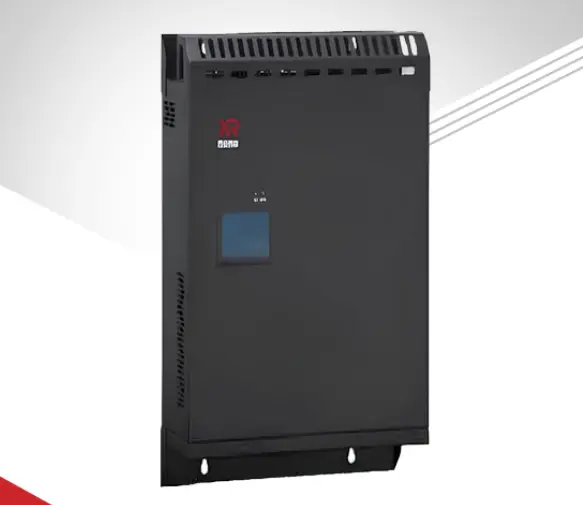
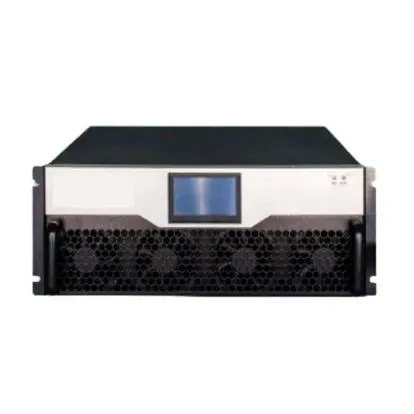
Understanding Active Harmonic Filters: Principles and Basics
How the Technology Works
A lot of times a second, an active harmonic filter takes a sample of the load current. The DSP controller pulls out the harmonic parts of the basic 50/60 Hz signal and then tells the IGBT inverter to make a current that is the opposite of what it is supposed to be. At the point where these two signals meet, they cancel each other out, leaving a clean sinusoidal pattern. The active harmonic filter from Xi'an Xikai has a reaction time of 10 ms or less, which is quick enough to keep up with harmonic patterns that change quickly in variable-speed drive (VSD) situations.
Active vs. Passive Harmonic Filters
Most of the time, the 5th or 7th harmonic frequency is set in passive LC filters. There is a real chance that they will resonate in parallel with the upstream transformer, which can make some harmonics louder instead of quieter. There is no such risk with an active harmonic filter because it makes a compensated current instead of a resonant circuit. It also works well when the power is low, which is when passive banks usually stop working because the voltage drops.
Modular Architecture
You can get Xi'an Xikai's active harmonic filter in both rack-mounted and wall-mounted versions. Each module can work on its own, and by connecting several modules in parallel, you can increase output without having to buy new equipment. This design lets a site start with the capacity it needs now and add modules as non-linear loads grow. This is an important thing to think about for data centers that add more servers over time.
Core Benefits and Industrial Applications of Active Harmonic Filters
Key Performance Advantages
The gadget gives observable outcomes in four areas. Before you buy, you should think about these main benefits:
- Dynamic harmonic suppression: The filter works on the second through fifty-first harmonic orders at the same time, lowering the THD by up to 97%. This keeps the system within the limits set by IEEE 519 and IEC 61000-3-2 without having to be retuned by hand.
- Resistance to grid fluctuations: The unit reacts within 10 milliseconds to fast load changes, like a big motor starting up, because the compensation algorithm runs in real time. This stops transient distortion spikes from spreading across the bus.
- Energy cost reduction: Fixing both displacement power factor and harmonic distortion lowers the perceived power demand, which lowers the cost of energy. Case studies from European industrial parks show that facilities that get fined by the utility company for low power factor or high THD usually get their money back within 18 to 36 months.
- Rugged reliability: Before leaving the plant, each unit goes through a 72-hour aging test and 100% load proof. Internal parts that are flame-resistant keep the noise level below 45 dB.
These benefits directly address the problems that often come up in hospital and data center projects, such as unpredictable harmonic profiles, strict grid code compliance, and no room for unplanned downtime.
Industrial Plant Applications
In CNC machine shops and production lines, variable-frequency drives create dominant 5th and 7th harmonic currents that change the bus voltage and make safety relays trip for no reason. The active harmonic filter from Xi'an Xikai can handle surge currents up to 100 times its rated capacity when a motor starts. This stops power factor penalties and keeps programmable controllers and servo drives safe from damage caused by voltage distortion.
Data Center and Commercial Building Applications
Power supplies that switch between modes are used in server rooms with a lot of computers. These supplies add large amounts of third harmonic currents to the neutral conductor. Installing an active harmonic filter of the right size at the main distribution board keeps neutral current within the wire values and keeps UPS systems from wearing out too quickly. The filter is suitable for hospital retrofits and shopping mall upgrades because it has a noise floor of less than 45 decibels and meets NFPA 70 fire codes. This means it can be used in occupied areas where noise disturbance is low.
Comparing Active Harmonic Filters with Other Solutions
AHF vs. Tuned and Hybrid Passive Filters
While tuned passive filters are good at absorbing one harmonic order, they do come with the risk of resonance and need to be re-calibrated whenever the load mix changes. A passive stage and a small active stage are paired together in hybrid filters. This lowers the cost but limits the compensation bandwidth. An active harmonic filter can handle many harmonic orders at once and doesn't need to be mechanically retuned. This makes it the best choice when the load profile changes often, like in buildings with multiple tenants or production lines that work different shift schedules.
AHF vs. Static VAR Compensators and Harmonic Reactors
Static VAR compensators (SVCs) fix reactive power but don't directly stop harmonic currents; in some cases, they might even make THD worse. Line reactors cut down on harmonics from individual drives by about 30 to 50 percent. This is helpful, but it's not always enough to meet IEEE 519 requirements at the point of common coupling. An active harmonic filter takes care of both reactive power and harmonic distortion in a single device. This makes the switchgear lineup simpler and requires less panel space.
Cost and Performance Trade-offs
A detuned reactor-capacitor bank might be the most cost-effective choice for projects where the harmonic spectrum is stable and load growth is not likely. An active harmonic filter's ability to respond lowers the cost per unit and gets rid of failures caused by resonance, which makes it worth the extra money for projects involving data centers, hospitals, or other buildings with a variety of non-linear loads.
Procurement and Installation Guide for Active Harmonic Filters
Evaluating Supplier Credentials
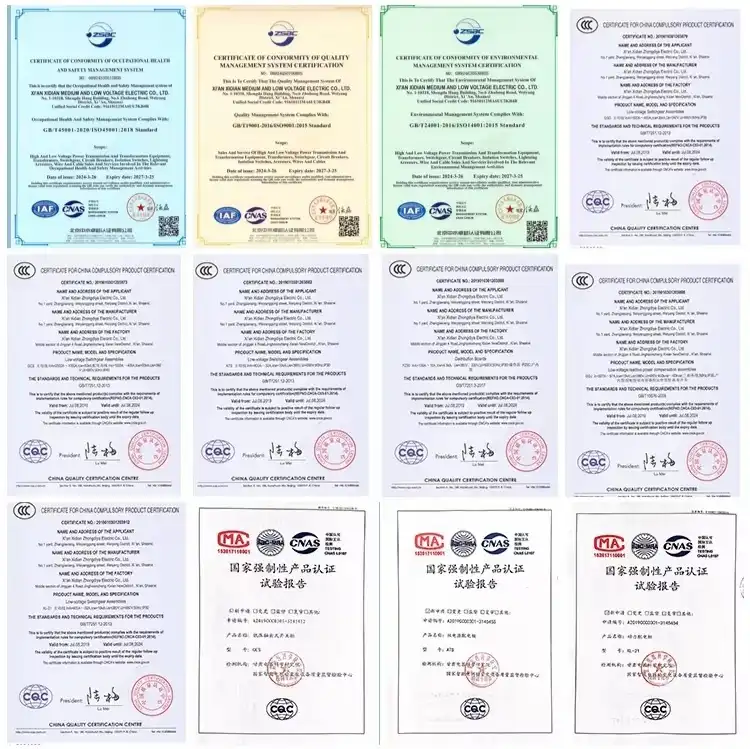
Check that the active harmonic filter has CE, UL, CCC, ISO 9001, and ISO 14001 certifications when you are narrowing down the list of providers. These credentials show that both the manufacturing process and the product have been checked by a third party that is knowledgeable about the markets you serve, such as the US, Europe, or the Asia-Pacific. Before you place a bulk order, make sure you get factory test reports that include 72-hour aging test data and full-load validation records.
Site Assessment and Installation Best Practices
A power quality study is the first step to a good installation. Check the THD voltage and current at the main bus when the system is working normally, and write down the harmonic spectrum to find the dominant orders. The highest compensating current should be used to determine the size of the active harmonic filter, not the value of the transformer. Place the unit near the main harmonic source to lower the cable resistance between the output of the filter and the load. Check the THD with a power quality tester after installation to make sure it meets standards before giving it to the end client.
Aftersales Support and Maintenance
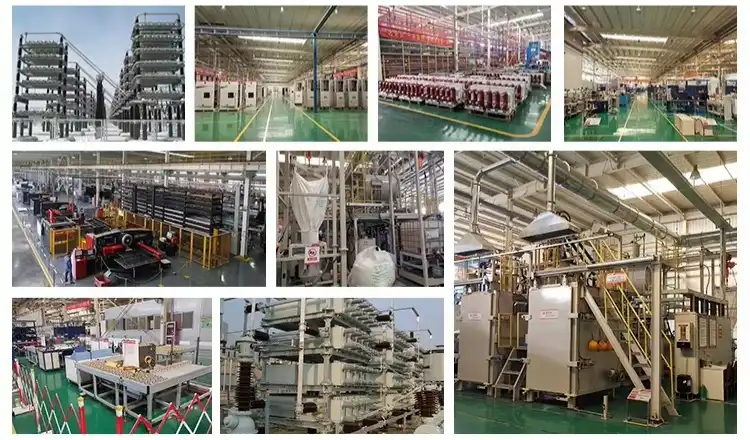
Ask for a clear warranty statement—usually between 12 and 24 months—and make sure the supplier offers remote diagnostics through communication protocols like BACnet or Modbus. Xi'an Xikai offers organized after-sales programs and help with testing on-site. As part of regular maintenance, cooling fans are checked, software versions are confirmed, and IGBT gate driver boards are inspected once a year. This keeps the average time between failures well above the industry average.
Conclusion
One of the most direct ways to make sure that a building's power meets IEEE 519 and IEC 61000 standards is to use an active harmonic filter. It fixes power factor problems, fixes harmonic distortion in real time, and protects sensitive equipment from damage caused by voltage distortion. Plus, it does all of this without the resonance risks that come with passive solutions. Choosing an active harmonic filter with verified certifications, flexible scalability, and a recorded aftersales program lowers project risk by a large amount for procurement teams working on projects in data centers, hospitals, and industrial plants. The technology works best when the provider can do a harmonic study before the project starts and then be responsible for measuring the results after the project is up and running.
FAQ
1.How long does an active harmonic filter typically last?
Most active harmonic filters in industrial settings last between 10 and 15 years with proper care. The first thing that usually limits how long a cooling fan lasts is its lifespan. Many makers say that fans should be replaced every 5 years. IGBT and capacitor life is extended when the unit is used within its rated ambient temperature range, which is usually 0°C to 40°C.
2.Does an active harmonic filter always reduce energy bills?
Not all the time. Most of the energy saves come from fixing the power factor and getting rid of the fees that utilities charge for too much reactive power, or THD. For facilities that already work close to unity power factor, the money they make will be less. The only reliable way to guess how much a site will save is to do a load study before the job starts.
3.What should I check when comparing active harmonic filter manufacturers?
Third-party certifications (CE, UL, CCC), factory test documents (72-hour aging, 100% load validation), and the supplier's ability to offer application engineering help before and after commissioning should be given the most weight. In the contract, not just in the marketing materials, ask for performance guaranties that can be measured, like the THD reduction rate and the response time.
4.Can an active harmonic filter work alongside an existing power factor correction bank?
Most of the time, yes. The management method for the active harmonic filter can be set up so that it doesn't affect capacitor banks that are already in use. During the site inspection phase, share the single-line plan and current PFC bank specs with the supplier's engineering team to make sure they are compatible.
Partner with Xi'an Xikai for Your Next Power Quality Project
Xi'an Xikai's active harmonic filter line has a 97% THD reduction rate, a 10 ms response time, and modular scalability. It is certified by ISO 9001, ISO 14001, CE, UL, and CCC. Before it is shipped, every unit goes through a full-load validation and a 72-hour aging test. Whether you need an active harmonic filter source for a new data center or to fix up an old hospital, our engineering team can look at your harmonic survey data and help you choose the best design. You can reach us at xaxd-electric.com or serina@xaxd-electric.com, amber@xaxd-electric.com, or luna@xaxd-electric.com.
References
1. IEEE Std 519-2022, IEEE Recommended Practice and Requirements for Harmonic Control in Electric Power Systems, IEEE, 2022.
2. IEC 61000-3-2:2018, Electromagnetic Compatibility (EMC) – Limits for Harmonic Current Emissions, IEC, 2018.
3. Mohan, N., Undeland, T. M., & Robbins, W. P., Power Electronics: Converters, Applications, and Design, John Wiley & Sons, 2003.
4. Akagi, H., "Active Harmonic Filters," Proceedings of the IEEE, Vol. 93, No. 12, IEEE, 2005.
5. Dugan, R. C., McGranaghan, M. F., Santoso, S., & Beaty, H. W., Electrical Power Systems Quality, 3rd ed., McGraw-Hill, 2012.
6. Bollen, M. H. J., Understanding Power Quality Problems: Voltage Sags and Interruptions, IEEE Press / Wiley-Interscience, 2000.