
SVG Compensator: What It Is and How It Controls Pressure
2026-09-29 17:33:08
An SVG compensator — short for Static Var Generator — is a power electronics device that injects or absorbs reactive power in real time to stabilize voltage across a grid. Unlike mechanical switching equipment, it responds within milliseconds, making it suitable for grids with fast-changing loads like wind farms, solar plants, and heavy industrial facilities. This guide covers how an SVG compensator works, how it compares to older technologies, where it is used, and how to choose the right unit for your project.
Understanding SVG Compensators: Definition and Working Principle
What Is an SVG Compensator?
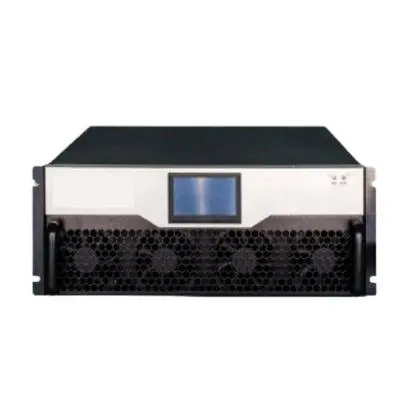
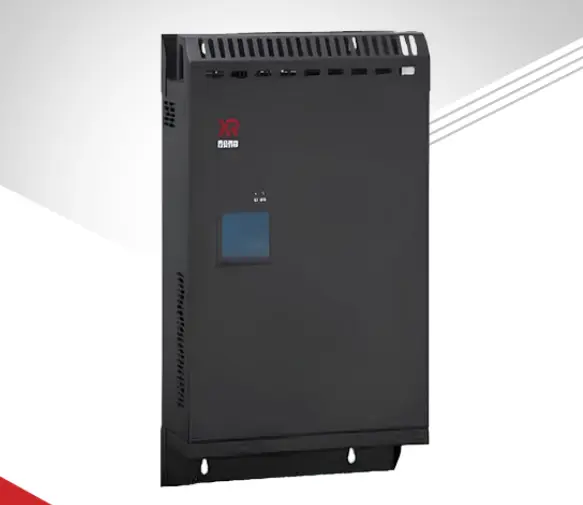
An SVG compensator is a voltage-source converter (VSC)-based device that is linked to the power grid by a coupling reactor. It checks the reactive power deficit at the point of common coupling and changes its output to match. The XD-dSVG from Xi'an Xikai can work with rated voltages ranging from 6 kV to 35 kV and correction capacities ranging from 0.3 Mvar to 50 Mvar. This makes it useful for a lot of different utility and industrial uses.
How It Controls Voltage Pressure
The gadget adds a controlled AC current that is 90 degrees ahead of or behind the power on the grid. The SVG compensator either adds reactive power (capacitive mode) to lower the voltage or takes it away (inductive mode) to raise it by changing the size of this current. This closed-loop voltage control keeps the bus voltage in the narrow range needed by grid codes. This is why engineers call it "pressure control."
Four Operating Modes of XD-dSVG
You can choose from four modes on the XD-dSVG: constant reactive current, constant reactive power, constant bus voltage, and constant power factor. Each mode can be changed to fit the needs of the user, so the same hardware can be used in a variety of grid situations, such as a wind farm that needs to strictly control voltage or a factory that needs a fixed power factor to meet billing requirements.
SVG Compensator vs Other Power Compensation Technologies
Response Speed Comparison
Most static var compensators (SVCs) use thyristor-switched capacitors and reactors, which means that they respond in 20–40 ms, which is about one to two power cycles. A modern SVG compensator has a response time of less than 5 ms because its IGBT-based converter can change output all the time without having to wait for a zero-crossing. This change in speed is important for green energy projects that need to follow low-voltage ride-through (LVRT) rules.
Capacitor Banks and FACTS Devices
While fixed capacitor banks are cheap, they only switch on and off in defined steps and can't take in reacting power. The VSC design of FACTS devices like the STATCOM is similar to that of the SVG compensator. However, the word "SVG" is commonly used in Chinese national standards and EPC contracts in Asia and the Middle East. The XD-dSVG also reduces low-order harmonics up to the 13th order and fixes three-phase imbalance, which is something that a pure STATCOM doesn't usually do all in one package.
Maintenance and Total Cost
SVCs need their capacitor and reactor banks to be replaced every so often. Switching and replacing fuses on capacitor banks must be done by hand. The SVG compensator doesn't have any moving parts and is made of high-quality IGBT modules with laminated busbars. Before sending the product, Xi'an Xikai makes sure it works by simulating a load for 72 hours. Lifecycle costs go down with less upkeep, which is something that EPC procurement managers look at very carefully when they compare bids.
Industrial Applications and Case Studies of SVG Compensators
Renewable Energy Grid Integration
Voltage changes caused by wind and solar power are punished by grid operators. An SVG compensator connected to a wind farm's 35 kV collector bus constantly changes the reactive output to keep the voltage within ±2% of what it should be. The Internet of Things (IoT)-enabled XD-dSVG units from Xi'an Xikai connect to SCADA systems using IEC 61850 protocols. This gives operators real-time data and maintenance warnings that are planned ahead of time. This is becoming a more important part of grid-connection agreements in China's "Three North" regions and export markets like Chile and the Middle East.
Heavy Industry: Metallurgy and Mining
Reactive power swings and low-order harmonics are both made by electric arc furnaces and big variable-frequency drives. By adding an SVG compensator to the plant center, power factor penalties are removed, and nearby lines are less likely to complain about flicker. During furnace electrode short-circuit phases, the XD-dSVG can handle surge currents up to 100 times its rated capacity. This is a real condition that cheaper equipment can't handle.
Substations and Commercial Buildings
At the substation level, the SVG compensator keeps the bus voltage stable when renewable inverters go out of sync. The flexible cabinet design lets more space be added in plug-and-play chunks without having to shut down the whole system in business buildings like hospitals and data centers. The units made by Xi'an Xikai make less than 45 decibels of noise, which is quiet enough for occupied buildings, and they use flame-resistant parts that meet international fire safety standards.
How to Choose and Procure the Best SVG Compensator for Your Needs
Define Technical Requirements First
To get quotes, the project engineer needs to write down the rated voltage level (6 kV, 10 kV, or 35 kV), the necessary adjustment range in Mvar, the response time (≤5 ms for LVRT compliance), and the harmonic spectrum at the connection point. Based on these four factors, an ordinary XD-dSVG cabinet or a special setup is required.
Evaluate the Supplier's Track Record
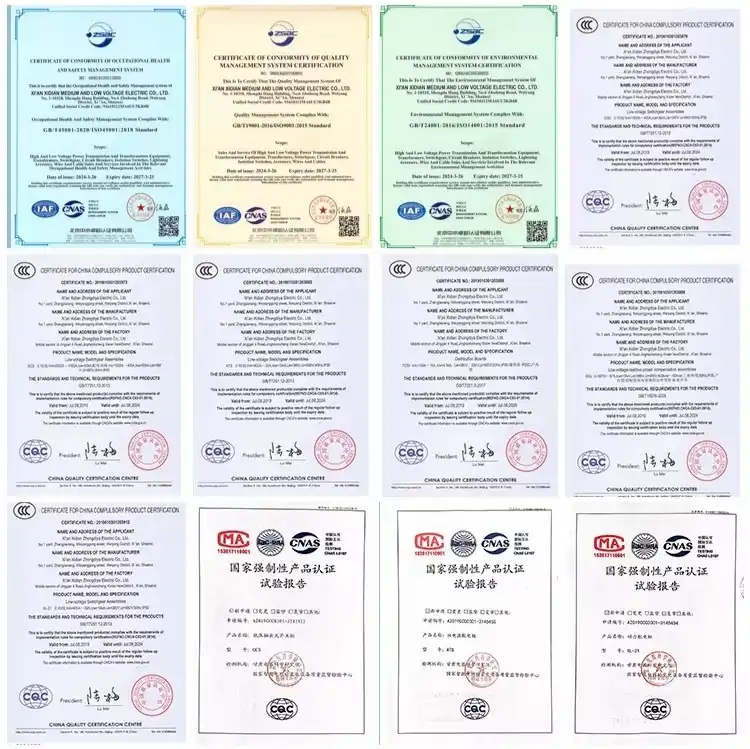
Type-test records are required for all EPC projects where the owner has the power to approve brands. Check to see if the company that sells SVG compensators is certified by ISO 9001 and ISO 14001 and can show you test results from a third party for things like inductance uniformity, temperature rise, and lightning impulse resist. Xi'an Xikai has been working on power quality solutions for more than 15 years and has multiple patents in the area of reactive compensation technology. This provides procurement managers with proof that bids have been properly submitted.
Assess IGBT Supply Chain and After-Sales Coverage
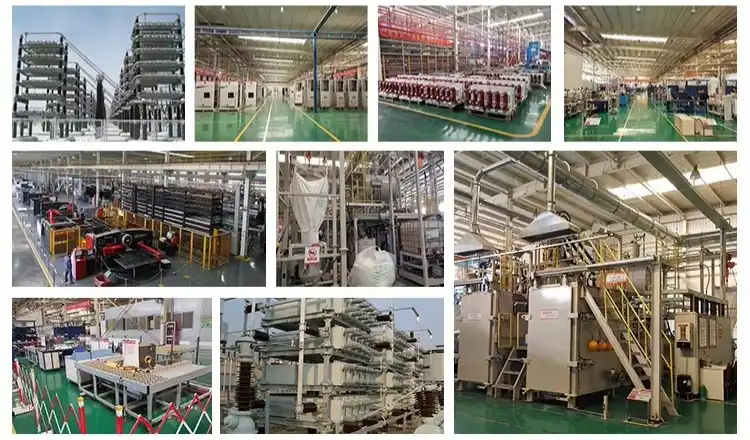
One thing that worries project engineers is the consistency of the IGBT module supply. Ask the company that makes the SVG compensator to name the IGBT brand and confirm when the parts will be in stock. Xi'an Xikai finds high-quality modules and puts them together precisely using automated systems that are designed to handle heat. They back up every installation with technical support 24 hours a day, seven days a week, from the feasibility study to commissioning.
Conclusion
Grid codes in every major market now require verified reactive power support and LVRT capability for all new energy projects. This means that an SVG compensator is no longer a choice. The XD-dSVG meets these needs by having a reaction time of 5 ms, a voltage range of 6–35 kV, a capacity of up to 50 Mvar, and four working modes that can be set to different values. Each unit at Xi'an Xikai is backed by ISO certifications, full type-test records, and tech help from one project to the next. If you need a tried-and-true reactive compensation solution for your next wind, solar, or industry project, the XD-dSVG is a good option that is also good for business.
FAQ
1.What is the typical response time of an SVG compensator?
The XD-dSVG achieves a response time under 5 ms, measured from the moment a reactive power error is detected to the moment corrective current is injected. This meets the fast LVRT requirements specified in China's GB/T standards and in many European grid codes.
2.Can one SVG compensator handle both reactive compensation and harmonic filtering?
Yes. The XD-dSVG compensates for fundamental reactive power and simultaneously suppresses low-order harmonics up to the 13th order, along with three-phase imbalance correction. This multi-function capability reduces the number of separate devices needed at the substation.
3.What maintenance does an SVG compensator require?
Dry-type SVG reactors need periodic air-duct cleaning to prevent dust blockage of cooling channels and torque checks on terminals to prevent hotspots. The IGBT modules should be inspected annually for thermal stress indicators. Overall, the maintenance burden is far lower than that of thyristor-based SVCs or capacitor banks.
4.How is the XD-dSVG configured for different grid codes?
The unit supports four operating modes — constant reactive current, constant reactive power, constant bus voltage, and constant power factor — each programmable through the control interface. This flexibility allows the same SVG compensator hardware to comply with different national and regional grid interconnection requirements.
5.What certifications should I request from an SVG compensator supplier?
Request ISO 9001, ISO 14001, and relevant type-test reports covering inductance linearity, temperature rise under harmonic load, and lightning impulse withstand. For projects on the State Grid or Southern Grid procurement platforms, also verify that the unit appears on approved vendor lists.
Request a Technical Consultation from Xi'an Xikai
The XD-dSVG SVG compensator is sold by Xi'an Xikai Medium & Low Voltage Electric Co., Ltd. to renewable energy EPC projects and industrial power quality applications all over the world. Our tech team can look at the data from your grid study and tell you what the right capacity and setup are. You can email our team at serina@xaxd-electric.com, amber@xaxd-electric.com, or luna@xaxd-electric.com to get a product datasheet, type-test documentation, or a quote that is tailored to your project. Please go to xaxd-electric.com to find out more about all of our SVG compensator options.
References
1. IEEE Standards Association. IEEE Std 1409-2012: Guide for Application of Power Electronics for Power Quality Improvement on Distribution Systems Rated 1 kV Through 38 kV. IEEE, 2012.
2. Hingorani, N. G., & Gyugyi, L. Understanding FACTS: Concepts and Technology of Flexible AC Transmission Systems. IEEE Press / Wiley, 2000.
3. Acha, E., Agelidis, V., Anaya-Lara, O., & Miller, T. J. E. Power Electronic Control in Electrical Systems. Newnes / Elsevier, 2002.
4. International Electrotechnical Commission. IEC 61850: Communication Networks and Systems for Power Utility Automation. IEC, 2013.
5. International Electrotechnical Commission. IEC 60076-6: Power Transformers — Part 6: Reactors. IEC, 2007.
6. Song, Y. H., & Johns, A. T. (Eds.). Flexible AC Transmission Systems (FACTS). IET Power and Energy Series, Institution of Engineering and Technology, 1999.