
What Makes Zinc Oxide Blocks Effective in Polymeric Lightning Arresters?
2026-11-11 17:21:09
Zinc oxide blocks make a polymeric lightning arrester for AC system duty effective because their resistance falls sharply when voltage rises. At normal voltage, they pass only a small leakage current. When lightning or switching pushes the voltage up, they become conductive almost instantly, send the current to earth, and hold the voltage at a safer residual level. Afterward, they return to a high-resistance state. The polymeric housing protects that block column from moisture, pollution, and impact. I wrote this guide for traders and procurement managers who ship arresters with transformers and switchgear, so you can compare models using clear facts.
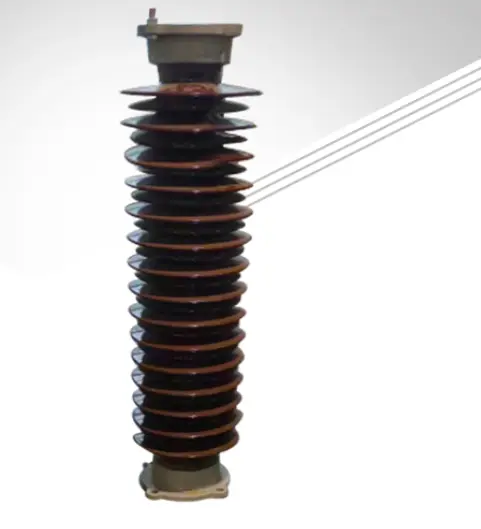
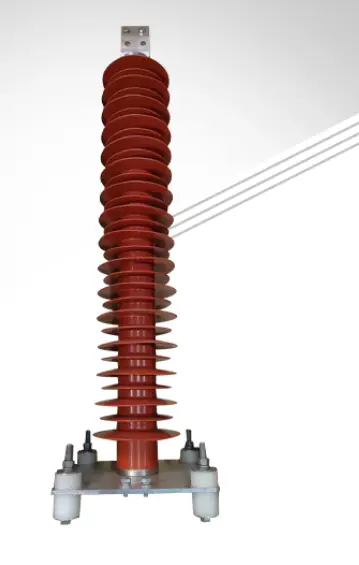
How Zinc Oxide Blocks Protect a Polymeric Lightning Arrester for AC System Networks
What Zinc Oxide Blocks Are Made Of
Different kinds of metal oxides are zinc oxide blocks. Some other metal oxides are mixed with zinc oxide powder and pressed into disks. The disks are then heated to a high temperature and sinter. In 1971, Matsuoka wrote about how this ceramic's electrical behavior wasn't straight. Later, silicon carbide units that needed series gaps were replaced by gapless arresters built on top of it. Each grain limit inside a disk blocks a small amount of electricity. The edges make a path that doesn't let current flow when the voltage is low but does a lot when the voltage is high. A stack of these disks serves as the electrical core of every polymeric lightning arrester for AC system installation. After that, let's look at why that works for AC networks.
Why the Nonlinear Curve Matters on AC Networks
An arrester is always between phase and earth, so it needs to stay cool at the voltage it is used for. When that happens, the block column has a loss current that is a lot less than 1 mA. That keeps the temperature down and helps the service last a long time. If lightning strikes and raises the voltage, the current goes up by a huge amount, but the voltage across the blocks only goes up a little. This flat response keeps the stress on the transformer's windings and bushings to a minimum. At nominal discharge classes like 5, 10, and 20 kA, IEC 60099-4 tests arresters with an 8/20 µs current wave. This way, you can compare products in the same way.
How the Polymeric Housing Supports the Blocks
The blocks are what make the electricity work, and the housing keeps them dry and stable. It takes longer for leakage current to move across a dirty or wet surface when silicone rubber sheds are present. Silicone doesn't let water stick to it, so it doesn't let surface flashover happen in humid air. A polymer shell is lighter than a porcelain one, and it doesn't break into pieces when pressure builds inside. That keeps people and equipment nearby safe. The most important thing is sealing, since wetness inside the column increases leaking current and shortens the life of the block. I look at the block quality and the housing seal together when I review a polymeric lightning arrester for AC system quotation.
Selecting a Polymeric Lightning Arrester for AC System Projects Overseas
Match Voltage, MCOV, and Grounding
The nominal system voltage can't choose an arrester by itself. You need to know the highest voltage in the system, how to ground it, the rated voltage, the maximum continuous operating voltage (MCOV), and the expected short-term overvoltage. If the network is well-grounded, a lower rating might be fine. A ground fault in an isolated or resonant-grounded network makes the voltage on healthy stages go up, which is why a higher grade is needed. This is why a model that works in one country might not work in another. Ask each end user for grounding information before you quote on polymeric lightning arrester for AC system orders. Then, make sure that the residual voltage stays below the protected transformer's insulation withstand level by a certain amount. For this step, IEC 60099-5 tells you how to choose.
Creepage Distance and Pollution Class
This is the length of the shielding surface between the live end and the earth. IEC 60815-1 sorts places by how polluted they are. The exact creepage distances range from 22.0 mm/kV for very little pollution to 53.7 mm/kV for a lot of pollution. Salt from the coast, dust from the desert, and factory smoke all move a site up the social ladder. Before you compare models, make sure you know how each seller talks about their creepage number. Some use rated voltage, while others use maximum system voltage. Even if its blocks are in perfect working order, a polymeric lightning arrester for AC system with the incorrect creepage may flash over.
Altitude, Humidity, and Sea Freight
Thinner air above 1,000 meters lowers the external flashover strength, so the length of the housing may need to be changed. The plateau-type equipment from Xi'an Xikai can work at heights of up to 4,000 meters, and our engineers can look at the arrester that comes with it to make sure it fits your site's height. A different risk is humidity when shipping goods by sea. Ask for proof of sealing control, like water soaking or leak test results, and make sure that each unit comes in dry, shock-proof packing. When compared to a broken arrester at a faraway base, these checks don't cost much. You can avoid claims later by purchasing a polymeric lightning arrester for AC system that is sealed and documented.
YH10W-216/562W: A Polymeric Lightning Arrester for AC System Duty
Core Specifications at a Glance
For AC system use in high-voltage networks, use the YH10W-216/562W polymeric MOA. It has a peak voltage of 216 kV and a DC reference voltage of at least 314 kV at 1 mA. It works in temperatures ranging from -40 °C to +85 °C and has two units. When it creeps, it moves 31 mm/kV. In the model code, the rated voltage is written as 216 kV and the residual voltage is written as 562 kV. This is how things are usually named. For your order, always check the final numbers against the datasheet. This is because MCOV, minimum discharge current, and test data belong in the technical file.
Two-Unit Construction and Polymer Housing
This arrester can stack two units next to each other. By dividing the column into two parts, each part is shorter, which makes export projects easier to pack and handle. The UV-resistant polymeric housing increases the distance between the stones, keeps water out, and doesn't break like porcelain does. It's also possible for the design to relieve pressure. The release path makes sure that the gas pressure inside the arrester goes out in a controlled way so that the housing doesn't burst. That fault behavior is important to site safety teams for projects that combine a polymeric lightning arrester for AC system with transformers and switchgear.
Protection, Sealing, and Ageing Performance
Xi'an Xikai lists five strengths of this arrester: it has great protective performance, reliable sealing, good performance with aging, safe pressure relief, and ongoing development of high-tech products. ZnO block columns protect, while sealing and aging depend on how the blocks fit into the housing and how good they are. When you buy a certain unit, make sure you get regular test results on it. These should include the reference voltage, the residual voltage, the partial discharge, and the leakage current at a fraction of the reference voltage. You should also ask for type-test results under IEC 60099-4 for the model. The polymeric lightning arrester for AC system can be quickly approved by your customer's engineer with clear paperwork.
Standards, Testing, and Buying Mistakes to Avoid
What IEC 60099-4 Evidence Should Include
IEC 60099-4 talks about gapless metal oxide arresters for AC circuits with more than 1 kV of voltage. Find out which edition fits your project, then ask for a type-test, a routine-test, and acceptance documents. There are also dimensional drawings, voltage-current characteristics, residual voltage tables, and installation instructions in a full technical file. You should look at the polymeric lightning arrester for AC system as a whole, not just the blocks. Field life is affected by things like block orientation, sealing, polymer binding, and terminal strength. Traders need these papers for customs, bids, or getting approval from the end user, so get them before you ship. If you work on projects in North America as well, IEEE C62.11 will be the standard there.
Common Selection Mistakes
Four mistakes are made a lot. First, buyers choose based on nominal voltage and don't look at grounding, which means they get the wrong MCOV. Second, buyers don't look at how long a lead is. When there is a fast impulse, voltage builds up across the protected equipment because of long connections and poor earthing. Third, people only look at the unit price and don't bother with accessories or paperwork. A polymeric lightning arrester for AC system is assumed to never need maintenance by buyers. It doesn't need to be fixed, but it does need to be looked at. Regularly check the state of the housing, the links between the terminals and the earth, for contamination and rust, and the disconnector signs.
Looking Beyond the Unit Price
I can see why traders pay close attention to price: it's important. But a low quote might not include the disconnector, brackets, test reports, or export packaging. You will have to pay extra for these things after the fact. Line by line, look at the quotes and compare the block specifications, rated voltage, creepage, accessories, documents, and packing. It's also important to know how much it will cost to send someone to the spot if an arrester fails. A failure at a faraway source costs a lot more than the difference in prices between two quotes. A polymeric lightning arrester for AC system that fits the site and comes with all the necessary paperwork is the most cost-effective option.
Applications and Ordering a Polymeric Lightning Arrester for AC System in Mixed Shipments
Where These Arresters Are Installed
Lightning and switching overvoltages can damage power transformers, circuit breakers, cable terminations, line entrances, and equipment in the switchyard. Polymeric arresters keep these things safe. As close to the equipment terminals as possible should be used to connect them. Short leads and a low-impedance earth should be used. They are also used in mines, factories, and renewable energy stations, though the brackets, terminals, and creepage distances are often customized. Transformers, switches, and isolators are typically shipped with a polymeric lightning arrester for AC system in export substations. Keeping the set's power and wiring the same across the board keeps changes from having to be made at the last minute on site.
Writing an RFQ That Avoids Rework
In a strong RFQ, you should include information about the minimum and maximum voltages, frequency, grounding method, MCOV, rated voltage, discharge current, application, altitude, pollution class, creepage requirement, mounting arrangement, disconnector needs, standards, quantity, destination, and documents that you need. When items are missing, the supplier has to guess or ask again, which takes more time. With a full RFQ, the manufacturer only has to look over the specs once and suggest a configuration that meets the requirements. If you work with clients in more than one country, keep the same form for each type of the polymeric lightning arrester for AC system and only change the voltage, altitude, and local standard fields. This habit also helps you keep your model variations in check.
Pairing Arresters With Transformers and Switchgear
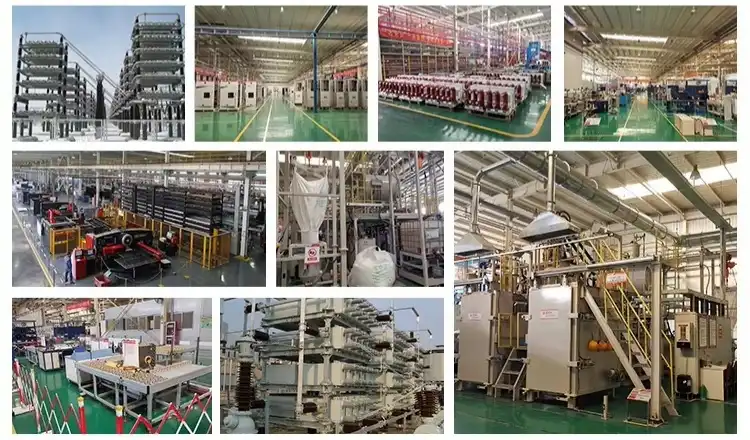
Xi'an Xikai makes dry-type transformers, vacuum circuit breakers, instrument transformers, air-insulated switchgear, high and low voltage switchgear, and prefabricated substations. They make these things in 7 groups, 34 lines, and more than 100 different versions. That range lets us look at both the arrester and the equipment it keeps safe, which lowers the chance of a mismatch when the two are looked at together. For checking on things, the JCQ-3 (YC)10/800D communication-type monitor keeps track of discharge counts and leakage current and sends information using Modbus-RTU over an RS485 interface. Make sure it works with your arrester class before you place your order.
Conclusion
Zinc oxide blocks work well because their nonlinear resistance keeps leakage low at the working voltage and stops overvoltage from happening during lightning and switching events. The polymeric housing improves sealing, creepage distance, and failure behavior in a polymeric lightning arrester for AC system use. Protecting something isn't just about how good the blocks are. The spot must have the same rated voltage, MCOV, grounding, residual voltage, creepage distance, altitude, humidity, lead length, and IEC 60099-4 testing that was done on paper. There are two units, a DC reference voltage of at least 314 kV, and 31 mm/kV creepage distance on the YH10W-216/562W, which shows these points. The lowest unit price doesn't mean the lowest project cost; good planning does.
FAQ
1. How do zinc oxide blocks limit overvoltage?
As the voltage goes up, their resistance drops very quickly. When there is lightning or a switch, the blocks send the current to earth and keep the voltage close to the level that was there before. After the brief is over, they go back to a high-resistance state and let a small amount of current leak through.
2. Does a polymeric lightning arrester for AC system need maintenance?
For now, it only needs a quick look over. Regularly check the housing, the connections, the earth, the contamination, the corrosion, the terminals, the earth connections, and the disconnector indicators. Trend data can be useful when you use a leakage current monitor.
3. What creepage distance does the YH10W-216/562W have?
The distance it moves is 31 mm/kV. That number should match your site pollution class according to IEC 60815-1. Before you place your order, make sure you know if it means rated voltage or maximum system voltage.
4. Is a polymeric arrester always better than porcelain?
Not all the time. Polymeric units are lighter and don't break easily, but porcelain may be needed because of the way the substation is set up now, utility rules, or the need to be compatible with other parts. Choose based on the spot factors and the project requirements.
Request a Quote from Xi'an Xikai, a Polymeric Lightning Arrester for AC System Manufacturer
Your voltage, grounding method, altitude, creepage requirement, and quantity will be reviewed by Xi'an Xikai, a polymeric lightning arrester for AC system manufacturer. Then we send you datasheets, test documents, and a suggestion that makes sense. Reach out to serina@xaxd-electric.com, amber@xaxd-electric.com, or luna@xaxd-electric.com by email. You can find out more about the YH10W-216/562W and our other transformers and switches at xaxd-electric.com.
References
1. IEC 60099-4, Metal-Oxide Arresters Without Gaps for AC Systems, Edition 3.1, 2014
2. IEC 60099-5, Selection and Application Recommendations, 2018
3. IEEE Std C62.11, Metal-Oxide Arresters for AC Power Circuits (Over 1 kV), 2020
4. IEEE Std C62.22, Guide for the Application of Metal-Oxide Arresters for Alternating-Current Systems, 2009
5. Matsuoka, M., "Nonohmic Properties of Zinc Oxide Ceramics," Japanese Journal of Applied Physics, 1971
6. IEC 60815-1, Selection and Dimensioning of High-Voltage Insulators for Polluted Conditions, Part 1, 2008