
How to Choose an Indoor Potential Transformer Ratio
2026-11-06 17:31:59
To choose an indoor potential transformer ratio, start with the system voltage and the secondary value your meters and relays need, then divide the primary voltage by the secondary voltage. Next, decide whether you measure line-to-line or line-to-neutral voltage, because that choice changes the ratio by a factor of √3. Confirm the burden, accuracy class, insulation level, connection type, and cubicle space before you place an order. A correct ratio keeps readings accurate and prevents false relay trips. This guide for switchgear makers and purchasing teams who build 24 kV equipment and want a clear path from specification to purchase order.
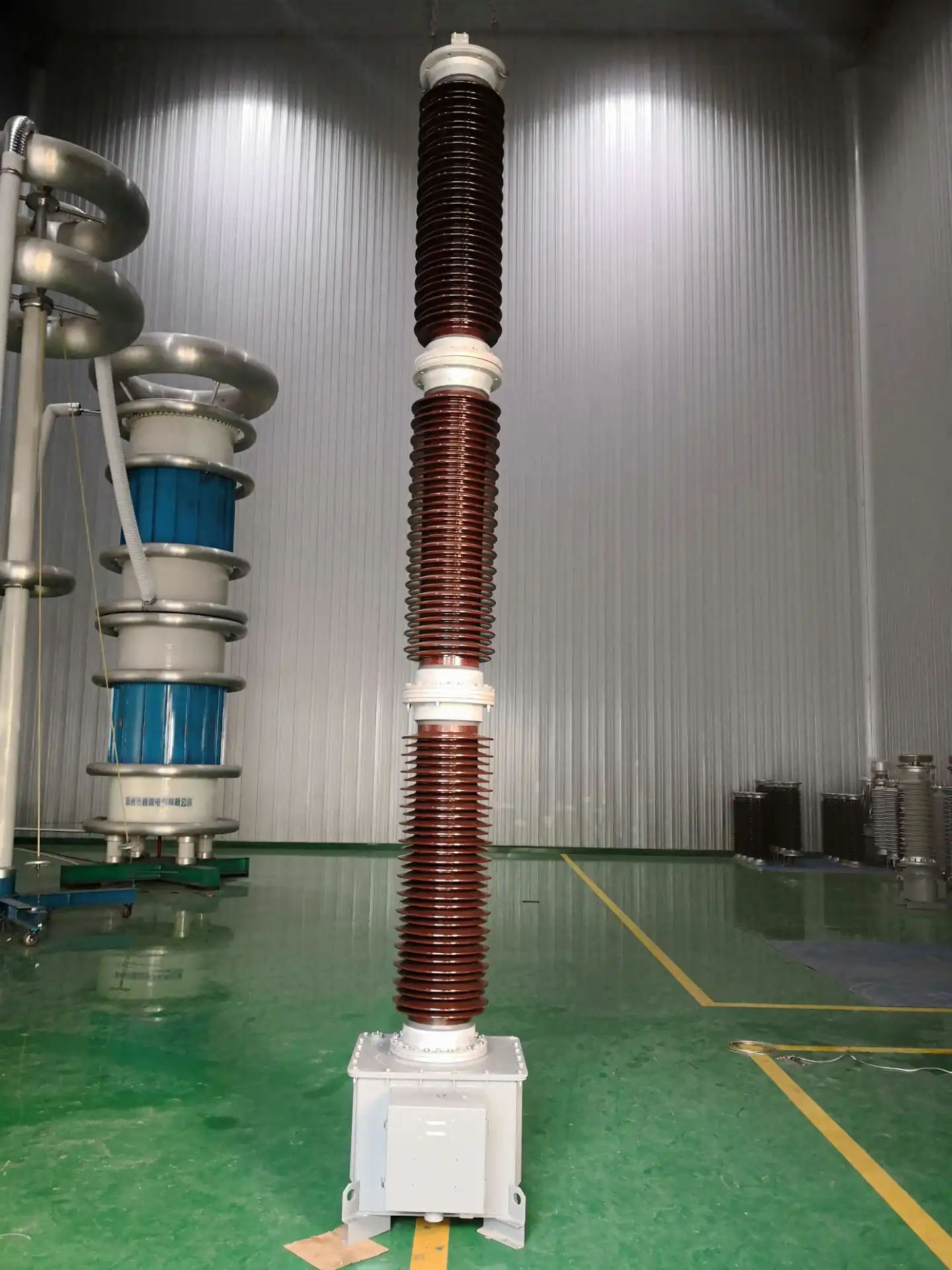
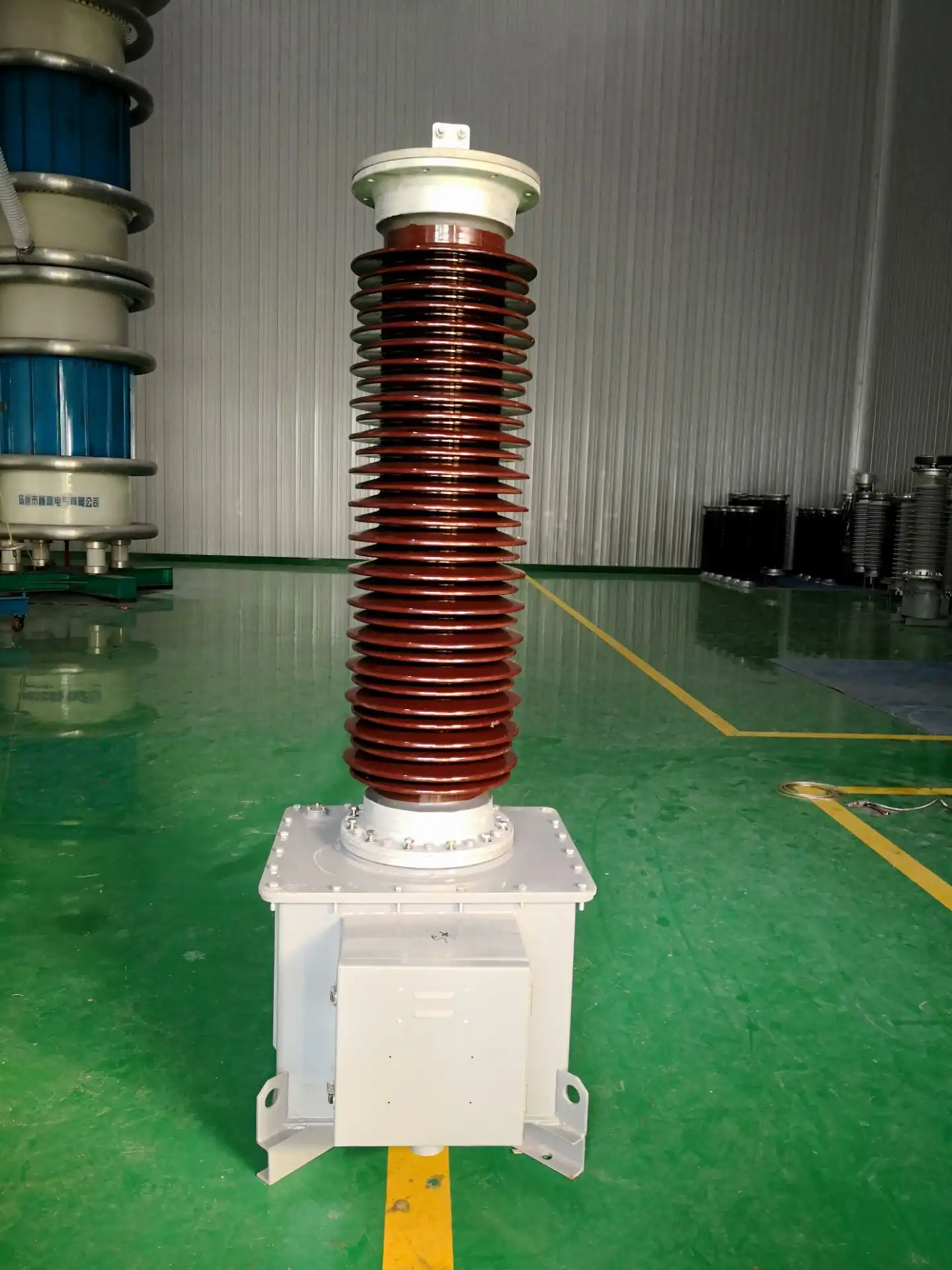
Define the Indoor Potential Transformer Ratio and Match It to the Application
Read the Primary and Secondary Voltage
The ratio is the voltage of the primary divided by the voltage of the secondary. It is 100:1 for an 11 kV/110 V unit and 200:1 for a 20 kV/100 V unit. Other numbers like 100 V, 110 V, 100/√3 V, and 110/√3 V are different for each meter, relay, and area. A mismatch can lead to wrong readings, billing problems, or relay problems. Write down the system voltage, the largest voltage that the equipment can handle, and the secondary value that each linked device needs before you choose an indoor potential transformer. That's right, our 24 kV type works with both 50 Hz and 60 Hz grids.
Choose Line-to-Line or Line-to-Neutral
When you split line voltage by √3, you get phase voltage. When a transformer is connected between a phase and earth, its primary rating is the line voltage over √3. The secondary rating is written in the same way, like 100/√3 V. Some engineers put a line-to-line ratio on a phase-to-earth unit and get readings that are 1.73 times off. Before anything else, look at the single-line diagram and the relay manual. The two files show how to connect each gadget. Ask the supplier to print the ratio in the same way on the rating plate and the datasheet so that technicians can read the same thing at the factory and on the job site.
Match Metering and Protection Duties
Because they send billing and energy data, metering circuits need to be very accurate and have a low phase-angle error. When there is an earth fault, protection circuits are more interested in the voltage factor and how the transformer acts. Depending on the way of earthing, standards usually list 1.2 for 8 hours, 1.5 for 30 seconds, or 1.9 for 30 seconds or 8 hours. If you need one unit to do both jobs, you might want to think about a dual-secondary design. This way, each winding can handle its own load and accuracy class. When you put in an indoor potential transformer in either fixed or retractable switchgear, you should treat it as if it were part of the whole assembly and check the rated voltage, insulation, earthing, and busbar layout.
Check Burden, Accuracy, Insulation, and Site Conditions
Calculate the Burden
The total VA that the auxiliary line draws is called its burden. The wire loss should be added to each meter, relay, sensor, and test switch. Let's say that a repeater uses 15 VA and a meter uses 10 VA. A 30 VA rating works because the load is 25 VA. IEC 61869-3 says that the load should not be more than 25% to 100% of the rated load, so don't give it a rating that is much higher than it really is. Ratio and phase-angle error go up when the burden is too high or too low. There are 30, 80, and 200 VA outputs on our indoor voltage transformer, so you can match small meter loads with bigger safety or monitoring loads.
Verify the Accuracy Class
Choose the right class for the job. For revenue metering, 0.2 or 0.5 is usually enough, and class 3P is used for protection in relay circuits. Class 0.2 and class 0.5 accuracy are shown on our 24 kV unit. Let our engineers know early on if your design needs 3P so they can look it over. Do not give each circuit a different class. That's why you should read the datasheet limits along with the class label. A class only works in the specified load and voltage range. When you get prices for an indoor potential transformer, make sure that each company uses the same language to describe accuracy.
Check Insulation and Site Conditions
How long accuracy lasts depends on how well the insulation works. The rated insulation level for our unit is 17.5/55/105 kV, and it has an epoxy resin body that is completely sealed. To get rid of air pockets, we use vacuum casting. This is because air holes cause partial discharge, which wears down insulation slowly and can change accuracy over time. Check the numbers on the list against the resist values, creepage, and clearances of your switchgear. Then check the altitude, temperature (the range given is -25°C to +55°C), humidity, pollution, and condensation. Xi'an Xikai also makes plateau-type equipment that can work at up to 4,000 meters above sea level, so bring your high-altitude projects to us early.
Connection, Ferroresonance, and Construction Choices for an Indoor Potential Transformer
Pick the Connection Arrangement
The most common ways to set up residual voltage are single-phase, wye-wye, open-delta, and broken-delta. You can change just one phase at a time with single-phase units, which gives you more layout options. In small cubicles, three-phase assemblies can help save space. The diagram needs to show the main and secondary terminals, grounding points, test links, and all the devices that are connected. Remember that you should never short-circuit a PT secondary, so add fuses or small circuit breakers to the secondary side. In case of a problem, these devices cut the transformer off from the power source and keep people safe from the high voltage on the secondary. Unlike a PT, a current transformer (CT) secondary must not be left open during operation because an open CT secondary can produce dangerously high voltage. CT secondary circuits should remain connected to their burden or be safely short-circuited when the primary is energized.
Control Ferroresonance
In medium-voltage circuits that are not grounded or are not heavily loaded, ferroresonance is a common problem. It takes place when the system capacitance interacts with the voltage transformer's magnetizing inductance. This can lead to too much voltage, too much heat, and blown fuses. A harmonic suppressor or damping device on the broken-delta wire, a transformer with a wide saturation margin, and proper neutral earthing are all common ways to stop this from happening. An indoor potential transformer that is well-built lowers the risk, but it is not the same as a damping device. Bring up the problem during planning, not after the work has been completed. If you tell us how you connect to the earth and how your switchgear is set up, our engineers can look at the transformer and your anti-resonance device together.
Compare Resin-Cast and Oil-Immersed Designs
Resin-cast units work well with indoor circuits because they are small, don't need much upkeep, and pass fire tests. Some insulation or heating needs can be met by oil-immersed designs, but they need more room and tools for how to handle the oil. Custom OEM solutions are better than catalog products when you need specific ratios, mounting dimensions, terminal layouts, or extra outputs. Large-volume export projects often use standardized configurations and higher production quantities, while custom OEM projects are more suitable when specific electrical or mechanical requirements must be met. Do not forget that CTs measure current and PTs measure voltage. Both of them usually work in the same area, so measure them both together before you lock down the plan.
How Our 24kV Indoor Voltage Transformer Fits OEM Switchgear
Core Specifications
The main information for our 24 kV type is shown below. That's 24 kV for the primary voltage and 50/60 Hz for the frequency. It can put out 30, 80, or 200 VA of secondary power, and it can handle 17.5, 55, or 105 kV of insulation withstand levels. It lists accuracy classes 0.2 and 0.5. The rules are IEC 61869-1 and 61869-2 and GB 20840.2-2014. It is a totally sealed electromagnetic unit made of epoxy resin. It works accurately, has a lot of power, and stays stable. Share the information from your meter and relay with us so that we can adjust the secondary voltage to meet the needs of the end user. Most 24 kV cubicle needs can be met by this indoor potential transformer.
Construction and Testing
The epoxy plastic body completely surrounds the windings and keeps dust and water out. Vacuum casting gets rid of air spaces, and automatic winding makes sure that the coils are the same from one unit to the next. The phase displacement is kept low by precision copper windings and layered silicon steel cores. Every so often, a 105 kV shock test, a 55 kV power-frequency withstand test, and a partial discharge test are done. Long-term accuracy depends on how well the insulation works, so these tests are important. A regular test report should be sent with each batch. You can then compare the results to the limits set out in your project plan. Your tech manager can then sign off on each set against a single document.
OEM Customization and Dimensions
The people who make switchgear care about fit just as much as they care about electrical data. The cubicle must have the same sizes, terminal positions, and mounting points, or the project will not move forward. We'll look over the ratio, load, insulation, wiring, and mechanical setup of your cell together after you send us your drawings. For jobs that need them, custom amounts can be made. People who buy things on a monthly basis and have an annual supply agreement usually set aside one to two months to sample a new specification, so send drawings early. That drawing should be looked over before any order for an indoor potential transformer for OEM switchgear is placed.
Supplier Checks, Selection Workflow, and Common Mistakes
Evaluate Supplier Documents and Terms
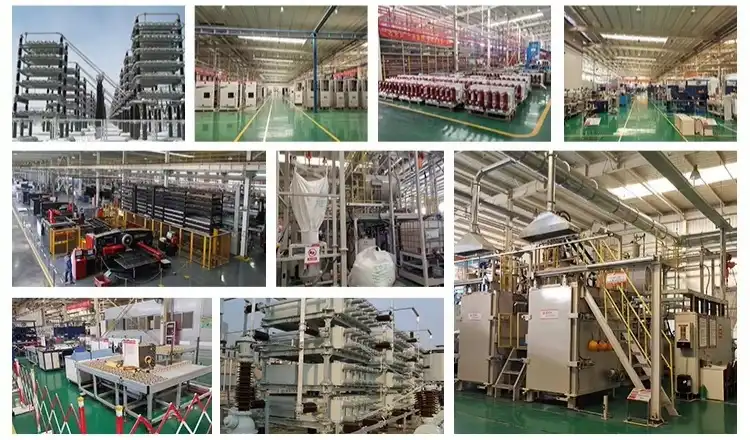
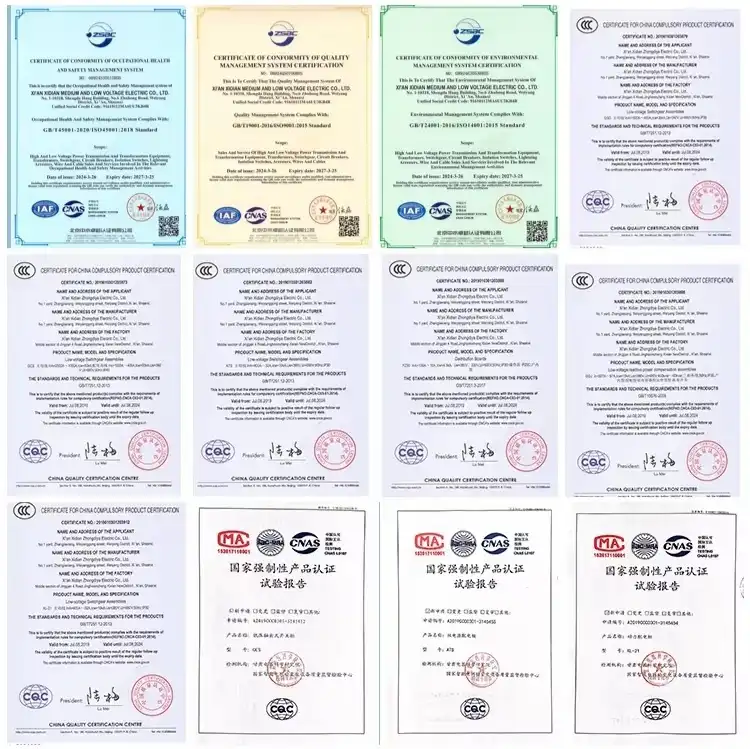
Look at a supplier's papers, not their words. You should ask for datasheets, drawings, routine test reports, type test documents, accuracy data, and results for partial discharge. Look over the company's ability to produce, experience with exporting, engineering support, lead time, packaging, and warranty. When you compare quotes, use the same criteria to see how much they vary: ratio, class, load, insulation, windings, testing, and quantity. Before you place your first order for OEM supply, you should agree on the Incoterms, the minimum order number, and the extra parts. Xi'an Xikai makes seven types of products, such as instrument transformers, vacuum circuit breakers, and switchgear. Its products are used by State Grid, rail transportation, and green energy projects.
Follow a Selection Workflow
Mistakes are less likely to happen when work is done in a set order. First, write down the nominal and highest voltage, frequency, earthing method, short-circuit level, and conditions at the spot. Second, choose the connection type, precision level, load, voltage factor, and amount of secondary windings. Third, measure the cubicle and check the connections, grounding, clearances, and wiring. Fourth, look at what different suppliers have to offer, covering things like ratio notation, test methods, standards, and definitions of accuracy. Lastly, for important projects, approve a sample before making a lot of them. When they put in an order for an indoor potential transformer, these steps make sure that your expert and buying teams are working from the same set of specs.
Avoid Common Mistakes
Most problems are caused by incomplete specifications, not by mistakes made in the factory. Some common mistakes are figuring out the ratio based on the nominal voltage alone, not measuring the line-to-neutral, not estimating the load properly, and using the same accuracy class for both protection and measurement. Buyers also don't pay attention to the voltage factor, the maximum partial discharge, the layout of the terminals, or the fastening details. A datasheet is not an approval package by itself. Make sure you know the connection, total load, and different circuit needs before you place your order. Make sure you also look at the fuse ratings and ferroresonance protection. Then ask for test records, compliance papers, drawings, and wiring diagrams. This list is the last thing you should look over before you send an inquiry about an indoor potential transformer.
Conclusion
First, you need to know the primary and secondary voltages to choose an indoor potential transformer ratio. But that's not all there is to it. To be accurate, the ratio must match the line-to-line or line-to-neutral measurement, the metering and security tasks, and the total load. It must also stay within the rated burden range. How long accuracy lasts depends on the level of insulation, the vacuum-cast construction, and the conditions at the site. Type of connection, secondary fuses, and ferroresonance control all work together to protect the generator and the devices that are attached to it. The unit's size determines whether it fits in the cubicle. This article talks about a 24 kV model that has 30, 80, and 200 VA outputs, 17.5/55/105 kV insulation, and 50/60 Hz operation. Before mass production, mistakes are less likely to happen if there is a written standard, source test reports, and sample approval.
FAQ
1. What is the difference between a PT and a VT?
For meters and relays, the primary voltage is stepped down to a safe level by the transformer, which is what both names mean. In North America, PT is the older word, while VT is used a lot in IEC documents.
2. How do I choose between 30, 80, and 200 VA?
Add up the VA of each meter, relay, and wire that is attached, then choose the highest number that is close to the total. Because accuracy is described as being between 25% and 100% of the measured burden, don't give a number that is way above the load.
3. Why does ferroresonance matter at 24 kV?
In devices that aren't grounded, it can lead to too much electricity, too much heat, and broken fuses. Plan a harmonic suppressor and let your provider know how to connect it to the earth.
4. Can an indoor potential transformer be customized for OEM switchgear?
Yes. Send our engineers the data from your meters and relays as well as the drawings of your switchgear. Before giving a quote, they look over the ratio, the load, and the layout.
Request a Quote for Your Indoor Potential Transformer from Xi'an Xikai
When it comes to indoor potential transformers, Xi'an Xikai makes switchgear, dry-type transformers, vacuum circuit breakers, instrument transformers, and equipment for plateaus up to 4,000 meters in height. Our engineers will look over your plans when you send them to serina@xaxd-electric.com, amber@xaxd-electric.com, or luna@xaxd-electric.com with your ratio, load, and accuracy needs. To find out more, go to xaxd-electric.com.
References
1. IEC 61869-3: Instrument Transformers – Additional Requirements for Inductive Voltage Transformers, 2011
2. IEC 61869-1: Instrument Transformers – General Requirements, 2023
3. IEEE C57.13: IEEE Standard Requirements for Instrument Transformers, 2016
4. GB/T 20840.3: Instrument Transformers – Part 3: Additional Requirements for Inductive Voltage Transformers, 2013
5. Electric Power Substations Engineering (CRC Press), 2012
6. Cahier Technique No. 190: Ferroresonance (Schneider Electric), 1998