
Indoor Potential transformer: Complete Guide to Selection and Use
2026-11-06 17:31:57
An indoor potential transformer (PT) steps medium voltage down to a safe, standard secondary level for meters, relays, and control equipment inside switchgear and substations. To select one, I check five items: system voltage, insulation level, accuracy class, rated burden, and physical size. This guide covers the working principle, key specifications, selection steps, installation checks, and supplier review. It also shows how the 24kV indoor potential transformer from Xi'an Xikai fits OEM switchgear builders who supply export markets, including the United States.
What Is an Indoor Potential Transformer?
Function and Terminology
A high primary voltage is turned down to a low, standard secondary voltage by an indoor potential transformer, which is also known as an indoor voltage transformer. Because meters, protection relays, and monitoring systems are fed by the secondary output, technicians never connect instruments directly to medium-voltage wires. The coil also keeps the main circuit from touching the secondary wires. When used in engineering, "voltage transformer" and "potential transformer" refer to the same thing. People in North America tend to write PT, while people in the IEC write VT. In this guide, I treat both names the same. One relay model can work with a lot of different main voltage values because the secondary voltage is always the same.
Typical Applications
These units can be found in power substations, industrial plants, business buildings, data centers, and places for renewable energy. They are enclosed in metal. The PT is linked to the busbar or feeder inside a panel. It can show the voltage, measure energy, watch SCADA, sync, protect against undervoltage and overvoltage, protect in both directions, and find ground faults. For companies that make OEM switchgear, the indoor potential transformer needs to fit in the booth as well. I need the interface drawing before production because the unit can't be installed without any changes being made to the mounting space, phase spacing, or terminal position. The PT and its main fuses are usually placed on a handcart in designs that can be taken out.
Voltage Ratings, Indoor vs. Outdoor, and PT vs. CT
People usually rate things from 3.3kV to 33kV. The voltage, level of insulation, and type of switchgear all need to match up. In North America, panels usually use 15kV, 27kV, or 38kV classes. In many export markets, however, panels use 24kV classes, so make sure you know the class before you order. An indoor potential transformer works well in controlled, sealed rooms. Units that are outside need to be more resistant to things like rain, dust, sunlight, and changes in temperature. A current transformer (CT) is another thing that a PT is not. A PT checks the power and links things together in parallel. A CT measures current and links things together in a chain. Do not open or short a CT secondary or a PT secondary.
Indoor Potential Transformer Working Principle and Construction
Electromagnetic Induction and the Voltage Ratio
Electromagnetic induction is what makes a potential transformer work. It is connected across the system voltage by the primary winding, which makes the magnetic core's flux change. A corresponding voltage is created in the secondary coil by that flux. Ku is equal to U1/U2, where U1 is the main voltage and U2 is the secondary voltage. A PT is almost an open circuit because meters and relays don't use much electricity. A power transformer, on the other hand, sends electricity to a load. Ratio and phase errors are small when the load current is low, as long as the connected load stays within the rated value.
Construction: Epoxy Resin Cast vs. Oil-Immersed
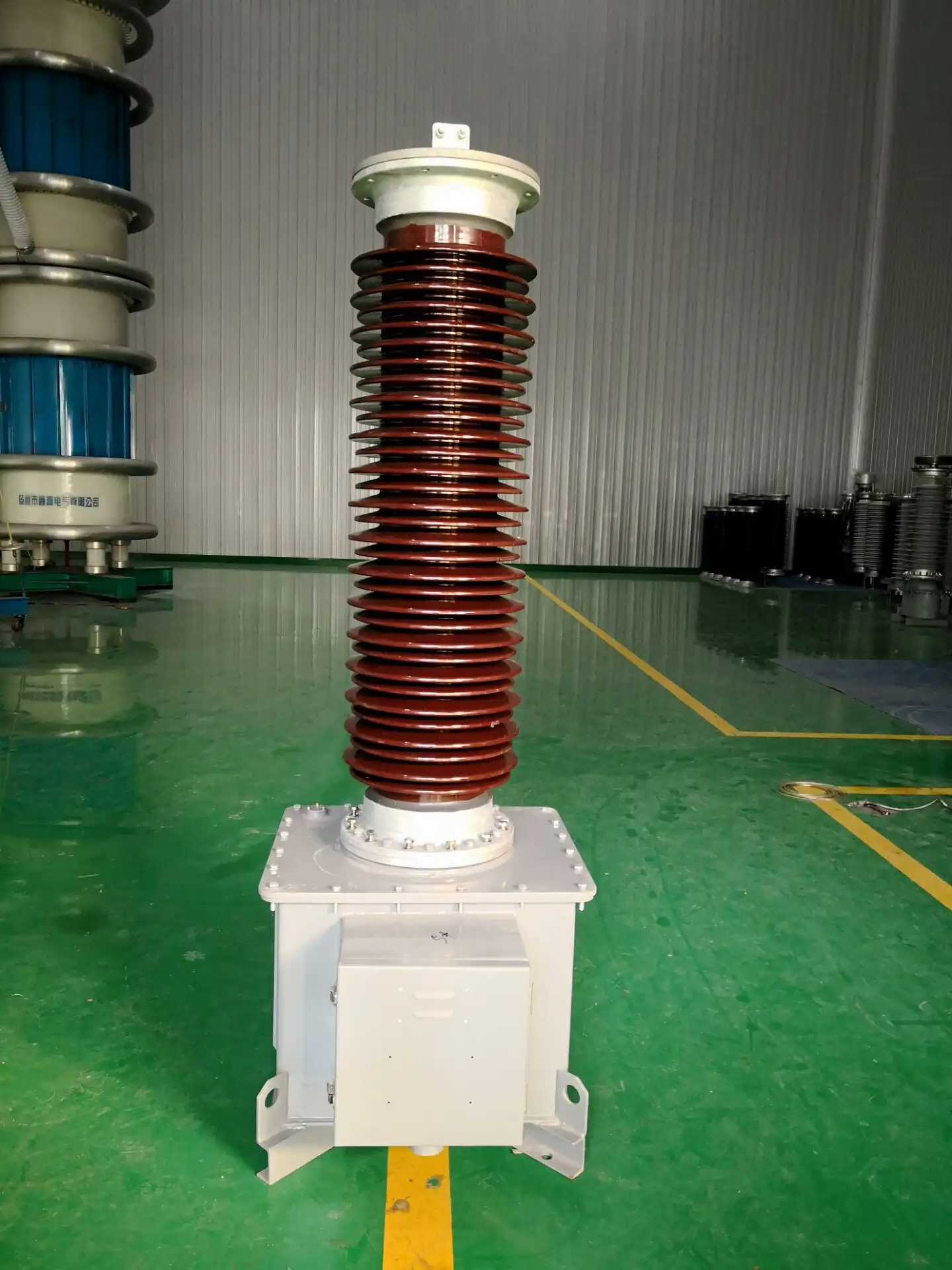
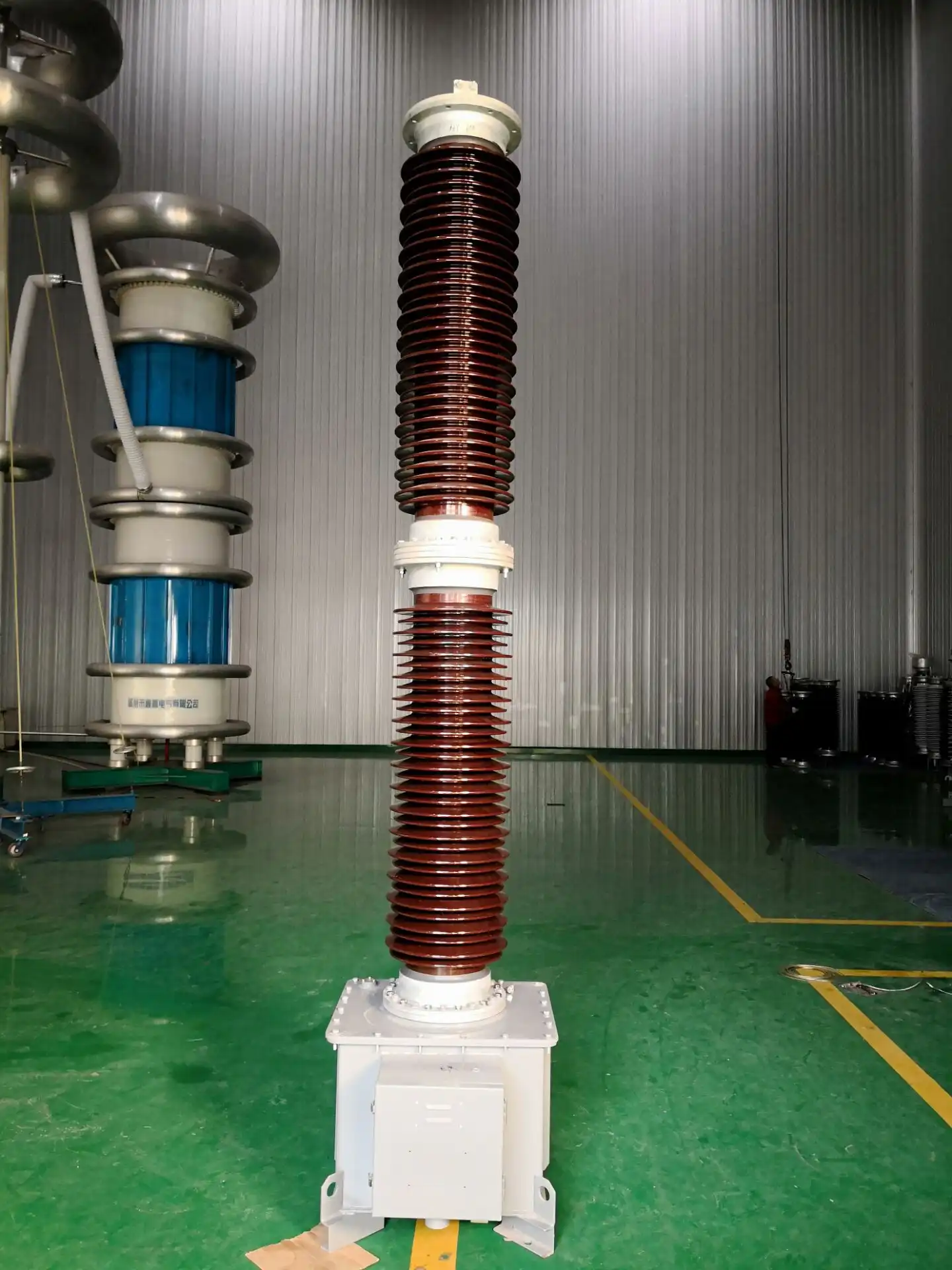
A laminated silicon steel core, insulation, connections, a case, a mounting frame, and a nameplate are all parts of a PT. As part of an epoxy resin cast system, the insulators and windings are surrounded by cast resin. This dry-type build doesn't need oil to be checked or added to, it takes up less room, and there is a lower risk of fire, so it is good for switchgear rooms inside. Designs that use oil need to be checked for oil, have leaks fixed, and have more space. The Xi'an Xikai 24kV indoor potential transformer is made of fully sealed electromagnetic components cast in epoxy resin. That arrangement makes it possible for a small panel to work reliably.
Single-Phase, Three-Phase, and Open-Delta Connections
Voltages from phase to ground and line to line can be found with three single-phase PTs connected in a grounded star pattern. On those units, a broken-delta winding can provide residual voltage to protect against earth faults. The two fully insulated PTs in open-delta (V-V) mode can only measure voltages from one line to another. This choice has fewer gadgets and works well for simple metering. A three-phase unit takes up less room, but the way it is built must allow for ground-fault monitoring. The first thing I do is choose a link from the protection plan. Then I match it with the network's grounding method and relay inputs.
Technical Specifications That Matter
The 24kV Indoor Voltage Transformer at a Glance
A 24kV indoor voltage transformer (potential transformer) from Xi'an Xikai has a frequency of 50/60Hz, a secondary output of 30/80/200VA, and an input voltage of 24kV. The level of insulation it is rated for is 17.5/55/105kV. The output voltage that is listed is 480V, and other values can be used depending on what the end user needs. The levels of accuracy are 0.2 and 0.5. The standards on the list are IEC 61869-1 and 61869-2 and GB 20840.2-2014. It is an epoxy resin cast, fully enclosed electromagnetic type indoor potential transformer that works accurately, has a large capacity, and stays stable. Before you order, you should compare the insulation numbers and secondary voltage to the design of your switchgear.
Accuracy Class and Rated Burden
IEC 61869-3 includes protection classes 3P and 6P as well as measuring classes 0.1, 0.2, 0.5, 1, and 3. Class 0.2 lets a ratio error of ±0.2% and a phase displacement of ±10 minutes happen within the given voltage and burden range. Class 0.5 gives you ±0.5% and ±20 minutes. The classes in IEEE C57.13 are 0.3, 0.6, and 1.2, so US standards need to make sure that the classes match. The PT's rated payload is the most weight it can hold while still being in its class. Add up the loss from each meter, relay, transducer, and cable. We have 0.2 and 0.5 classes on our list. If your relays ask for 3P, make sure you get confirmation during the call.
Insulation Level, Partial Discharge, and Standards
The overvoltage a PT can handle is determined by its insulation level. Ask for results on the power-frequency withstand, impulse withstand, and partial discharge (PD) for each batch. PD lets you know when there are holes or other problems in the plastic insulation. Long-term PD speeds up insulation aging, which can cause accuracy to change over time. So, an indoor potential transformer can use a clean factory PD test as a starting point. General rules are in IEC 61869-1, and rules for inductive voltage transformers are in IEC 61869-3. In North America, IEEE C57.13 is used. When your provider gives you a quote, ask them to include models and test reports along with a list of the standards that apply.
How to Choose an Indoor Potential Transformer
Start With Duty and Burden
First, decide what the duty is: protection, metering, or both? Then write down the frequency, phase configuration, primary and secondary voltage, and the method of grounding. Next, add up the extra weight. The load is 20VA before cable losses if a meter draws 5VA, a relay draws 10VA, and a transducer draws 5VA. A 30VA grade gives you a good amount of room for error. IEC limits the accuracy of measuring classes from 25% to 100% of the rated load, so don't use a rating that is much higher than the real load. I write down the math on the data sheet so that the supplier can check it.
Check Mechanical Fit and Site Conditions
Even if the unit meets the electrical data, it may fail on size. The measurements, mounting holes, terminal orientation, phase spacing, and panel clearance should all be compared to the model of the cubicle. Ask for a dimensional drawing early on for a new panel design. Make a list of the site's conditions, such as the altitude, humidity, dust, chemicals, and condensation. For Xi'an Xikai's plateau-type equipment to work, the site must be at least 4,000 meters above sea level. Please include this information in your inquiry. Tell us what kind of insulation you want, what certificates you need, and if there are any OEM labels. The indoor potential transformer stays in sync with the panel thanks to every little thing.
Plan for Ferroresonance and Insulation Aging
When the nonlinear magnetizing inductance of a PT interacts with the system capacitance, ferroresonance happens. It happens most often in networks with no other neutral or switching after a ground fault or switching. It could lead to too much electricity and too much heat in the PT. A harmonic eliminator across the broken-delta winding, a core designed with low flux density, and a good way to ground the device are all common ways to protect it. In your RFQ, talk about the eliminator and ask your supplier for the excitation curve. To check for wear and tear, write down the ratio and insulation resistance values when the system is first turned on and do the tests again at regular times.
Indoor Potential Transformer Wiring, Installation, and Supplier Evaluation
Wiring, Installation, and Pre-Energization Tests
Diagrams of wiring must show the primary and secondary terminals, as well as the polarity, phase connections, neutral points, and grounding. When you get there, check the label and look for cracks in the plastic surface. Place the unit with the required gaps and tighten the connections to the required force. At one point, ground the secondary. Use fuses or a miniature circuit breaker to protect the secondary circuit. Qualified people run tests for ratio, polarity, phase relationship, insulation resistance, winding resistance, continuity, burden, and accuracy before turning it on. During upkeep, check for dust, water, cracks, overheating, weak connections, and noises that don't make sense.
Common Selection Mistakes
There are three mistakes that happen a lot in indoor potential transformer orders:
- Picking based only on the main voltage. The project also needs to meet the secondary voltage, load, accuracy class, insulation level, measurements, and wiring. Units that don't work with the voltage but not with the cubicle or the relay input can make commissioning take longer and require extra work to be done on a finished panel. Before making anything, please share the full info sheet.
- Ignoring the total load and cable losses. More load is added by each meter, relay, and sensor, as well as by long secondary lines. If a PT is too full, it can drift out of its accuracy range and give incorrect readings for billing or safety. Find the full load in VA and choose a rating that gives you a little extra room.
- Needs for both metering and protection are mixed. Metering classes like 0.2 and 0.5 aim for accuracy close to the maximum voltage, while safety classes like 3P cover a wider voltage range when there is a fault. Before turning on the panel, make sure you know which winding goes to which device and that the polarity and phase sequence are correct. Make a note of them on the wiring plan.
By avoiding these mistakes, you can save time during commissioning and make sure that the measurements are correct.
RFQ Checklist and Supplier Evaluation
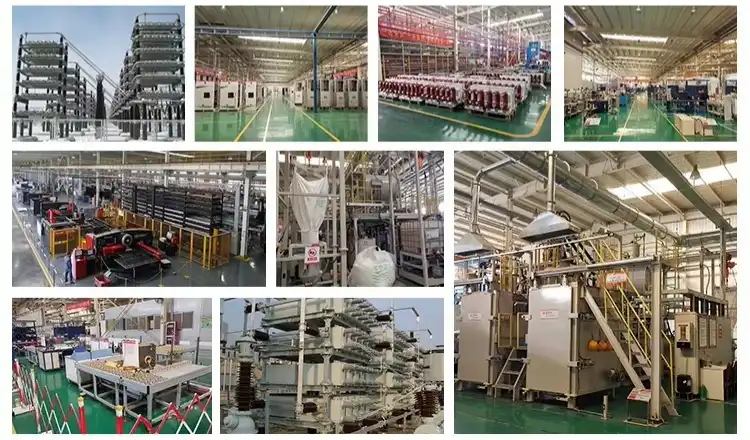
A full RFQ makes it faster and easier to get a correct quote. Write down the system voltage, frequency, primary and secondary voltages, the application, the accuracy class, the load, the insulation level, the phase configuration, the insulation type, the panel's size, quantity, destination, certificates, and test reports. Because price relies on load, class, windings, insulation level, tests, and packaging, quotes have to be changed when data is missing. Send each provider the same specs, and then look at the drawings, wiring diagrams, test scope, packing, guarantee, and lead time to see which ones are the best. Xi'an Xikai has 7 product categories, 34 series, and more than 100 variants, such as instrument transformers. They can also make custom ratios for OEM projects.
Conclusion
An indoor potential transformer inside a building changes medium voltage into a safe secondary signal that can be used for monitoring, metering, and safety. The electric induction that makes it work is Ku = U1/U2. Matching main voltage, insulation level, accuracy class, rated burden, connection type, and cubicle measurements all play a role in making the right choice. Molds made of epoxy resin work well inside because they don't hold oil and don't take up much room. When you look at grounding, damping devices, partial discharge data, and standard test records, you need to pay attention to ferroresonance risk and insulation aging. A full RFQ, careful wiring, pre-energization testing, and a clear standards list cut down on work that needs to be redone and ensure that readings are correct. When these steps are used together, they help project teams and OEM switchgear builders choose a PT that works with the system.
FAQ
1. Is an indoor potential transformer the same as a voltage transformer?
Yes. Either name refers to a part of the system that lowers the voltage for sensors and switches. Most people in North America use PT, and most people in Europe use VT.
2. What secondary voltages are most common?
In IEC practice, 100V, 100/√3V, 110V, and 110/√3V are often used. In North America, 120V is often used. The 24kV unit we sell lists 480V, but other numbers can be used if the customer needs them.
3. Which accuracy class suits metering and protection?
For metering, use either 0.2 or 0.5, depending on what the utility or contract says. For safety, use 3P or 6P. Check that the class is correct for each winding in the quote.
4. Can one PT serve both metering and protection?
Yes, as long as the PT has separate windings that are rated for each job. In the RFQ, you should list both responsibilities and groups.
5. Which tests should I complete before energization?
There are checks for run ratio, polarity, phase relationship, insulation resistance, winding resistance, continuity, burden, and accuracy, as well as dielectric tests when they are needed. The results should be kept as a starting point.
Request an Indoor Potential Transformer Quote from Xi'an Xikai
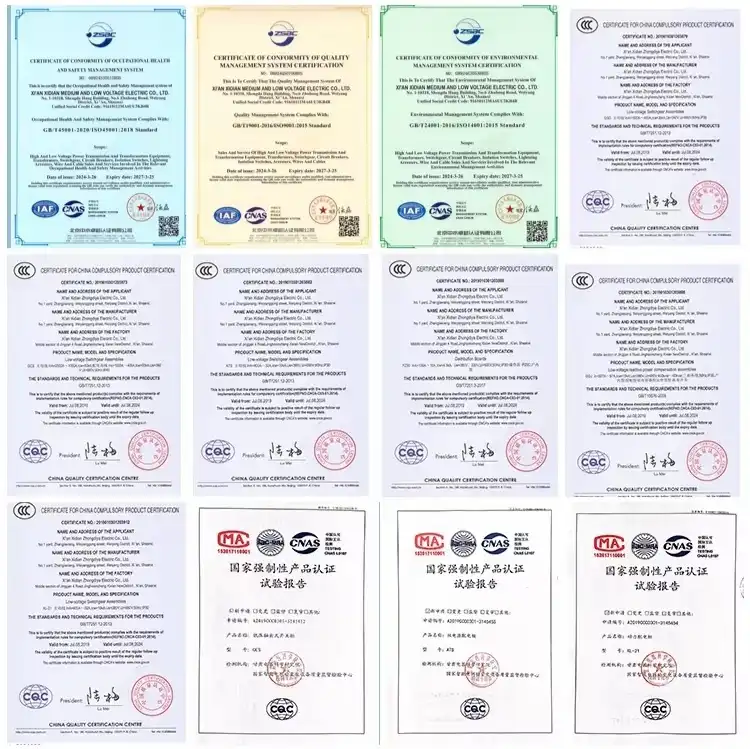
Xi'an Xikai is an indoor potential transformer manufacturer with 7 product categories, 34 series, and more than 100 variants. They also make equipment for plateaus at heights of up to 4,000 meters. Our 24kV epoxy resin cast unit has outputs of 30, 80, and 200VA and meets IEC 61869 and GB 20840.2-2014 standards. To serina@xaxd-electric.com, amber@xaxd-electric.com, or luna@xaxd-electric.com, send your voltage, load, class, and panel drawing. To find out more, go to xaxd-electric.com.
References
1. IEC 61869-1: Instrument Transformers – General Requirements, 2023
2. IEC 61869-3: Instrument Transformers – Additional Requirements for Inductive Voltage Transformers, 2011
3. IEEE C57.13: IEEE Standard Requirements for Instrument Transformers, 2016
4. Electric Power Distribution Handbook, 2014
5. Protective Relaying: Principles and Applications, 2014
6. Electrical Power Equipment Maintenance and Testing, 2008